
Following the military seizure of Pakistani government …
Years: 1958 - 1958
Following the military seizure of Pakistani government by Ayub Khan, Dhaka is designated as the legislative capital of Pakistan.
Central government bodies, such as the Planning Commission, are now instructed to hold regular sessions in Dhaka.
Related Events
Filter results
Showing 10 events out of 3806 total
New Zealand writer Sylvia Ashton-Warner, in 1958, publishes her well received first novel, “Spinster,” a tale of a dedicated schoolteacher fiercely opposed to mediocrity.
New Zealand writer Sylvia Ashton-Warner, in 1958, publishes her well received first novel, “Spinster,” a tale of a dedicated schoolteacher fiercely opposed to mediocrity.
In 1958, Oswald is on maneuvers in the Philippines involving U-2 flights.
Mao’s Great Leap Forward of 1958, a frenzied attempt at increasing agricultural production, meets with much resistance among the rural populace.
A CIA-backed 1958 coup against Sihanouk fails.
A 1958 CIA-sponsored coup against Sukarno fails.
Kenzo Tange’s architectural designs combine concrete and steel construction with traditional Japanese design.
Petroleum is discovered in 1958 at the submarine field of Umm ash-Shayf, about seventy-five miles (one hundred and twenty-five kilometers) offshore at a depth of almost nine thousand feet twenty-seven hundred and fifty meters), in territorial waters belonging to Abu Dhabi.
Despite Saudi Arabia's new oil wealth, extravagant spending leads to governmental deficits and foreign borrowing in the 1950s.
Financial and administrative affairs become too complex to be conducted simply on the personal authority of the king, who possesses neither the ability nor the inclination to cope with these problems.
Sa'ud so mismanages the financial affairs of the state that he is forced to reconstitute the council of ministers and give full executive powers to Faysal as its president.
In 1957, Sa'ud became the first Saudi monarch to visit the United States.
In March of the following year, Sa'ud, bowing to pressure from the modernizers at the royal court, issues a decree transferring all executive power to his brother Faysal.
United States marines occupy Lebanon against rebels in 1958.
A system of medium-term planning is introduced in 1958 with the belated publication of the first five-year plan (1955-60).
Societal violence and ethnic unrest further complicate the growth and functioning of parliamentary government.
Khan Sahib finds his hold over the West Pakistan legislature slipping, and he asks the president to suspend the constitution.
President Mirza has made no secret of his dissatisfaction with the working of parliamentary democracy in Pakistan.
Fed up with the bickering and opportunism that pervades Pakistani politics, Mirza, on October 7, 1958 abrogates the constitution, bans political parties, cancels the elections scheduled for January 1959, and declares martial law, with General Mohammad Ayub Khan, the army Commander-in-Chief, as chief martial law administrator.
Mirza announces that the martial-law period will be brief and that a new constitution would be drafted.
Mirza has the support of the army as well as the civil service bureaucracy, which harbors deep suspicions of politicians.
On October 27, he swears in his new Cabinet.
General Ayub becomes prime minister, and three lieutenant generals are named to the Cabinet.
The eight civilian members include businessmen and lawyers, one being a young newcomer, Zulfikar Ali Bhutto.
On the evening of October 27, the new military ministers call on the president, with contingents of armed soldiers, and inform him that he is to resign.
After a short interval, Mirza is exiled to London.
A proclamation issued by Ayub announces his assumption of the presidency.
He justifies his assumption of power by citing the nation's need for stability and the necessity for the army to play a central role.
The imposition of martial law targets "antisocial" practices such as abducting women and children, black marketeering, smuggling, and hoarding.
Many in the Civil Service of Pakistan and Police Service of Pakistan are investigated and punished for corruption, misconduct, inefficiency, or subversive activities.
Ayub Khan's message is clear: he, not the civil servants, is in control.
Ayub Khan and his fellow officers decide to turn out the "inefficient and rascally" politicians, against whom sterner measures are used.
The Public and Representative Office Disqualification Act (PRODA) prescribes fifteen years' exclusion from public office for those found guilty of corruption.
The Elective Bodies Disqualification Order (EBDO) authorizes special tribunals to try former politicians for "misconduct," an infraction not clearly defined.
Prosecution can be avoided if the accused agrees not to be a candidate for any elective body for a period of seven years.
About 7,000 individuals are "EBDOed." Some people, including Suhrawardy, who is arrested, fight prosecution.
Efforts are made to popularize the regime while the opposition is muzzled.
Ayub Khan's philosophy is indebted to the Mughal and viceregal traditions; his rule is similarly highly personalized.
He maintains a high public profile, often taking trips expressly to "meet the people." He is also aware of the need to address some of the acute grievances of East Pakistan.
To the extent possible, only Bengali members of the civil service are posted in the East Wing; previously, many of the officers had been from the West Wing and knew neither the region nor the language.
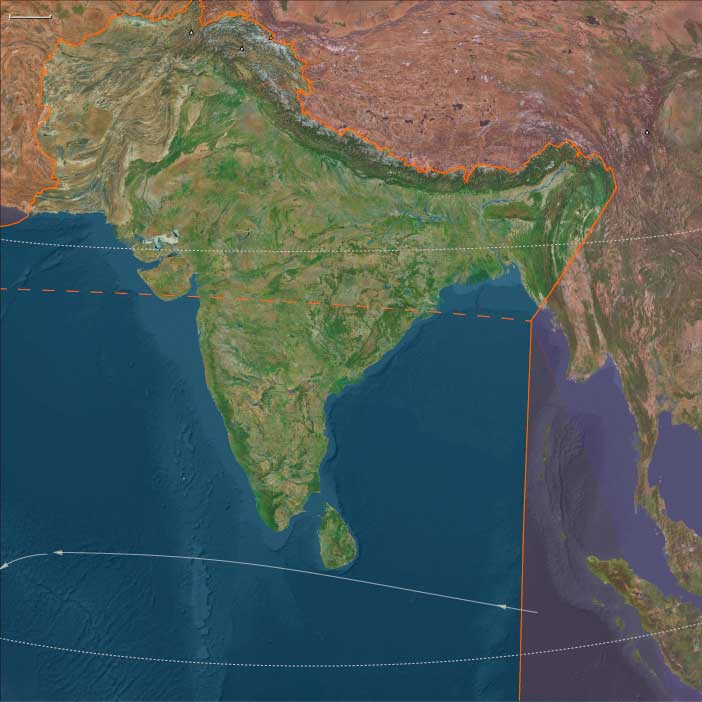
Oman surrenders its last colonial outpost—Gwadar, on what is now the coast of Pakistan—in September 1958, when Sultan Said bin Taimur allows it to be reintegrated into Pakistan in return for a payment of £3 million.
The Palestine National Liberation Movement (Harakat at-Tahrir al-Watani al-Filastini), a secret organization, known from a reversal of its Arabic initials as Fatah (Arabic: "Conquest" or "Opening"), is founded in the late 1950s by Yasir 'Arafat, 29, and Khalil al-Wazir, 23, with the aim of wresting Palestine from Israeli control by waging low-intensity guerrilla warfare against the latter.
Al-Wazir, who takes the nom de guerre Abu Jihad, had fled from Ramla with his family during the 1948 war.
He grew up in the Gaza Strip, where he was educated by the UNRWA, and met 'Arafat in 1951 while attending college in Cairo.
'Arafat, a civil engineer whose wife is related to the anti-Zionist grand mufti of Jerusalem, Amin al-Husayni, had gone to Kuwait, where he worked as an engineer and set up his own contracting firm.
In Romania, strains in the relations between Gheorghiu-Dej and Soviet party leaders come to the surface in the late 1950s.
Gheorghiu-Dej, a long-time disciple of rapid industrialization and, since 1954, a supporter of "national" communism, fears that the de-Stalinization campaign launched by Khrushchev, the Soviet Union’s new premier, might force him from power, since he had been (and continues to be) one of the most rigid of Stalinists.
However, he also objects vehemently to Khrushchev's insistence that Romania abandon its headlong drive to industrialize and, instead, accept the more modest role of supplier of agricultural products and raw materials to the designated “industrial powers” of Comecon.
Thus, the emergence of Romanian national communism is accompanied and in part stimulated by growing friction with the Soviet Union.
The PCR is firmly in control of the country and Romania is securely within the Warsaw Pact.
Therefore, with Chinese support, Gheorghiu-Dej is able to coax the Soviet Union into removing its forces from Romanian soil, which occurs in May 1958.
Romanian-Soviet trade soon slowed to a trickle.
With no Soviet troops in Romania to intimidate him, Gheorghiu-Dej's defiance stiffens, and his negotiators begin bringing home Western credits to finance purchases of technology for Romania's expanding industries.
Khrushchev apparently seeks to undermine Gheorghiu-Dej within the PMR and considers military intervention to unseat him.
The Romanian leader counters by attacking anyone opposed to his industrialization plans and by removing Moscow-trained officials and appointing loyal bureaucrats in their place.
The November 1958 PMR plenum asserts that Romania must strengthen its economy to withstand external pressures.
Industrialization, collectivization, improved living standards, and trade with the West become the focal points of the party's economic policy.