
Florentine native Philip Neri, who studied in …
Years: 1575 - 1575
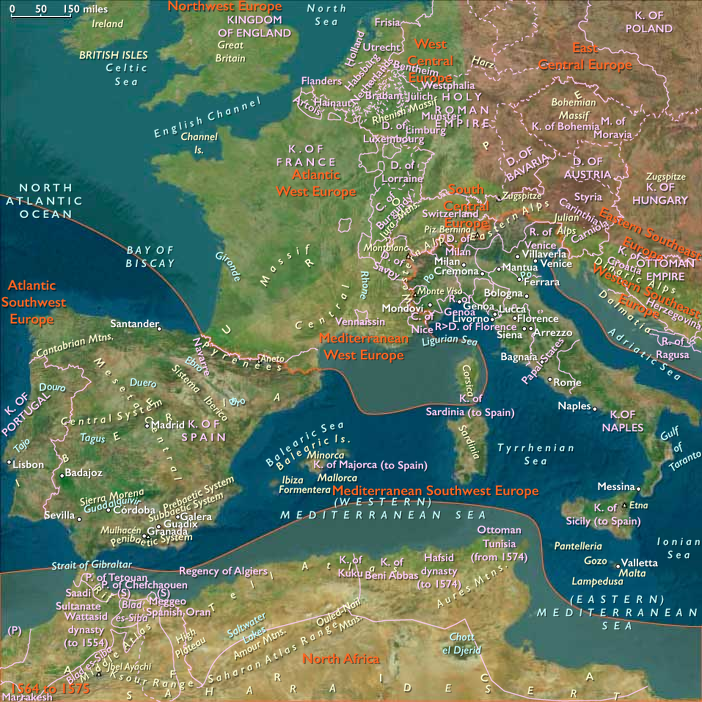
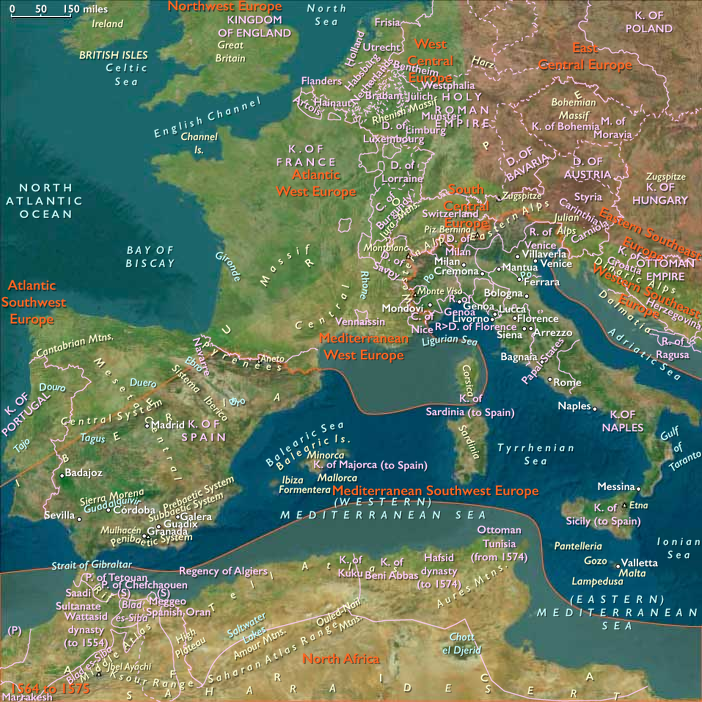
Florentine native Philip Neri, who studied in Rome as a young man and also worked among the poor and sick of the city, was ordained in 1551 and becomes noted as a confessor and for bringing about a religious revival among the Romans.
Pope Gregory XIII in 1575 approves Neri’s Congregation of the Oratory, where priestly members lead a devotional life without vows.
The charismatic Neri, whose good judgment and friendly, playful disposition earn him love and respect, becomes known as the Apostle of Rome.
Italian mathematician Gerolamo Cardano, a pioneer in the study of probability, publishes one of the first modern psychological autobiographies, De vita propria liber (“Book of My Life”) in 1575.
Spanish composer Tomas Luis de Victoria, who may have studied with Bartolomé Escobedo and Palestrina, gains experience in Rome, where he first studies, as an organist and choirmaster, having competent Catholic church choirs for the performance of his works.
He enters the priesthood in 1575 but continues to compose and direct music in Rome.
Stukley allies with Fitzmaurice and moves to Rome in 1575, where he walks about the streets and churches barefoot and bare legged (which causes the lord deputy of Ireland, Sir William Fitzwilliam, to write sarcastically of his holiness, remarking that it had caused the people of Waterford, where he had put on a similar performance while awaiting favorable winds for five weeks prior to his departure, to believe in his piety).
He has an interview at Naples with Don John in June, when he gives details of the plans hatched with the pope for an October expedition.
The intention is to deliver Mary Stewart from prison and take possession of England.
He has corresponded with Nicholas Sanders at this stage.
Don John, who is now in charge of the Spanish forces in Flanders, says the king would have to approve and that three thousand men are too few, but is cautiously optimistic that the expedition would help to contain the rebellion in the Netherlands.
The prospect of a major invasion has been growing, and detailed proposals are put forward for Ireland.
Friar Patrick Healy arrives at Rome in 1575, bearing a letter from the king and announcing that he seeks sanction for an unnamed Irish gentleman to revolt and to request assistance; he insists Philip II has given his blessing.
Gregory stresses that the crown ought not to go to a French or Spanish claimant, but to a native Catholic, i.e. Mary Stewart, lest the king gain too much power and territory, and is opposed to Don John being crowned in Ireland.
The king denies O'Healy's authority to enter discussion on the Irish matter and queries the pope's opposition to the increase of Spanish authority; he is willing to guarantee six months pay for two hundred men and their shipping expenses to go to England in the pope's name, and wonders if a personal attempt might be made against Elizabeth.
Later, it is suggested that five thousand go to Liverpool and free Mary before possessing the country, or go to Ireland.
Gregory bargains for Philip II to defray the entire expense of the expedition, and suggests that if the Vatican is to pitch in then it should receive some benefit in Italy by way of material return.
The Spanish think the leader of the expedition should be married, so as to prevent papal approval of a match with Mary.
Locations
People
- Don John of Austria
- Elizabeth I
- Gerolamo Cardano
- James Fitzmaurice Fitzgerald
- Mary I of Scotland
- Philip II of Spain
- Philip Neri
- Pope Gregory XIII
- Thomas Stukley
- Tomás Luis de Victoria
Groups
- Papal States (Republic of St. Peter)
- England, (Tudor) Kingdom of
- Ireland, (English) Kingdom of
- Spain, Habsburg Kingdom of
Topics
- Protestant Reformation
- Counter-Reformation (also Catholic Reformation or Catholic Revival)
- Elizabethan Period
- Eighty Years War (Netherlands, or Dutch, War of Independence)
- Desmond Rebellions
Commodoties
Subjects
- Commerce
- Writing
- Watercraft
- Performing Arts
- Labor and Service
- Conflict
- Faith
- Theory
- Government
- Custom and Law
- Technology
- Movements
- Mathematics
Regions
Subregions
Years: 1575 - 1575
Locations
People
- Don John of Austria
- Elizabeth I
- Gerolamo Cardano
- James Fitzmaurice Fitzgerald
- Mary I of Scotland
- Philip II of Spain
- Philip Neri
- Pope Gregory XIII
- Thomas Stukley
- Tomás Luis de Victoria
Groups
- Papal States (Republic of St. Peter)
- England, (Tudor) Kingdom of
- Ireland, (English) Kingdom of
- Spain, Habsburg Kingdom of
Topics
- Protestant Reformation
- Counter-Reformation (also Catholic Reformation or Catholic Revival)
- Elizabethan Period
- Eighty Years War (Netherlands, or Dutch, War of Independence)
- Desmond Rebellions
Commodoties
Subjects
- Commerce
- Writing
- Watercraft
- Performing Arts
- Labor and Service
- Conflict
- Faith
- Theory
- Government
- Custom and Law
- Technology
- Movements
- Mathematics
Regions
Subregions