
Paris-born Jean-Baptiste-Siméon Chardin, breaking with the style …
Years: 1729 - 1729
Paris-born Jean-Baptiste-Siméon Chardin, breaking with the style of the times, can be said to be Anti-Rococo.
He paints The White Tablecloth in 1729.
Considered by some to be the greatest of the eighteenth-century French painters, he favors simple still lives and unsentimental domestic interiors, and is known for his beautifully textured still lives as well as his sensitive and touching genre paintings.
Simple, even stark, but treasured paintings of common household items (Still Life with a Smoker's Box) and an uncanny ability to portray children's innocence in a non-sentimental manner (Boy with a Top) account for his timeless appeal.
He is the son of a cabinetmaker, and though largely self-taught, is greatly influenced by the realism and subject matter of the seventeenth-century Low Country masters.
His early support comes from patrons in the French aristocracy, including Louis XV, despite his unconventional portrayal of the rising bourgeoisie.
He had been admitted to the Royal Academy in 1728.
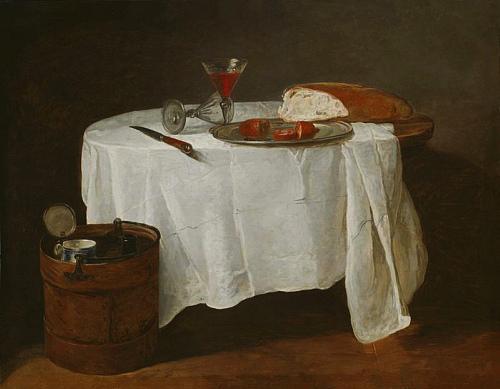
Jean-Baptiste-Siméon Chardin: The White Table (1731)
Locations
People
Groups
Topics
Subjects
Regions
Subregions
Years: 1729 - 1729
Jean-Baptiste-Siméon Chardin: The White Table (1731)
Locations
People
Groups
Topics
Subjects
Regions
Subregions