
The Expansion of Flanders Under Baldwin IV …
Years: 1005 - 1005
The Expansion of Flanders Under Baldwin IV ("the Bearded") and the Seizure of Ghent (1005)
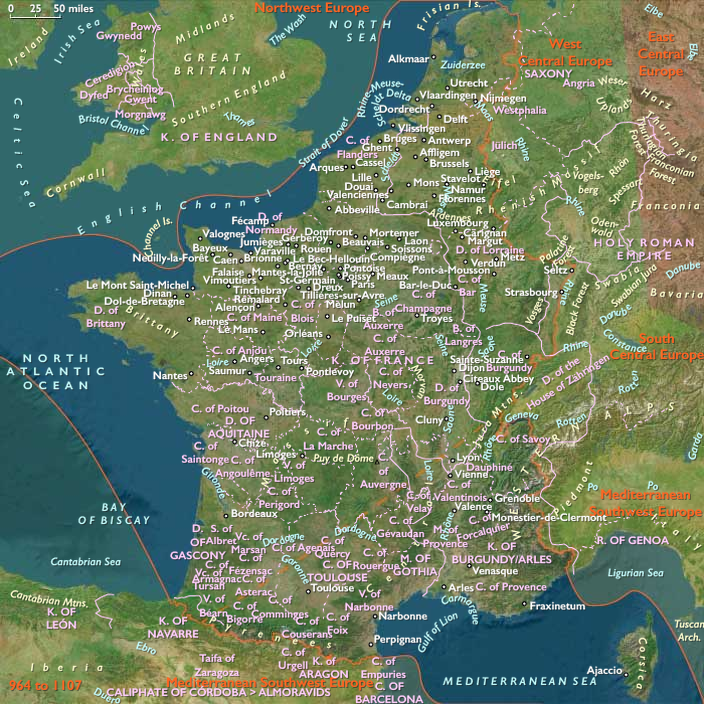
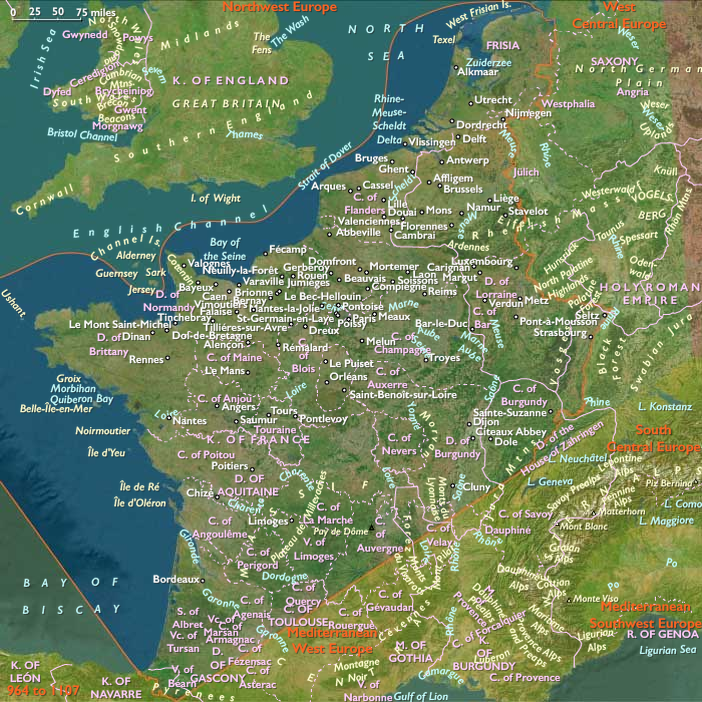
During the early 11th century, Flanders, a powerful vassal state of the Capetian Duchy of Burgundy, embarked on a period of territorial expansion under Count Baldwin IV ("the Bearded"). One of his earliest and most significant gains was the capture of Ghent in 1005, securing a crucial strategic and economic stronghold.
Flanders’ Position Within the Capetian Realm
- Though formally a vassal of the Capetian monarchy, Flanders enjoyed significant autonomy, owing to its wealth, military strength, and political ties to the Holy Roman Empire.
- The House of Flanders was a dominant force in northern France and the Low Countries, frequently engaging in territorial disputes and strategic alliances to expand its holdings.
The Capture of Ghent (1005)
- In 1005, Baldwin IV expanded his control eastward, seizing Ghent, a vital trade and river port city at the confluence of the Scheldt and Lys rivers.
- Ghent’s location made it one of the most important economic centers in northern Europe, allowing Flanders to control trade routes and further develop its textile industry.
- This expansion strengthened Flanders’ influence in the region, bringing it into closer conflict with both the Capetian monarchy and the Holy Roman Empire, which also had interests in the Low Countries.
Baldwin IV’s Continued Expansion
- Following the capture of Ghent, Baldwin IV continued to extend Flemish control southward and eastward, further consolidating his territorial power.
- His reign marked the foundation of Flanders’ later dominance as one of the wealthiest and most politically independent regions in medieval Europe.
Legacy
The capture of Ghent in 1005 was a turning point in the rise of Flanders as a commercial and military power. It secured Baldwin IV’s position as a formidable ruler, setting the stage for Flanders’ increasing independence from Capetian France and its growing role in European trade and politics.
Locations
People
Groups
Topics
Commodoties
Subjects
Regions
Subregions
Related Events
Showing 10 events out of 51912 total
Years: 1005 - 1005
Locations
People
Groups
Topics
Commodoties
Subjects
Regions
Subregions