
Filters:
Charles XII's policies lead to the repudiation …
Years: 1684 - 1827
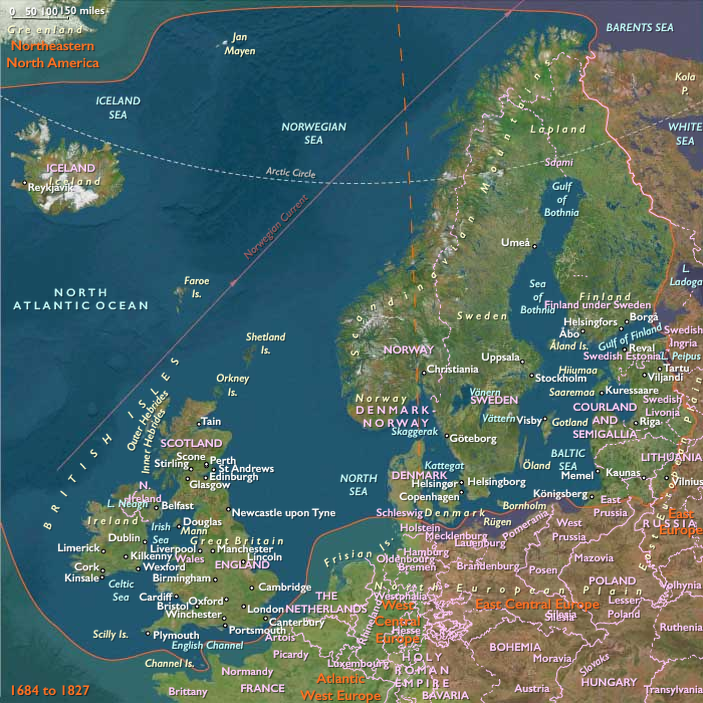
Charles XII's policies lead to the repudiation of absolute monarchy in Sweden and to the ushering in of a half-century of parliamentary supremacy, referred to as the Age of Freedom.
One major characteristic of this era is the strife between the two major political parties, the Hats, representing the upper classes, and the Caps, representing the lower classes.
These political parties, however, prove no more competent in the realm of foreign affairs than the kings.
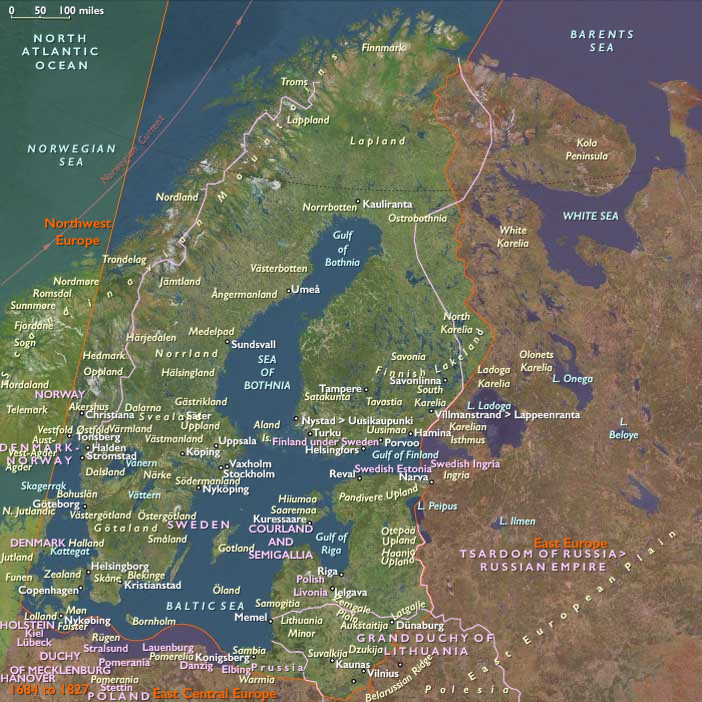
In 1741 the Hats lead Sweden into a war with Russia in order to try to undo the result of the Peace of Uusikaupunki.
Russian forces thereupon invade Finland and begin, virtually without a fight, a short-lived occupation known as the Lesser Wrath.
In accordance with the Peace of Turku signed in 1743, Russia once again evacuates Finland, but takes another slice of Finnish territory along the southeastern frontier.
One major characteristic of this era is the strife between the two major political parties, the Hats, representing the upper classes, and the Caps, representing the lower classes.
These political parties, however, prove no more competent in the realm of foreign affairs than the kings.
In 1741 the Hats lead Sweden into a war with Russia in order to try to undo the result of the Peace of Uusikaupunki.
Russian forces thereupon invade Finland and begin, virtually without a fight, a short-lived occupation known as the Lesser Wrath.
In accordance with the Peace of Turku signed in 1743, Russia once again evacuates Finland, but takes another slice of Finnish territory along the southeastern frontier.
Locations
People
Groups
- Finns
- Sami people
- Karelians
- Tavastians
- Estonians
- Danes (Scandinavians)
- Poles (West Slavs)
- Swedes (Scandinavians)
- Russians (East Slavs)
- Sweden, (second) Kingdom of
- Denmark-Norway, Kingdom of
- Russia, Tsardom of
- Swedish Empire
- Polish-Lithuanian Commonwealth (Commonwealth of the Two Nations)
- Finland, (Swedish) Grand Duchy of
Topics
Subjects
Regions
Subregions
Years: 1684 - 1827
Locations
People
Groups
- Finns
- Sami people
- Karelians
- Tavastians
- Estonians
- Danes (Scandinavians)
- Poles (West Slavs)
- Swedes (Scandinavians)
- Russians (East Slavs)
- Sweden, (second) Kingdom of
- Denmark-Norway, Kingdom of
- Russia, Tsardom of
- Swedish Empire
- Polish-Lithuanian Commonwealth (Commonwealth of the Two Nations)
- Finland, (Swedish) Grand Duchy of
Topics
Subjects
Regions
Subregions