
Filters:
The Castilian Succession Crisis and the Turbulent …
Years: 1372 - 1372
The Castilian Succession Crisis and the Turbulent Reign of Ferdinand I of Portugal (1367–1372)
When Ferdinand I of Portugal (r. 1367–1383) ascended to the throne upon his father Peter I’s death in 1367, his reign was soon entangled in dynastic conflicts with Castile, resulting in three Fernandine Wars (1369–1382) and political instability.
The Claim to the Castilian Throne (1369–1371)
- In 1369, King Peter of Castile was assassinated by his illegitimate half-brother, Henry of Trastámara, who then seized the throne as Henry II of Castile.
- As a great-grandson of Sancho IV of Castile through the female line, Ferdinand of Portugal laid claim to the Castilian throne, competing with:
- Peter IV of Aragon
- Charles II of Navarre
- John of Gaunt, Duke of Lancaster, who had married Constance of Castile, the eldest daughter of Peter I of Castile, in 1370.
- Henry II, already in control of Castile, took the field to defend his claim, leading to an indecisive conflict between the rival claimants.
The Peace of Alcoutim and the Broken Marriage Pact (1371)
- In 1371, Pope Gregory XI mediated a settlement, resulting in the Peace of Alcoutim, which included:
- Ferdinand’s renunciation of his claim to Castile.
- The betrothal of Ferdinand to Leonor of Castile, a daughter of Henry II, to seal the peace.
- However, before the marriage could take place, Ferdinand fell in love with Leonor Telles de Menezes, the wife of one of his courtiers.
- Ferdinand had her first marriage annulled and married her instead, causing:
- A major scandal in Portugal.
- A revolt among the Portuguese nobility, who opposed the union.
- Political repercussions with Castile, as the broken marriage agreement angered Henry II.
The Second Fernandine War (1372): Ferdinand’s Secret Treaty and Castilian Retaliation
- Despite his peace treaty with Castile, Ferdinand secretly allied with John of Gaunt, hoping to expel Henry II from the Castilian throne.
- In 1372, Henry II discovered this betrayal and invaded Portugal, marching on Lisbon.
- Ferdinand was forced to surrender, and the peace terms required him to:
- Hand over several Portuguese castles to Castile.
- Break his alliance with John of Gaunt, leaving his former ally without Portuguese support.
Aftermath and Further Conflict
- Though peace was temporarily restored, Ferdinand’s political miscalculations and diplomatic failures left Portugal increasingly vulnerable.
- His continued interference in Castilian affairs led to further wars and internal instability, culminating in the Third Fernandine War (1381–1382).
- His marriage to Leonor Telles remained deeply unpopular, and after his death in 1383, Portugal entered a succession crisis (1383–1385) that threatened its independence.
Ferdinand I’s reign was marked by reckless ambition, failed diplomacy, and military setbacks, ultimately weakening Portugal’s position and setting the stage for the rise of the House of Avis.
Locations
People
Groups
- Castile, Kingdom of
- England, (Plantagenet, Angevin) Kingdom of
- Castile, Crown of
- Portugal, Burgundian (Alfonsine) Kingdom of
Topics
Commodoties
Subjects
Regions
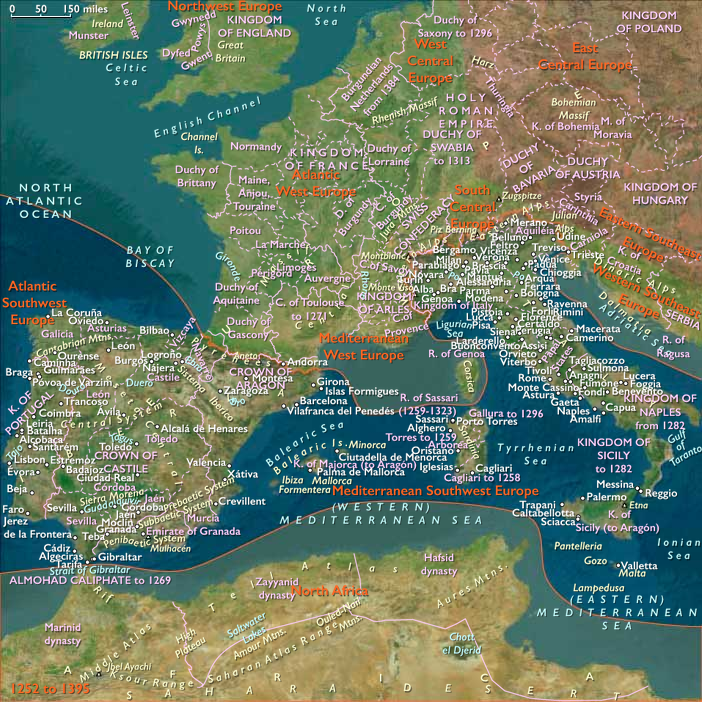
Subregions
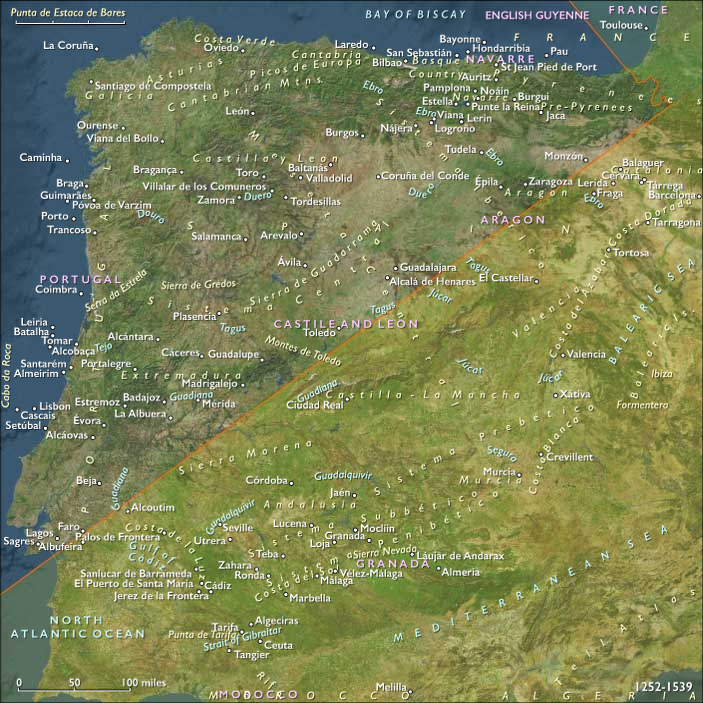
Years: 1372 - 1372
Locations
People
Groups
- Castile, Kingdom of
- England, (Plantagenet, Angevin) Kingdom of
- Castile, Crown of
- Portugal, Burgundian (Alfonsine) Kingdom of
Topics
Commodoties
Subjects
Regions
Subregions