
Ferdinand is in a bad financial situation …
Years: 1625 - 1625
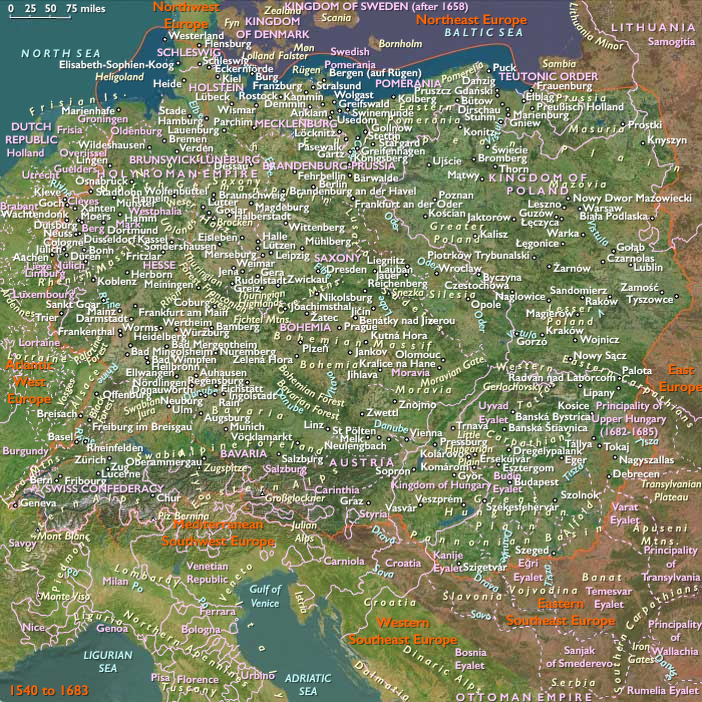
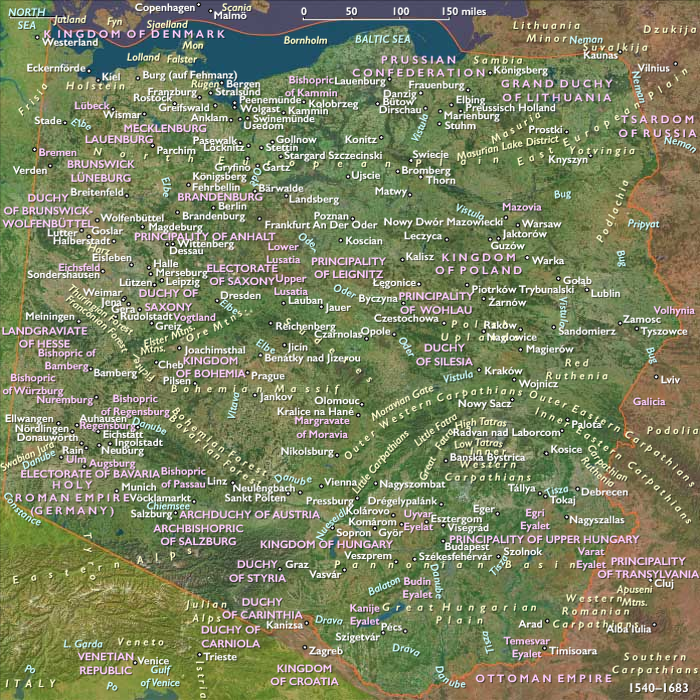
Ferdinand is in a bad financial situation in 1625, despite the subsidies received from Spain and the Pope.
In order to muster an imperial army to continue the war, he has applied to Wallenstein, now one of the richest men in Bohemia: the latter accepts on condition that he can keep total control over the direction of the war, as well as over the booty taken during the operations.
In order to aid the emperor against the Northern Protestants and to produce a balance in the Army of the Catholic League under Johann Tserclaes, Count of Tilly, Wallenstein has offered to raise a whole army for the imperial service following the bellum se ipsum alet principle.
The Latin phrase bellum se ipsum alet or bellum se ipsum alit (English: War feeds itself, French: La guerre doit se nourrir elle-même), and its German rendering Der Krieg ernährt den Krieg, describe the military strategy of feeding and funding armies primarily with the potentials of occupied territories.
The phrase, coined by the ancient Roman statesman Cato the Elder, is primarily associated with the Thirty Years' War.
Appointed imperial generalissimo on April 7, 1625, Wallenstein, viewing the war as a business enterprise, has raised a huge new imperial army at his own expense; he will take his profits in the form of levies imposed on conquered territories.
After receiving his final commission on July 25, 1625, his popularity soon recruits thirty thousand (not long afterwards fifty thousand) men.
Locations
People
- Albrecht von Wallenstein
- Christian IV
- Ernst von Mansfeld
- Ferdinand II
- Johann Tserclaes, Count of Tilly
Groups
- Venice, (Most Serene) Republic of
- Denmark-Norway, Kingdom of
- Catholic League, the (German)
- Habsburg Monarchy, or Empire
Topics
- Protestant Reformation
- Counter-Reformation (also Catholic Reformation or Catholic Revival)
- Thirty Years' War
- Danish War of 1625-29
Commodoties
Subjects
Regions
Subregions
Years: 1625 - 1625
Locations
People
- Albrecht von Wallenstein
- Christian IV
- Ernst von Mansfeld
- Ferdinand II
- Johann Tserclaes, Count of Tilly
Groups
- Venice, (Most Serene) Republic of
- Denmark-Norway, Kingdom of
- Catholic League, the (German)
- Habsburg Monarchy, or Empire
Topics
- Protestant Reformation
- Counter-Reformation (also Catholic Reformation or Catholic Revival)
- Thirty Years' War
- Danish War of 1625-29
Commodoties
Subjects
Regions
Subregions