
Filters:
The Famine of 585 CE in Gaul: …
Years: 585 - 585
The Famine of 585 CE in Gaul: A Crisis Recorded by Gregory of Tours
In 585 CE, Gaul is struck by a severe famine, as recorded by Gregory of Tours in his Historia Francorum (History of the Franks). The famine causes widespread suffering, while opportunistic traders exploit the desperate population, selling scant amounts of grain and wine at exorbitant prices.
1. The Economic Devastation of the Famine
- Food shortages lead to extreme price inflation, making basic necessities unaffordable for most people.
- Gregory of Tours describes grain traders as plundering the people, selling:
- Only a peck of grain (approximately 9 liters) for one-third of a gold piece.
- Only a half measure of wine for the same exorbitant price.
- The high cost of food exacerbates starvation, as the poorest members of society suffer the most.
2. Possible Causes of the Famine
- Climate anomalies – The sixth century had already seen episodes of unusual cold and erratic weather, including the volcanic winter of 536 CE and subsequent crop failures.
- War and political instability – The ongoing Merovingian civil wars between Fredegund, Brunhilda, and Guntram disrupt agriculture and food supply chains.
- Epidemics – The plague outbreaks of the Justinianic era (541–590s CE) may have weakened the workforce, reducing food production.
3. Social Consequences of the Famine
- Hoarding and speculation – Wealthy traders exploit the scarcity of resources, making survival even more difficult for common people.
- Rural depopulation – Starvation leads to mass migrations, with many fleeing the countryside for cities and monasteries in search of aid.
- Breakdown of law and order – Social unrest increases as desperate people loot grain stores or flee to monasteries for protection and charity.
4. Impact on Frankish Society and the Church’s Role
- The Catholic Church emerges as the primary relief provider, as monasteries and bishops distribute what little food they can.
- Gregory of Tours’ account condemns traders for their greed, reinforcing the idea that the Church was a protector of the poor in times of crisis.
- The famine weakens Frankish society, making the kingdom more vulnerable to political turmoil and external threats.
Conclusion: A Devastating Blow to Merovingian Gaul
The famine of 585 CE is one of the many crises that weaken the Frankish realm during the Merovingian period, reinforcing social inequality and destabilizing local economies. Gregory of Tours’ vivid account underscores the harsh realities of medieval food shortages, in which the wealthy profited while the poor perished, highlighting the fragility of early medieval society in the face of natural disasters and human greed.
Locations
People
Groups
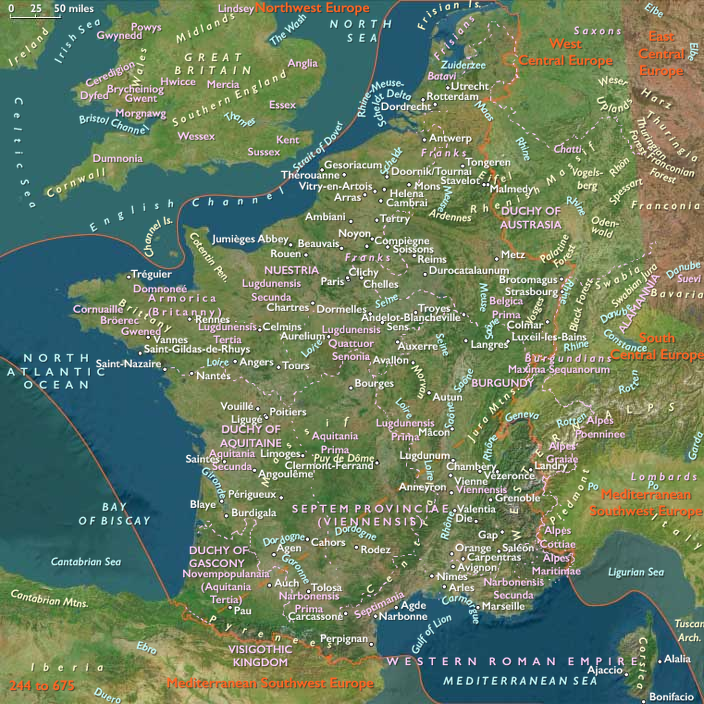
- Soissons (eventually Neustria), Frankish Kingdom of
- Paris, Frankish Kingdom of
- Orléans (eventually Burgundy), Frankish Kingdom of
- Reims and Metz (eventually Austrasia), Frankish Kingdom of
Topics
Commodoties
Subjects
Regions
Subregions
Years: 585 - 585
Locations
People
Groups
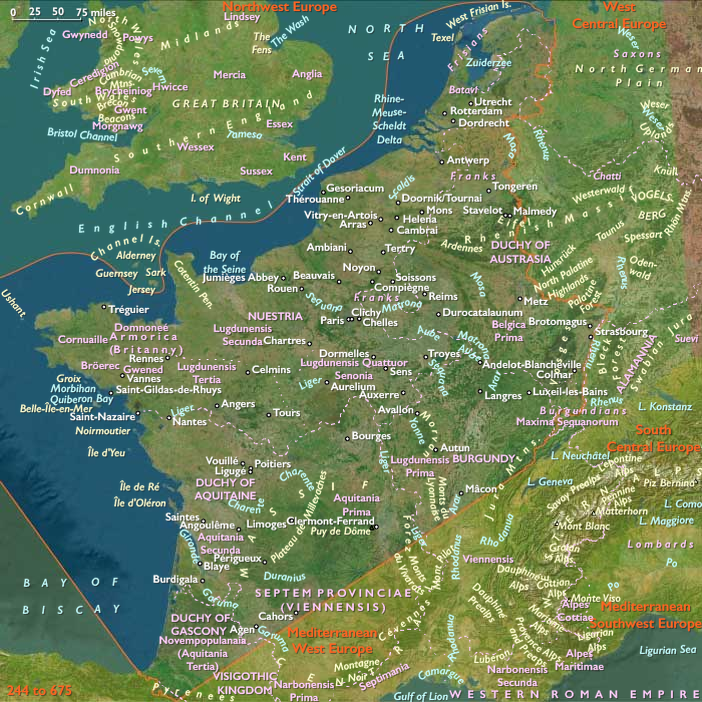
- Soissons (eventually Neustria), Frankish Kingdom of
- Paris, Frankish Kingdom of
- Orléans (eventually Burgundy), Frankish Kingdom of
- Reims and Metz (eventually Austrasia), Frankish Kingdom of
Topics
Commodoties
Subjects
Regions
Subregions