
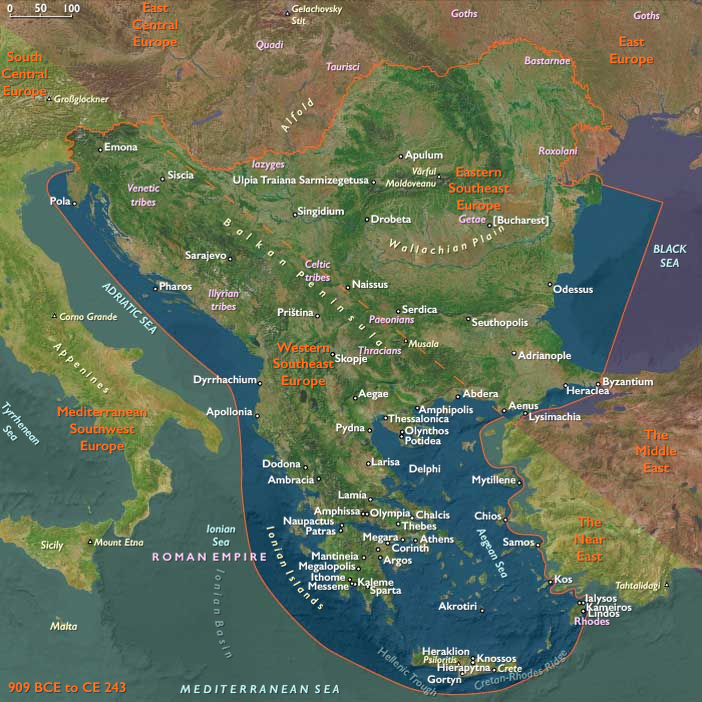
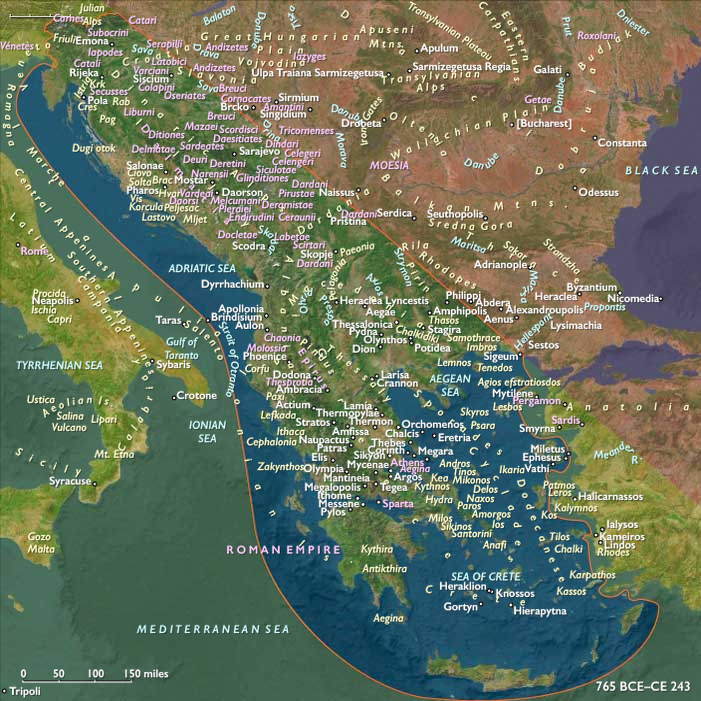
…expanding into Delphi (center of the Amphictyonic …
Years: 290BCE - 290BCE
…expanding into Delphi (center of the Amphictyonic Council) and …
Locations
Groups
Topics
Commodoties
Subjects
Regions
Subregions
Related Events
Filter results
Showing 10 events out of 18 total
Atlantic Southwest Europe: Imperial Rivalry, Cultural Flourishing, and the Consolidation of Power (1504–1515)
Between 1504 and 1515, Atlantic Southwest Europe entered a pivotal period marked by imperial rivalry, political consolidation, maritime expansion, and rich cultural developments. Spain transitioned from the reign of the Catholic Monarchs to that of the Habsburg heir, Charles I (later Emperor Charles V). Portugal, under the prosperous rule of King Manuel I, solidified its global maritime and commercial dominance. Navarre, increasingly vulnerable, found itself the target of aggressive Spanish ambitions.
Political and Military Developments
-
Spain (Castile, León, and Northern Provinces):
- Following Queen Isabella I's death (1504), Castile entered a period of instability as her daughter Juana "the Mad" and husband Philip I ("the Handsome") briefly ruled, until Philip’s early death (1506) plunged Castile into further uncertainty under Ferdinand’s regency.
- Ferdinand II of Aragon, until his death (1516), skillfully managed political tensions and consolidated royal power, laying foundations for Spain’s imperial expansion.
- Ferdinand annexed Navarre (1512), taking advantage of political instability and fears of French alliance. This significantly expanded Spanish influence northwards, incorporating Basque territories and northern Rioja more firmly into Castile.
-
Portugal:
- Under King Manuel I ("the Fortunate"), Portugal reached the zenith of its economic and political power, further consolidating royal authority and pursuing aggressive maritime exploration and expansion.
- Manuel’s diplomatic marriages strategically connected Portugal to major European royal houses, including Spain and the Habsburgs, securing Portugal’s position in European politics.
-
Navarre:
- King John III of Navarre and Queen Catherine of Foix attempted to preserve independence through diplomatic channels. However, Navarre’s political fragility culminated in its invasion and annexation by Ferdinand II in 1512, effectively ending its independent kingdom status south of the Pyrenees, although the northern part retained independence, allied with France.
Economic and Maritime Expansion
-
Spanish Economic and Maritime Growth:
- Spain expanded its colonial enterprise in the Americas significantly, particularly with early expeditions that explored the Caribbean and initiated colonization efforts, bringing substantial wealth from gold and emerging transatlantic trade networks.
- Northern Spanish ports such as Bilbao, Santander, and La Coruña experienced notable growth, thriving on new Atlantic trade routes and fisheries.
-
Portuguese Dominance in Global Trade:
- Portugal solidified dominance over the spice trade routes to India and the East Indies. Manuel I’s policies secured commercial monopolies, establishing Lisbon as the premier European hub for spices, precious metals, and luxury goods.
- Economic prosperity allowed extensive architectural and urban development throughout northern and central Portugal.
-
Navarre’s Economic Realignment:
- With the annexation of southern Navarre, its economy became increasingly tied to Castile’s, while northern Navarre sought alignment with France, marking a significant shift in regional economic dynamics.
Cultural and Social Developments
-
Spanish Cultural Expansion:
- Spain experienced significant artistic and literary developments, notably with the early rise of Spanish humanism and the production of key scholarly works influenced by Italian Renaissance thought.
- The period saw increased centralization of religious institutions, laying foundations for intensified religious orthodoxy and future inquisitorial practices.
-
Portuguese Manueline Renaissance:
- Portugal experienced the cultural zenith of the Manueline style, exemplified by architectural masterpieces such as the Tower of Belém and the continued construction of the Jerónimos Monastery, celebrating maritime achievements and imperial prestige.
- Lisbon became an intellectual center, attracting scholars, navigators, and merchants from across Europe.
-
Navarre’s Cultural Preservation:
- Even amid political turmoil, Navarre continued to preserve its unique cultural identity, particularly in the Basque-speaking territories. However, cultural expressions increasingly reflected the pressures of Spanish and French political influence.
Significance and Legacy
The era 1504–1515 profoundly reshaped Atlantic Southwest Europe, solidifying the region's status as a hub of imperial ambition and global maritime dominance. Spain and Portugal’s imperial expansions laid crucial foundations for their future global empires, significantly impacting world history. The annexation of Navarre dramatically altered regional geopolitics, reshaping cultural identities and political allegiances. These developments marked a clear transition from medieval structures toward the emergence of early modern Europe.
The Navarrese Struggle for Stability and Ferdinand II’s Influence (1507–1508)
Since the mid-15th century, Navarre had been plagued by internal instability, with two major warring factions—the Beaumonts and the Agramonts—constantly vying for power. This instability made Navarre a target for external meddling, particularly from Castile and Aragon under Ferdinand II.
Navarre’s Political Factions and the Castilian Protectorate (1476–1507)
- The Beaumonts (aligned with Castile) and the Agramonts (aligned with France) had been locked in a power struggle.
- In 1476, Ferdinand II of Aragon effectively turned Navarre into a Castilian protectorate, using a mix of alliances and military influence.
- However, from 1482 to 1492, Ferdinand and Isabella were preoccupied with the conquest of Granada, temporarily shifting focus away from Navarre.
- After the fall of Granada (1492) and the death of Isabella I (1504), Ferdinand renewed his pressure on Navarre.
Ferdinand’s Marriage and Renewed Claims on Navarre (1506–1507)
- In 1506, Ferdinand married Germaine of Foix, daughter of John of Foix, Viscount of Narbonne, a claimant to the Navarrese throne.
- This move strengthened Ferdinand’s claim to Navarre through any potential heirs and was meant to undermine his son-in-law, Philip I of Castile.
- By 1507, Ferdinand had regained control of Castile as regent, allowing him to focus once again on Navarre.
The Rebellion of the Count of Lerín and Cesare Borgia’s Death (1507)
- In 1507, Louis de Beaumont, Count of Lerín, Ferdinand’s key ally in Navarre, revolted along with other Beaumont faction lords.
- The ruling monarchs of Navarre, Catherine I and John III of Albret, refused to negotiate with the rebels, declaring that no pardon would be granted to the Count of Lerín.
- During the Battle of Viana (1507), Cesare Borgia, the famous Italian condottiero, fighting for John III of Navarre, was killed by Beaumont knights.
The Defeat of the Beaumont Rebellion (1508)
- After a year-long standoff, in 1508, the Navarrese crown launched an offensive against the Count of Lerín.
- Lerín was occupied, and Louis de Beaumont suffered a severe defeat.
- This marked a temporary victory for the Navarrese monarchy against Ferdinand’s Castilian-backed allies.
Conclusion: The Path to Castilian Annexation
- Despite this victory, Navarre’s independence remained fragile, as Ferdinand continued to seek control over the kingdom.
- By 1512, Castile would invade Navarre outright, completing its annexation under Ferdinand II.
- The conflicts of 1507–1508 were a precursor to the final conquest, demonstrating Navarre’s vulnerability to both internal division and external pressures.
The Count of Lerín’s rebellion and Cesare Borgia’s death in 1507 were key moments in the larger struggle between Navarre and Castile, ultimately leading to Navarre’s downfall and absorption into the Spanish Crown.
Navarre’s Diplomatic Struggles and the Path to Castilian Invasion (1507–1512)
By the early 16th century, the Kingdom of Navarre was caught between two powerful neighbors—France and Castile-Aragon—and struggled to maintain its sovereignty and diplomatic balance. While Ferdinand II of Aragonand King Louis XII of France had initially cooperated after Ferdinand’s marriage to Germaine of Foix, tensions soon escalated over Navarre and Béarn, setting the stage for Navarre’s downfall and Castilian annexation in 1512.
Navarre’s Diplomatic Efforts and Rising Threats from France (1507–1510)
- In 1507, the Navarrese Parliament (Three States of Navarre) appointed a diplomatic delegation to France, led by John of Jaso (father of Saint Francis Xavier) and the Bishop of Lescar.
- However, these efforts were halfhearted and failed to secure strong commitments from France.
- King Louis XII of France, seeking to expand his control, pressured the House of Albret (rulers of Navarre) to relinquish their holdings outside Navarre—including Béarn, Bigorre, and Foix.
- The Albrets refused, and in response, Louis XII used the Parliament of Toulouse to issue a confiscation decree, laying claim to these territories.
Navarre Reacts: Military Mobilization and the Béarn-Navarre Confederation (1510)
- Facing the risk of a French takeover, the Three States of Navarre and the States-General of Béarn convened and passed a military mobilization decree.
- A Béarn-Navarre Confederation was created, establishing a permanent joint defense provision against external threats.
- However, Ferdinand II of Aragon was closely monitoring these events, seeing an opportunity to destabilize Navarre from within.
- He renewed contacts with his allies in the Navarrese Beaumont party, a pro-Castilian faction that opposed the ruling House of Albret.
The Italian Wars and Navarre’s Precarious Position (1510–1511)
- By 1510, the Italian Wars had shifted dramatically, impacting Navarre’s diplomatic options.
- Pope Julius II, one of the most ambitious popes of the era, initially formed the Holy League against Venice in 1508 but later turned against France.
- On August 4, 1511, Julius II declared a new Holy League against France, aligning himself with Ferdinand IIin the Spanish-French power struggle over Italy.
- Navarre refused to join the League, maintaining a neutral position, but its stance was increasingly precarious.
Ferdinand II Declares War on France and Prepares to Invade Navarre (1512)
- In March 1512, Ferdinand II of Aragon declared war on France, seizing the opportunity to expand his territorial ambitions.
- The death of Gaston de Foix (April 1512), the brilliant French general, left a power vacuum over the Pyrenean holdings of the House of Albret.
- With Gaston’s death, the full claim over the Pyrenean territories of the Albrets fell to Germaine of Foix, Ferdinand’s wife, giving him a legal pretext for intervention.
The Path to Castilian Annexation
- Ferdinand II now had both a military and legal justification to move against Navarre.
- With French forces weakened in Italy, Castile-Aragon prepared for the full-scale invasion of Navarre, which would occur in July 1512.
Conclusion: The Inevitable Fall of Navarre
- Caught between two powerful rivals, Navarre’s attempts at neutrality and military defense failed to prevent its eventual annexation by Castile.
- Ferdinand II’s long-term strategy—first using diplomacy, then military force—ensured that Navarre would fall under Castilian rule.
- By the end of 1512, Navarre’s independence was effectively lost, marking one of the final territorial conquests of Ferdinand’s reign.
The Castilian Invasion of Navarre (1512): Ferdinand II’s Final Move for Annexation
By 1512, the Kingdom of Navarre was caught in the geopolitical struggle between France and Castile. Although King Louis XII of France began to adopt a more conciliatory tone toward Queen Catherine and King John III of Navarre, Ferdinand II of Aragon had no intention of allowing Navarre to remain independent.
Navarre’s Struggle for Neutrality and Diplomatic Maneuvering (1512)
- Queen Catherine and King John III of Navarre sought to negotiate with both France and Castile, attempting to preserve Navarre’s sovereignty and neutrality.
- Ferdinand II of Aragon pressured Navarre with troop movements along the border, mixing diplomatic overtures with direct military threats.
- In February 1512, Ferdinand allied with England, leading to a joint English-Castilian military intervention in Guyenne (Aquitaine), increasing tensions in the region.
Ferdinand’s Propaganda and Preparations for Invasion
- Recognizing that military conquest needed political justification, Ferdinand orchestrated a propaganda campaign labeling the Navarrese monarchy as schismatic.
- Castilian diplomats lobbied Rome for months, securing papal bulls from Pope Julius II, which framed the invasion as a religious crusade.
- The Holy League formally requested permission in June 1512 to move English and Castilian troops through Navarre into France, further justifying Spanish intervention.
The Treaty of Blois and the Final Countdown (July 1512)
- Navarre continued diplomatic negotiations with France, leading to the Fourth Treaty of Blois (July 18, 1512), which:
- Guaranteed mutual French-Navarrese assistance to uphold Navarre’s neutrality.
- Acknowledged the growing English threat after their landing in Hondarribia, Gipuzkoa, a Basque province under Castilian suzerainty.
- Despite the treaty, Ferdinand ignored Navarre’s neutrality and ordered an invasion the next day (July 19, 1512).
The Castilian Invasion Begins (July 1512)
- On July 19, 1512, Ferdinand’s troops, led by Don Fadrique de Toledo, Duke of Alba, crossed the border from Álava into Navarre.
- Fadrique had experience in conquest, having been one of the leading commanders in the fall of Granada (1492).
- Meanwhile, on July 10, 1512, a Gipuzkoan militia had already entered Navarre from the northwestern border, capturing the fortified village of Goizueta.
Conclusion: The Fall of Navarre is Imminent
- Ferdinand II strategically combined military pressure, diplomacy, and religious justification to execute his long-planned annexation of Navarre.
- With Spanish troops pouring into Navarre from multiple fronts, Queen Catherine and King John III were left scrambling to defend their kingdom.
- By July 1512, Navarre was on the brink of collapse, marking the beginning of its absorption into the Crown of Castile.
The invasion of Navarre in 1512 was one of Ferdinand’s final territorial conquests, completing his vision of unifying Iberia under Spanish rule and ensuring that Navarre would never again regain full independence.
The Fall of Pamplona and the Castilian Conquest of Navarre (July 1512)
Following Ferdinand II of Aragon’s invasion of Navarre on July 19, 1512, Castilian forces advanced rapidly, meeting little resistance. By July 25, 1512, Pamplona, the capital of Navarre, surrendered, marking a decisive turning point in the conquest.
The Overwhelming Castilian Force and Navarrese Retreat
- Ferdinand’s army numbered 6,000 veteran soldiers, with a total force of 15,000 including support personnel.
- In contrast, Pamplona’s population was only around 10,000, and Catherine I and John III of Navarre were able to muster only 500 troops from loyal lords.
- Realizing they were massively outnumbered, Catherine and John III abandoned Pamplona, retreating first to Tudela, then veering eastward to Lumbier (Irunberri) before crossing into Lower Navarre and Béarn.
Pamplona’s Surrender (July 25, 1512)
- With the royal family in exile and Castilian troops on the outskirts, Pamplona’s weakened defenses and the threat of looting from the Duke of Alba pressured local authorities into surrendering without a fight.
- Upon entering the city, the Castilian administration demanded an oath of loyalty to Ferdinand II, but the Navarrese officials refused, citing their previous oath to King John III, who was still alive and in exile.
The Submission of Navarre’s Fortresses
- Castilian messengers were immediately dispatched to the remaining fortresses in Navarre, ordering them to surrender.
- Most complied, but a few key strongholds resisted:
- Amaiur (Baztan)
- Estella-Lizarra
- Tudela
- Saint-Jean-Pied-de-Port
These fortresses became the final pockets of resistance against Castilian rule, but with Pamplona fallen, Navarre’s fate was largely sealed.
Conclusion: The Beginning of Castilian Rule Over Navarre
- Pamplona’s surrender marked the effective annexation of Upper Navarre by Castile.
- Catherine and John III, now in exile in Béarn, launched several attempts to reclaim Navarre, but none succeeded.
- Over the next few years, Castilian forces would systematically eliminate the last strongholds of Navarrese resistance, ensuring Navarre’s permanent absorption into the Crown of Castile.
The events of July 1512 were a turning point in Iberian history, as Ferdinand II completed one of his last territorial conquests, cementing Spain’s control over Navarre and further consolidating Iberian unification.
Ferdinand II Declares Himself King of Navarre and the Siege of Tudela (August 1512)
By late August 1512, Ferdinand II of Aragon declared himself King of Navarre de jure proprio (by his own right), asserting that Navarre was now legally and permanently part of his dominions. This marked a crucial step in the full annexation of Navarre into the Crown of Castile and Aragon.
Ferdinand’s Justification for His Claim
- Ferdinand II, having successfully occupied Pamplona and most of Navarre, sought to legitimize his conquest through a legal claim to the throne.
- His propaganda campaign, backed by papal bulls issued by Pope Julius II, framed the invasion as a crusade against a schismatic monarchy, even though Navarre had remained neutral in the Italian Wars.
- By declaring himself King of Navarre, Ferdinand sought to erase the legitimacy of Queen Catherine I and King John III of Albret, who had fled to Lower Navarre and Béarn.
The Siege of Tudela (August–September 1512)
- Tudela, a major stronghold in southeastern Navarre, remained one of the last cities resisting Castilian control.
- Alfonso of Aragon, Ferdinand’s bastard son and Archbishop of Zaragoza, was given command of the siege.
- He led 3,000 infantry and 300 cavalry, determined to subdue the city by force.
- The siege of Tudela became one of the final major battles of the Castilian invasion, as Ferdinand aimed to eliminate all resistance in Upper Navarre.
Outcome and Legacy
- Tudela’s resistance delayed Castile’s total victory, but ultimately, the city would fall to Castilian forces.
- The siege further solidified Castilian dominance over Upper Navarre, leaving only a few remaining rebel strongholds.
- By 1513, Navarre’s integration into Castile was virtually complete, though Navarrese loyalists and the House of Albret continued their fight from Béarn and Lower Navarre.
Ferdinand’s declaration as King of Navarre in 1512 and the siege of Tudela were key moments in the final conquest of Navarre, ensuring Spanish control over the kingdom for centuries to come.
The Surrender of Tudela and the Final Stage of Navarre’s Conquest (September 9, 1512)
Despite the determined loyalty of Tudela’s authorities to the Navarrese crown, morale among the defenders had collapsed due to:
- The Pope’s bull legitimizing Ferdinand II’s invasion, labeling Navarre as schismatic.
- The overwhelming military advantage of the Castilian-Aragonese forces.
- The hopelessness of resistance, as made clear in letters sent by Tudela’s defenders to King John III of Navarre, acknowledging their dire situation.
To prevent further suffering, Tudela surrendered on September 9, 1512, avoiding:
- Unnecessary bloodshed in a hopeless fight.
- The pillaging of the city, which often followed prolonged resistance.
- Further confiscations of property and political reprisals.
Alfonso of Aragon’s Oath to Respect Navarrese Laws
- Alfonso of Aragon, the bastard son of Ferdinand II and Archbishop of Zaragoza, led the victorious Castilian-Aragonese forces.
- Following Ferdinand’s instructions, Alfonso took an oath on September 9, 1512, promising to respect Navarre’s traditional laws and institutions.
- However, in practice, Castilian administration gradually eroded Navarre’s autonomy, integrating Upper Navarre into the Spanish Crown.
Consequences of Tudela’s Fall
-
The Final Blow to Navarrese Resistance in Upper Navarre
- With Pamplona and Tudela surrendered, only a few isolated fortresses remained under Navarrese control.
- Navarre’s monarchs, Catherine I and John III, remained in exile in Béarn, unable to mount an effective counterattack.
-
Castile’s Near-Complete Control Over Upper Navarre
- By 1513, Upper Navarre was fully integrated into the Crown of Castile, though Lower Navarre (north of the Pyrenees) remained under the House of Albret.
-
Navarre Becomes a Spanish Territory
- In 1515, the Cortes of Burgos formally annexed Upper Navarre to the Crown of Castile, finalizing Ferdinand’s conquest.
Conclusion: The End of an Independent Navarre
The surrender of Tudela on September 9, 1512, marked the effective end of Navarre’s independence. Though Alfonso of Aragon swore to respect Navarrese laws, Castilian rule gradually eroded local autonomy, paving the way for Navarre’s full integration into Spain. The House of Albret would continue to resist from Lower Navarre, but Ferdinand II’s conquest of Upper Navarre was now complete.
The Castilian Conquest of Lower Navarre and the Struggle for Control (September 1512)
By late August 1512, Ferdinand II of Aragon’s forces had effectively conquered Upper (Iberian) Navarre, leaving only Lower Navarre (Ultrapuertos) north of the Pyrenees under the control of the exiled Navarrese monarchs, Catherine I and John III of Albret. However, Ferdinand was not content with stopping at the Pyrenees and launched an incursion into Lower Navarre, using brutal tactics to suppress resistance.
The Castilian Advance into Lower Navarre (September 1512)
- The Duke of Alba, leading 3,000 infantry, 300 cavalry, and 400 artillery men, pushed northward through the Pyrenean valleys of Aezkoa, Salazar, and Roncal.
- His troops crossed into Lower Navarre, taking the Chapel of Roncevaux (Roncesvalles) by surprise, setting fire to the village.
- On September 10, 1512, Castilian forces led by Colonel Villalba (or Beaumont party lord Martín de Ursúa, depending on the source) entered St-Jean-Pied-de-Port (Donibane Garazi), only to find that the garrison under the Lord of Miossens (an Albret ally) had abandoned the fortress.
Pillage, Destruction, and Repression
- Despite securing the town without resistance, the Castilian troops pillaged and burned villages across Lower Navarre, spreading terror among the local population.
- The Roman Catholic Church appeared to support the enslavement of the subdued Navarrese, further legitimizing the conquest.
- All Navarrese lords in Lower Navarre were ordered to submit, while the Duke of Alba gave the order to demolish tower houses, key defensive structures in Basque noble estates.
- Apple and fruit orchards around St-Jean-Pied-de-Port were cut down, devastating local agriculture and leaving the population struggling for subsistence.
Ferdinand’s Demand for the Surrender of the Navarrese Crown
- As Navarre’s monarchs remained in exile in Béarn, Ferdinand II demanded their full capitulation.
- However, he offered negotiations, proposing that Catherine and John III could remain rulers of Navarre if they sent their heir, Henry II of Navarre, to be raised in the Castilian court—a clear attempt to control Navarre through a puppet king.
- The Navarrese monarchs flatly refused, unwilling to surrender their sovereignty to Castile.
The French Presence and Castilian Stalemate
- A French army was stationed in Bayonne (Labourd, Guyenne), watching for English or Castilian movements, but France did not yet intervene militarily.
- Ferdinand still hoped to invade Guyenne, targeting Bayonne, an important French port with strategic value for Navarre.
- However, time was running out for the Castilians in Lower Navarre, as they faced:
- Food and supply shortages.
- Harsh weather conditions in the Pyrenees.
- Mounting unrest among their veteran troops.
Mutiny in St-Jean-Pied-de-Port and the Castilian Withdrawal
- In St-Jean-Pied-de-Port, around 1,000 discontented Castilian troops mutinied, refusing to endure the worsening supply crisis and weather conditions.
- To prevent full-scale desertion, the Duke of Alba allowed the mutineers to relocate to Burgui and Salazar, breaking up the rebellion without violence.
- The mutiny weakened Castilian control over Lower Navarre, ultimately forcing their withdrawal from the region.
Conclusion: The Limits of Castilian Expansion
- While Ferdinand II successfully annexed Upper Navarre, his attempt to conquer Lower Navarre stalled, leading to a strategic retreat.
- French forces in Bayonne and local Navarrese resistance prevented Ferdinand from fully absorbing the kingdom.
- Lower Navarre remained under the House of Albret, and their exiled monarchs would continue resisting Spanish rule for decades.
Though Ferdinand’s campaign crushed Navarrese independence south of the Pyrenees, the invasion of Lower Navarre proved unsustainable, marking the limits of Castile’s territorial ambitions in the region.
The Navarrese Counteroffensive and English Withdrawal (October 1512)
By mid-October 1512, King John III of Navarre, determined to reclaim his kingdom from Ferdinand II of Aragon's forces, assembled a 15,000-strong army composed of:
- Navarrese loyalists
- Gascon mercenaries from Béarn and Guyenne
- Landsknechts, elite German infantry
With this force, John III launched a counteroffensive, advancing into Gipuzkoa and the Navarrese heartland, seeking to retake key fortresses and push back Castilian occupation.
Navarrese Three-Pronged Invasion
The counterattack was structured into three military columns, each with distinct objectives:
-
Siege of Hondarribia and Donostia (San Sebastián)
- The first column laid siege to Hondarribia and Donostia, major Castilian-held towns in Gipuzkoa.
- The Navarrese also occupied smaller surrounding towns to divert Castilian forces from reinforcing Pamplona, which remained under siege.
-
Central Assault on Castilian Positions in Navarre
- The main column advanced into the heartland of Navarre, directly challenging Castilian control over Pamplona and surrounding fortresses.
-
Diversionary Raids in Eastern Navarre
- A third column targeted weaker Castilian outposts, harassing supply lines and disrupting Spanish logistics.
The English Abandon Ferdinand II and Withdraw
- The English, originally aligned with Ferdinand II in the Holy League, had become frustrated with his shifting political priorities and lack of clear military coordination.
- By late 1512, the English decided to leave the war, returning home after raiding and sacking several towns and villages, including Errenteria.
- Their departure weakened Castilian military strength, further encouraging the Navarrese resistance.
Significance of the Counterattack
- The Navarrese offensive demonstrated that John III was still capable of resisting Ferdinand’s occupation.
- The loss of English support weakened Castile’s military advantage, making Ferdinand’s hold on Navarre more vulnerable.
- The siege of Hondarribia and Donostia placed pressure on Castilian forces in Gipuzkoa, forcing them to split their army between defending northern and southern fronts.
Conclusion: Navarre’s Fight for Survival Continues
- Although John III’s counteroffensive created serious challenges for Castile, Navarre remained heavily outmatched in resources and manpower.
- The war was not yet decided, and the fate of Navarre’s independence still hung in the balance.
- The events of late 1512 marked the final phase of the struggle for Navarre, setting the stage for the last major battles of the campaign.
The Navarrese-French Counteroffensive Gains Momentum (October 1512)
By October 1512, John III of Navarre, with support from France, launched a full-scale counteroffensive to retake his kingdom from Ferdinand II of Aragon’s occupying forces. This counterattack, reinforced by French and German troops, put Castilian forces under severe pressure, forcing them into a defensive retreat.
The Second Expedition: The Duke of Longueville’s Army
- A second French-Navarrese army, commanded by the Duke of Longueville, was assembled with:
- 8,000 Gascons (light infantry from Gascony, skilled in skirmishing).
- 1,000 Navarrese loyalists.
- 1,500 Landsknechts, elite German mercenary pikemen.
- Corresponding artillery, bringing siege cannons to counter Castilian fortifications.
Victory at the Battle of Ainhize (October 19, 1512)
- Setting out from Peyrehorade, the army crossed into Navarre, engaging Castilian forces at Ainhize.
- On October 19, 1512, Longueville’s forces decisively defeated the Castilian troops, forcing them into retreat.
Strategic Movements in the Pyrenees
- A third Navarrese-French column advanced south across the Pyrenees from Roncal (Erronkari), reaching Burgui.
- Another Navarrese column marched from Salazar, heading toward Pamplona, threatening to cut off Castilian reinforcements from the south.
The Duke of Alba’s Tactical Withdrawal
- Fearing his communication lines with Pamplona were at risk, Ferdinand’s commander, the Duke of Alba, decided to withdraw to the capital.
- However, before retreating, he left a well-equipped Castilian detachment in St-Jean-Pied-de-Port, ensuring a defensive stronghold in Lower Navarre.
Significance of the Counteroffensive
- Navarre’s counterattack marked a major turning point, proving that the kingdom was not yet fully conquered.
- The French-backed forces had recaptured key strongholds, forcing Castile into a defensive posture.
- The Duke of Alba’s retreat showed that Castile’s hold over Navarre was fragile, increasing hopes for full Navarrese restoration.
However, despite these early victories, the war was not over, and Ferdinand II of Aragon was unlikely to relinquish Navarre without a final fight. The next phase of the campaign would determine Navarre’s ultimate fate.
Years: 290BCE - 290BCE
Locations
Groups
Topics
Commodoties
Subjects
Regions
Subregions