
Cossack Hetman Ivan Mazepa's alliance with Peter …
Years: 1708 - 1708
October
Cossack Hetman Ivan Mazepa's alliance with Peter of Russia has caused heavy losses of Cossacks, and Russian interference in the Hetmanate's internal affairs.
When the Tsar refuses to defend Ukraine against the Polish King Stanislaus Leszczynski, an ally of Charles XII of Sweden, Mazepa and the Zaporozhian Cossacks alliy themselves with the Swedes on October 28, 1708.
Mazepa is hesitant and gathers the Starshyna Council to decide the further course of actions.
The council, composed of Cossack military officers, approves the negotiations with Charles.
He leaves his last Cossack reserves in Baturyn and moves to the Desna River for negotiations with Charles.
When Peter hears of this move, he sends Aleksandr Menshikov to Baturyn.
Evidence of settlement in the area of present-day Baturyn dates back to the Neolithic era, with Bronze Age and Scythian remains also having been unearthed.
According to some modern writers, the earliest fortress at Baturyn would have been created by the Grand Principality of Chernihiv in the eleventh century.
The contemporary name for the settlement, however, is first mentioned in the 1625, likely referring to the fortress of Stefan Batory, King of Poland, Prince of Transylvania, and Grand Duke of Lithuania, which had been built and named in his honor.
The area had been part of the Polish-Lithuanian Commonwealth (in the Kijów Voivodeship of the Crown of Poland) since before the Union of Lublin.
Control of the town had been wrested from the Commonwealth during the Khmelnytsky Uprising, after which natives of Ruthenia had gained some degree of autonomy under Hetman Bohdan Khmelnytsky and his Cossack state.
Baturyn had in 1648 been transformed into a Cossack regional center (sotnia), first hosting the Starodub Cossack Regiment, and then the Nizhyn Regiment.
Home to four hundred and eighty-six Cossacks and two hundred and seventy-four villagers by 1654, Baturyn had been granted Magdeburg Rights.
As the settlement has grown, more merchants have flocked to it, and great fairs are held quarterly.
The capital of the Cossack Hetmanate, an autonomous Cossack republic in Left-bank Ukraine, has been located in Baturyn from 1669.
The area has prospered under the rule of Mazepa, increasing in size and population (with upwards of twenty thousand residents).
The period of the Ruin was effectively over when Mazepa was elected hetman, and brought stability to the state.
He has united Ukraine which, once again, is under the rule of one hetman.
The Hetmanate has flourished under his rule, particularly in literature, and architecture.
The architectural style that has developed during his reign is called the Cossack Baroque, distinct from the Western European Baroque in having more moderate ornamentation and simpler forms, and as such is considered more constructivist.
Baturyn boasts forty churches and chapels, two monasteries and a college for government officials and diplomats (the Kantseliarsky Kurin).
Locations
People
- Adam Ludwig Lewenhaupt
- Aleksandr Danilovich Menshikov
- Augustus II the Strong
- Charles XII of Sweden
- Ivan Mazepa
Groups
- Cossacks, Zaporozhian
- Sweden, (second) Kingdom of
- Russia, Tsardom of
- Polish-Lithuanian Commonwealth (Commonwealth of the Two Nations)
- Kalmyk people
- Cossack Hetmanate
- Cossack Hetmanate
Topics
Commodoties
Subjects
Regions
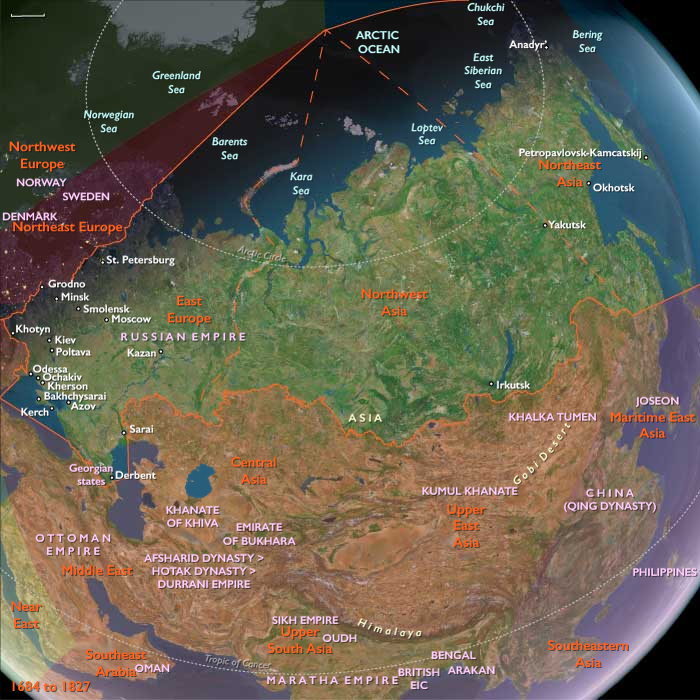
Subregions
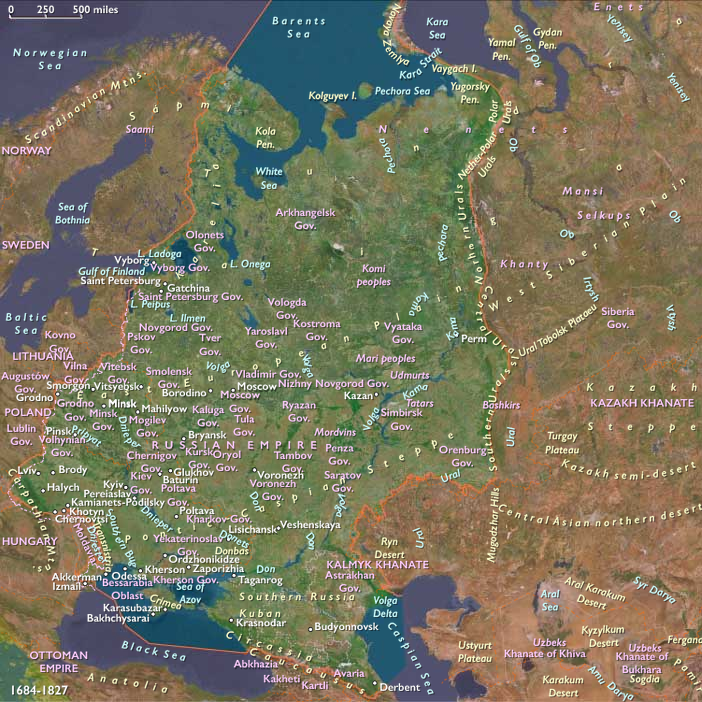
Related Events
Showing 10 events out of 28695 total
Years: 1708 - 1708
October
Locations
People
- Adam Ludwig Lewenhaupt
- Aleksandr Danilovich Menshikov
- Augustus II the Strong
- Charles XII of Sweden
- Ivan Mazepa
Groups
- Cossacks, Zaporozhian
- Sweden, (second) Kingdom of
- Russia, Tsardom of
- Polish-Lithuanian Commonwealth (Commonwealth of the Two Nations)
- Kalmyk people
- Cossack Hetmanate
- Cossack Hetmanate
Topics
Commodoties
Subjects
Regions
Subregions