
Events in Thrace cause two of Philip’ …
Years: 339BCE - 339BCE
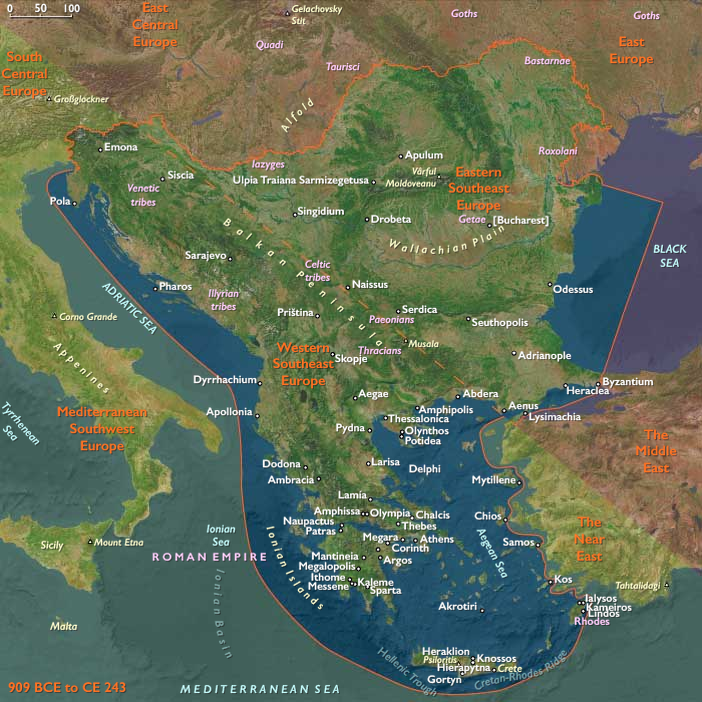
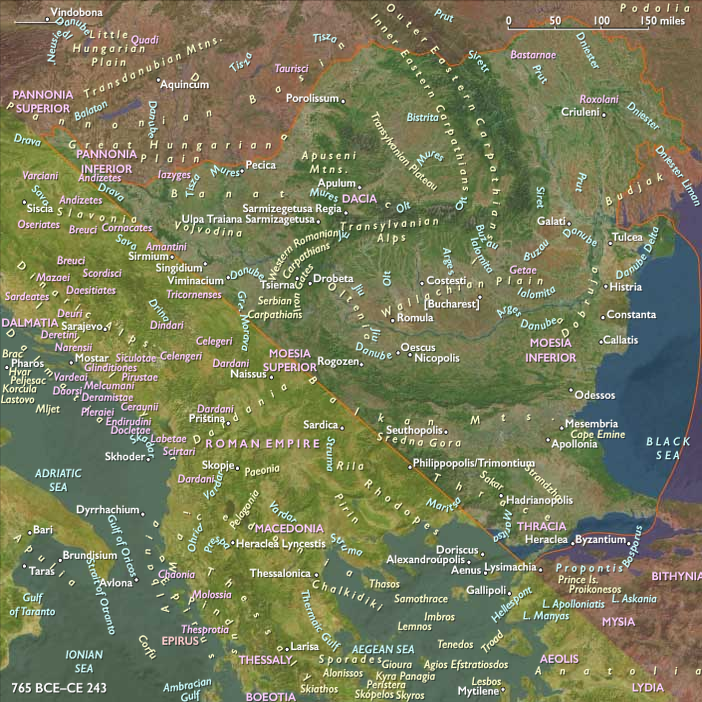
Events in Thrace cause two of Philip’ of Macedon’s Greek allies, the cities of Perinthus (later called Heraclea, present-day Marmaraereglisi) and Byzantium, to review their position.
Consequently, Philip attacks Perinthus in 340 BCE.
Perinthus, which at this time seems to have been more important than Byzantium itself, is helped by Byzantium and other Greek communities, including Athens, and even by the Persian satraps (which represents the first collision between the two great powers, Macedon and Persia).
Despite all Philip's efforts (and artillery), Perinthus holds out.
He also switches his siege engines from Perinthus against Byzantium, to which Artaxerxes sends support also, but he makes no easy progress here either.
Athens having declared war on Macedon in 340, Phocion aids in the defense of Byzantium, but from about this time he regards the Macedonians as unstoppable and cultivates diplomatic relations with them in order to avoid outright conquest.
Artaxerxes, having rebuilt Persian power, combines forces with Phocion's Athenian forces at Byzantium in 340-339 to oust the Macedonians from Anatolia.
The declaration of war by Athens in 340 has enabled Philip to raise the two sieges without undue loss of face, though he has failed to establish a threat to the Athenian corn route to southern Russia.
It is possible that the reason for Philip's abandonment of at least the second of these sieges is not military (siege engines are now virtually irresistible when applied to their target over time) but political.
Philip's gaze is now fixed on Athens, the greater enemy and the greater prize.
Athens is to be intimidated now by invasion of its territory through central Greece, where the key position is held by Thebes, his ally hitherto, but of late a dissatisfied and recalcitrant one.
His services to it in the Sacred War have been more than offset by his new position as its successful rival for leadership in and through the Amphictyony, and his moves toward hegemony in Greece can be seen in Thebes as encroachments.
Locations
People
Groups
- Thebes, City-State of
- Greece, classical
- Macedon, Argead Kingdom of
- Byzantium (Ionian Greek) city-state of
- Boeotian League
- Achaemenid, or First Persian, Empire
- Athens, City-State of
- Athenian Empire or Confederacy, Second
Topics
- Iron Age Europe
- Iron Age Cold Epoch
- Classical antiquity
- Macedon, Rise of
- Sacred War, Fourth (Amphissean War)
Commodoties
Subjects
Regions
Subregions
Related Events
Showing 10 events out of 64588 total
Years: 339BCE - 339BCE
Locations
People
Groups
- Thebes, City-State of
- Greece, classical
- Macedon, Argead Kingdom of
- Byzantium (Ionian Greek) city-state of
- Boeotian League
- Achaemenid, or First Persian, Empire
- Athens, City-State of
- Athenian Empire or Confederacy, Second
Topics
- Iron Age Europe
- Iron Age Cold Epoch
- Classical antiquity
- Macedon, Rise of
- Sacred War, Fourth (Amphissean War)
Commodoties
Subjects
Regions
Subregions