
Eustace the Monk had once belonged to …
Years: 1217 - 1217
August
Eustace the Monk had once belonged to a monastic order, but he had broken his vows and became a pirate along with his brothers and friends.
His early successes at this endeavor had attracted many lawless men and his pirates had become a menace to shipping in the English Channel.
Eustace from 1205 to 1208 for King John I of England, with whose blessing he had seized the Channel Islands and was allowed to hold them for John, while using Winchelsea as his English base.
Eustace had switched his allegiance to France in 1212 and was chased out of England.
The year 1215 saw his ships transporting war engines to the English barons who opposed John.
When Prince Louis sailed for London, he traveled in Eustace's fleet.
It was thanks to Eustace's help that Louis was able to quickly capture London and the Cinque Ports.
After Louis’s lieutenants were badly defeated at the Battle of Lincoln on May 20, 1217, Prince Louis had raised his siege of Dover Castle and retired to London.
Signaling his willingness to negotiate an end to the struggle, he had agreed to meet at Brentford with adherents of the boy-king Henry III of England.
The victor of Lincoln, William Marshal, first Earl of Pembroke and Louis came close to an agreement.
However, in order to pardon the bishops who had gone over to Louis' cause, Pope Honorius III's acquiescence was required.
Since this was not possible without a long journey to Rome, the negotiations had broken down.
Louis has received the news that reinforcements and supplies will soon arrive from France.
Encouraged, he resolves to fight on.
The French fleet sets south from Calais on August 24, in clear weather.
Eustace the Monk has equipped the ships but command of the knights and soldiers is held by Robert of Courtenay.
The wife of Prince Louis, Blanche of Castile, is also an important organizer of the relief effort.
Opposing the French is Philip d'Aubigny, commander of the southeastern coast.
The Earl of Pembroke had arrived at New Romney on August 19 and summoned the sailors of the Cinque Ports.
The English mariners had complained bitterly of bad treatment at the hands of King John, but Pembroke has convinced them to fight with the promise of great spoils should they defeat the French.
These consist of nine hundred troops and supplies on board ten warships and seventy small craft.
De Burgh has a fleet of sixteen large ships and about twenty appropriated merchant vessels; he sails out from Dover to intercept the French before they could land.
De Burgh, in a novel move, attacks from upwind, first launching a shower of crossbow bolts, followed by quicklime dust to blind the French.
After this, the ships close for the usual boarding and hand-to-hand combat, in which the English are able to destroy or capture three-quarters of Eustace's ships.
Eustace is able to get away, but in the naval Battle of Sandwich in August he is captured and beheaded.
Locations
People
- Blanche of Castile
- Eustace the Monk
- Henry III of England
- Hubert de Burgh 1st Earl of Kent
- Louis VIII of France
- Pope Honorius III
- Stephen Langton
- William Marshal
Groups
- Alba (Scotland), Scots Kingdom of
- France, (Capetian) Kingdom of
- Catharism (Albigenses)
- England, (Plantagenet, Angevin) Kingdom of
Topics
Commodoties
Subjects
- Commerce
- Watercraft
- Labor and Service
- Conflict
- Mayhem
- Faith
- Government
- Custom and Law
- Technology
- Piracy
Regions
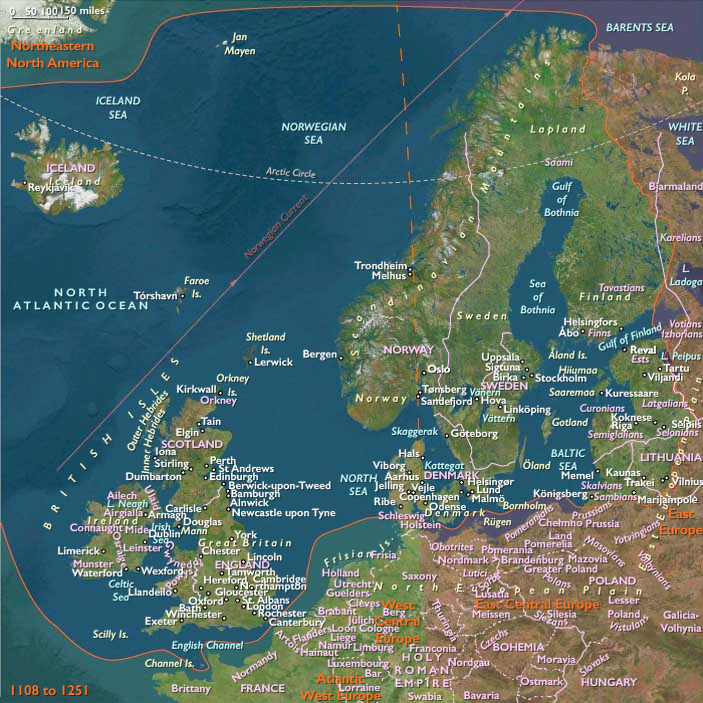
Subregions
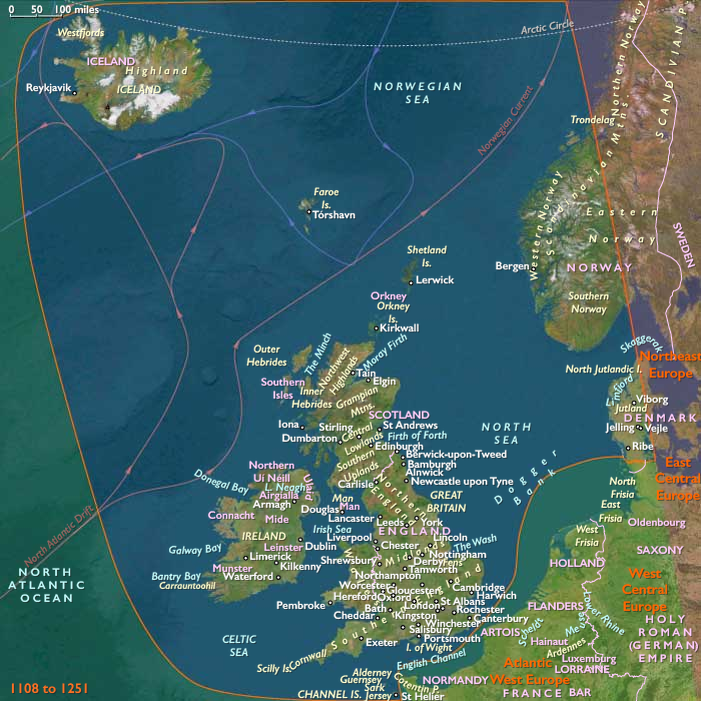
Related Events
Showing 2 events out of 2 total
Years: 1217 - 1217
August
Locations
People
- Blanche of Castile
- Eustace the Monk
- Henry III of England
- Hubert de Burgh 1st Earl of Kent
- Louis VIII of France
- Pope Honorius III
- Stephen Langton
- William Marshal
Groups
- Alba (Scotland), Scots Kingdom of
- France, (Capetian) Kingdom of
- Catharism (Albigenses)
- England, (Plantagenet, Angevin) Kingdom of
Topics
Commodoties
Subjects
- Commerce
- Watercraft
- Labor and Service
- Conflict
- Mayhem
- Faith
- Government
- Custom and Law
- Technology
- Piracy
Regions
Subregions