
The Napoleonic wars of the early nineteenth …
Years: 1684 - 1827
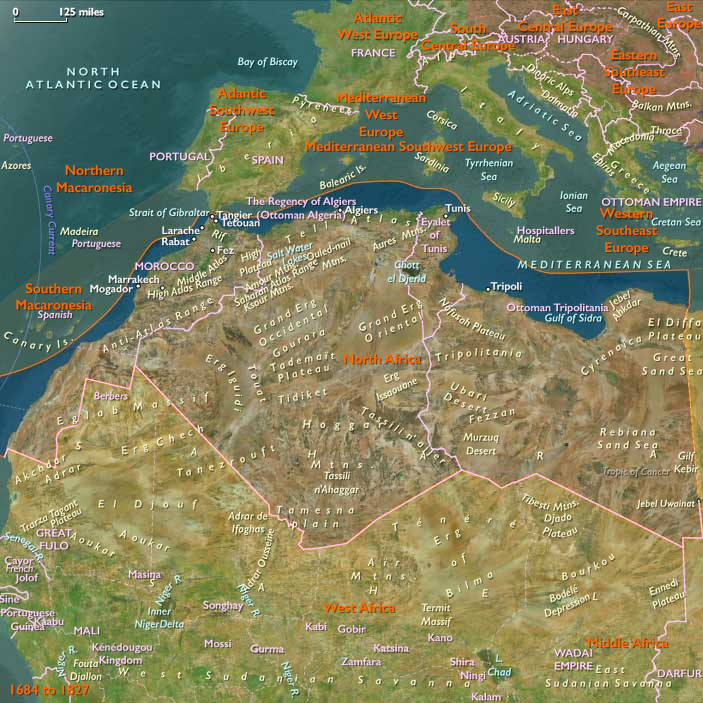
The Napoleonic wars of the early nineteenth century divert the attention of the maritime powers from suppressing what they derogatorily call piracy, but when peace is restored to Europe in 1815, Algiers finds itself at war with Spain, the Netherlands, Prussia, Denmark, Russia, and Naples.
In March of this year, in what becomes the Second Barbary War, the United States Congress authorizes naval action against the Barbary States, the then-independent Muslim states of Morocco, Algiers, Tunis, and Tripoli.
Commodore Stephen Decatur is dispatched with a squadron of ten warships to ensure the safety of United States shipping in the Mediterranean and to force an end to the payment of tribute.
After capturing several corsairs and their crews, Decatur sails into the harbor of Algiers, threatens the city with his guns, and concludes a favorable treaty in which the dey agrees to discontinue demands for tribute, pay reparations for damage to United States property, release United States prisoners without ransom, and prohibit further interference with United States trade by Algerian corsairs.
No sooner has Decatur set off for Tunis to enforce a similar agreement than the dey repudiates the treaty.
The next year, an Anglo-Dutch fleet, commanded by British admiral Viscount Exmouth, delivers a nine-hour bombardment of Algiers.
The attack immobilizes many of the dey's corsairs and obtains from him a second treaty that reaffirms the conditions imposed by Decatur.
In addition, the dey agrees to end the practice of enslaving Christians.
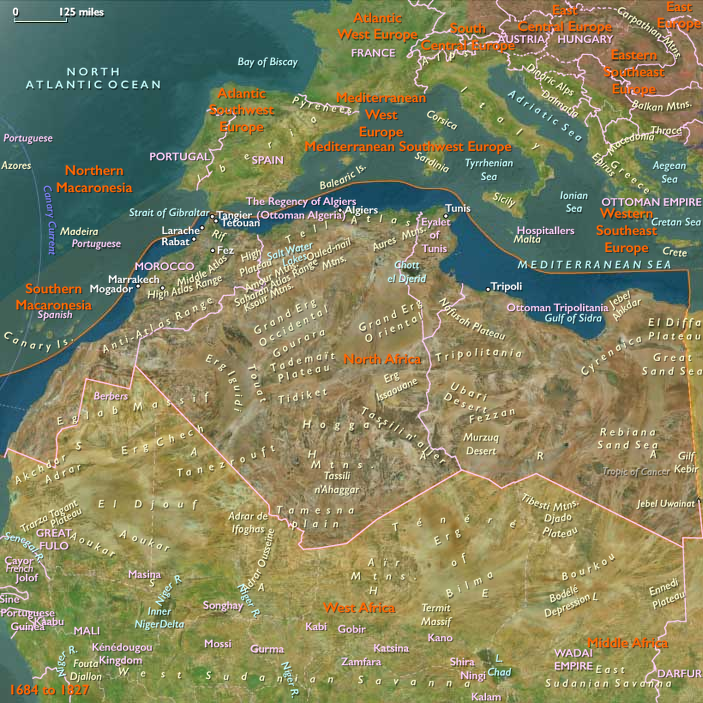
In March of this year, in what becomes the Second Barbary War, the United States Congress authorizes naval action against the Barbary States, the then-independent Muslim states of Morocco, Algiers, Tunis, and Tripoli.
Commodore Stephen Decatur is dispatched with a squadron of ten warships to ensure the safety of United States shipping in the Mediterranean and to force an end to the payment of tribute.
After capturing several corsairs and their crews, Decatur sails into the harbor of Algiers, threatens the city with his guns, and concludes a favorable treaty in which the dey agrees to discontinue demands for tribute, pay reparations for damage to United States property, release United States prisoners without ransom, and prohibit further interference with United States trade by Algerian corsairs.
No sooner has Decatur set off for Tunis to enforce a similar agreement than the dey repudiates the treaty.
The next year, an Anglo-Dutch fleet, commanded by British admiral Viscount Exmouth, delivers a nine-hour bombardment of Algiers.
The attack immobilizes many of the dey's corsairs and obtains from him a second treaty that reaffirms the conditions imposed by Decatur.
In addition, the dey agrees to end the practice of enslaving Christians.
Locations
People
Groups
- Arab people
- Berber people (also called Amazigh people or Imazighen, "free men", singular Amazigh)
- Jews
- Islam
- Christians, Roman Catholic
- Christians, Eastern Orthodox
- Turkish people
- Ottoman Empire
- Ottoman Algeria
- Tripolitania (Regency of Tripoli, Tripoli-in-the-West), Ottoman eyalet of
- Morocco, 'Alawi (Filali) Sultanate of
- Prussia, Kingdom of
- Tunis, Beylik of
- Russian Empire
- United States of America (US, USA) (Philadelphia PA)
- United States of America (US, USA) (Washington DC)
- Britain (United Kingdom of Great Britain and Ireland)
- Spain, Bourbon Kingdom (first restoration) of
- United Netherlands, Sovereign Principality of the
- Denmark, Kingdom of
- Sicilies, Kingdom of the Two
Topics
Commodoties
Subjects
Regions
Subregions
Related Events
Showing 10 events out of 30218 total
Years: 1684 - 1827
Locations
People
Groups
- Arab people
- Berber people (also called Amazigh people or Imazighen, "free men", singular Amazigh)
- Jews
- Islam
- Christians, Roman Catholic
- Christians, Eastern Orthodox
- Turkish people
- Ottoman Empire
- Ottoman Algeria
- Tripolitania (Regency of Tripoli, Tripoli-in-the-West), Ottoman eyalet of
- Morocco, 'Alawi (Filali) Sultanate of
- Prussia, Kingdom of
- Tunis, Beylik of
- Russian Empire
- United States of America (US, USA) (Philadelphia PA)
- United States of America (US, USA) (Washington DC)
- Britain (United Kingdom of Great Britain and Ireland)
- Spain, Bourbon Kingdom (first restoration) of
- United Netherlands, Sovereign Principality of the
- Denmark, Kingdom of
- Sicilies, Kingdom of the Two
Topics
Commodoties
Subjects
Regions
Subregions