
The Transatlantic Slave Trade and the Triangular …
Years: 1684 - 1827
The Transatlantic Slave Trade and the Triangular Trade System (16th–19th Century)
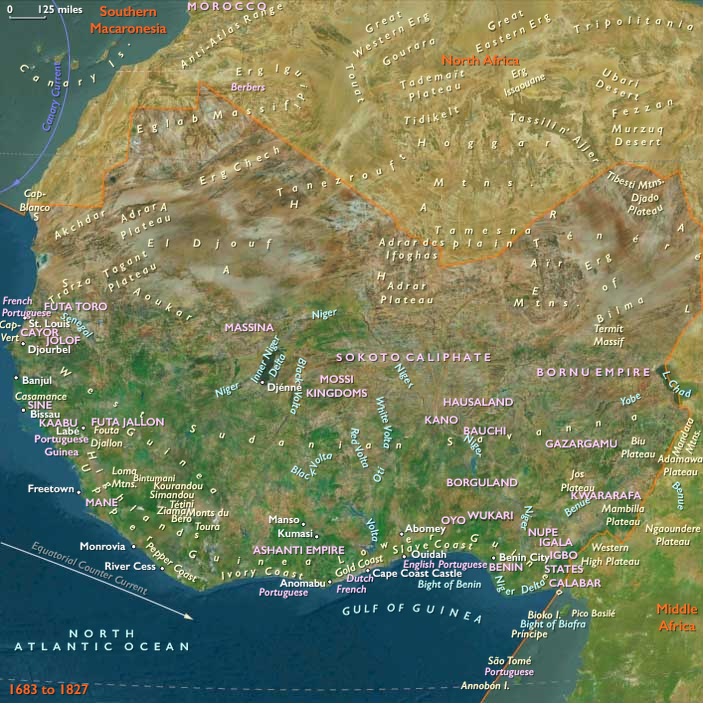
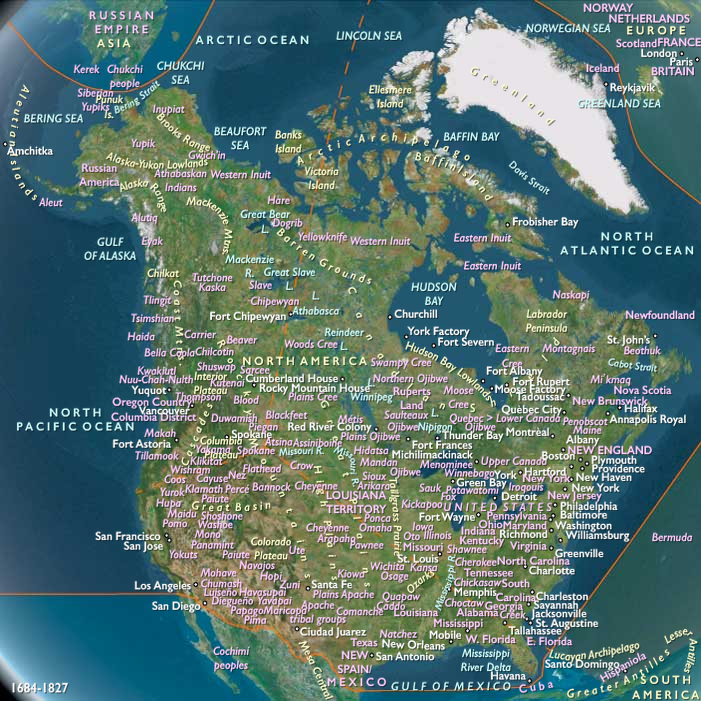
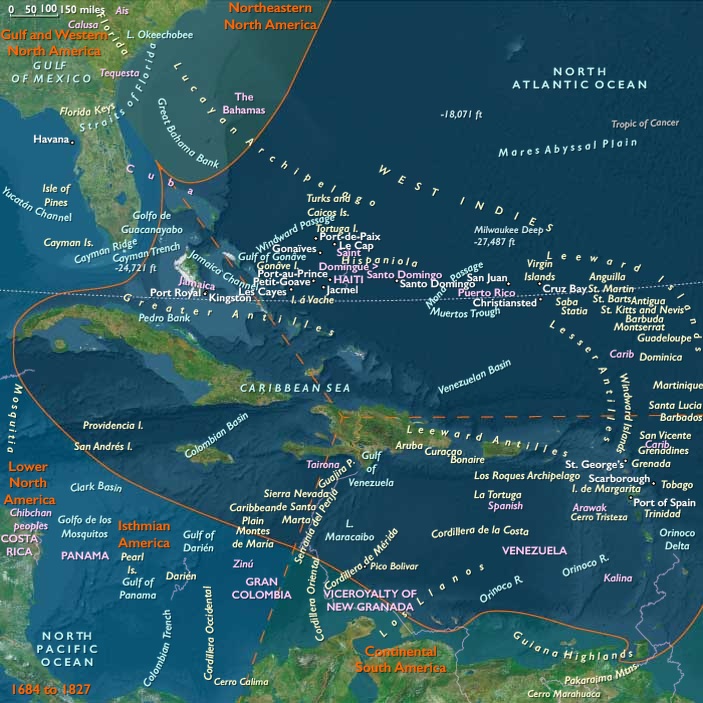
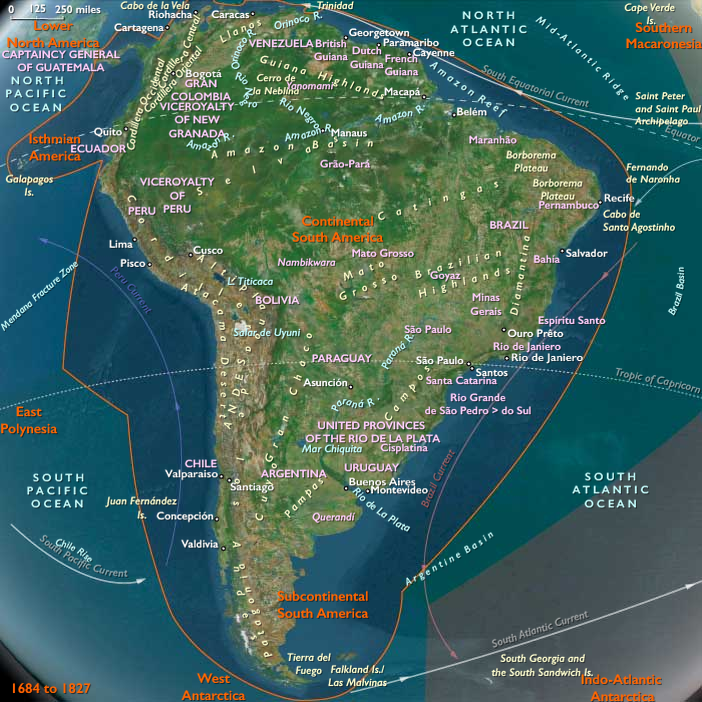
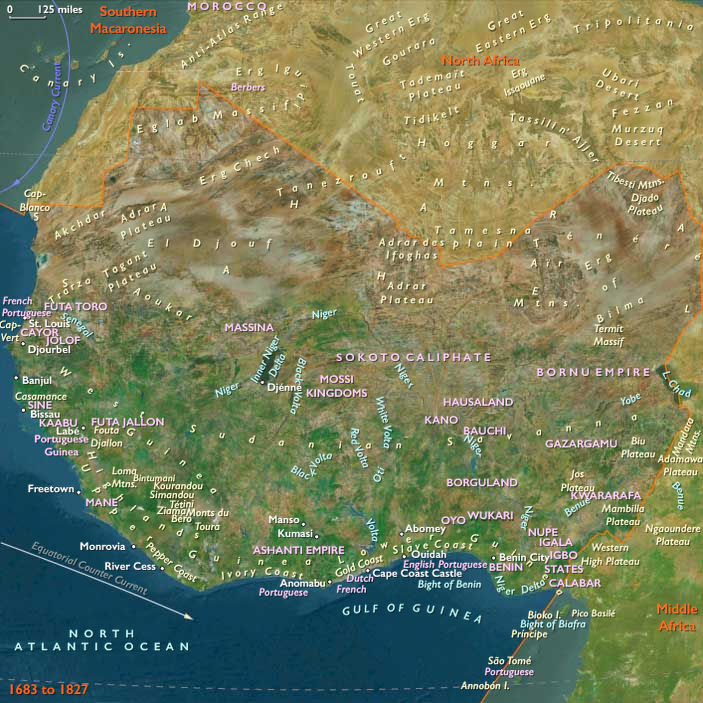
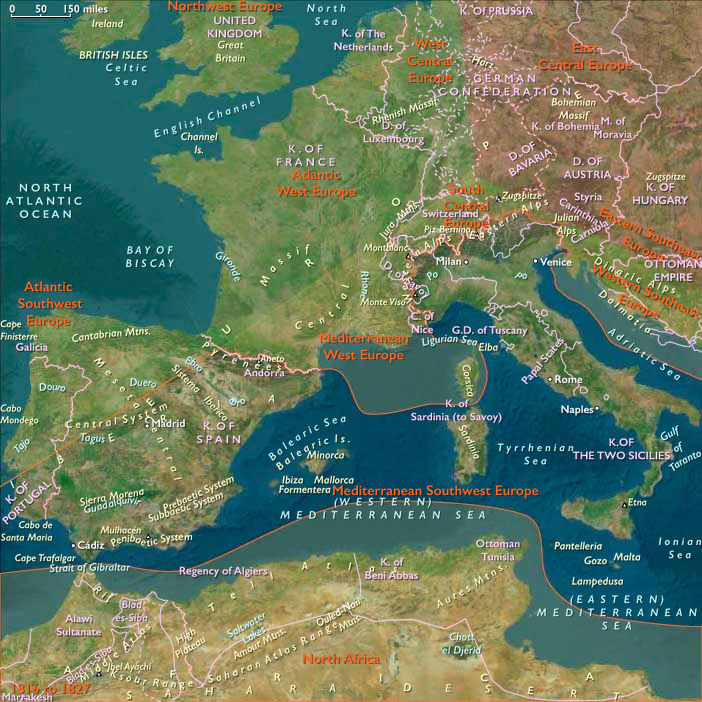
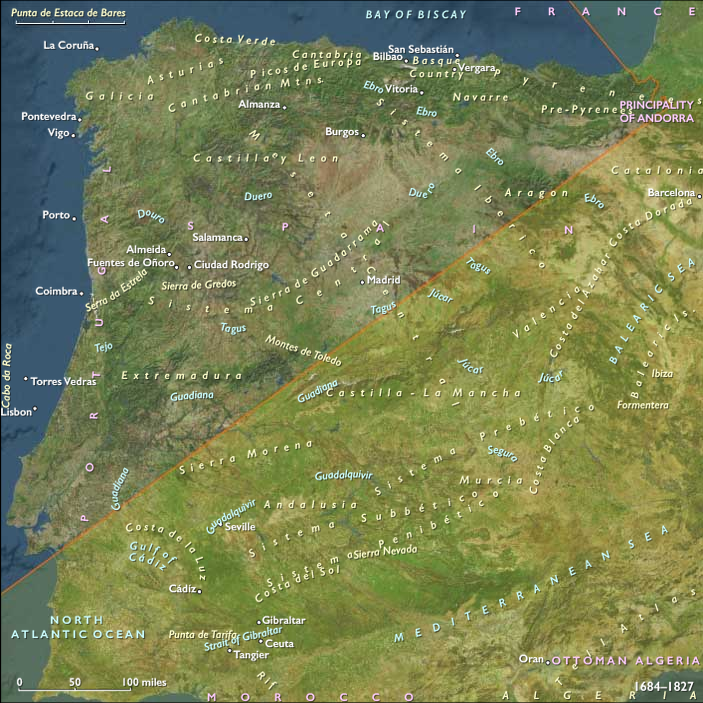
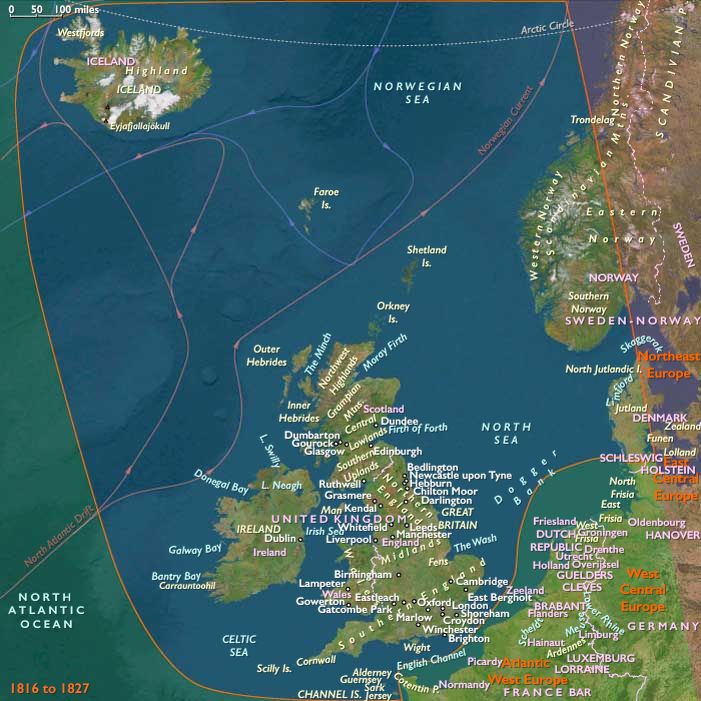
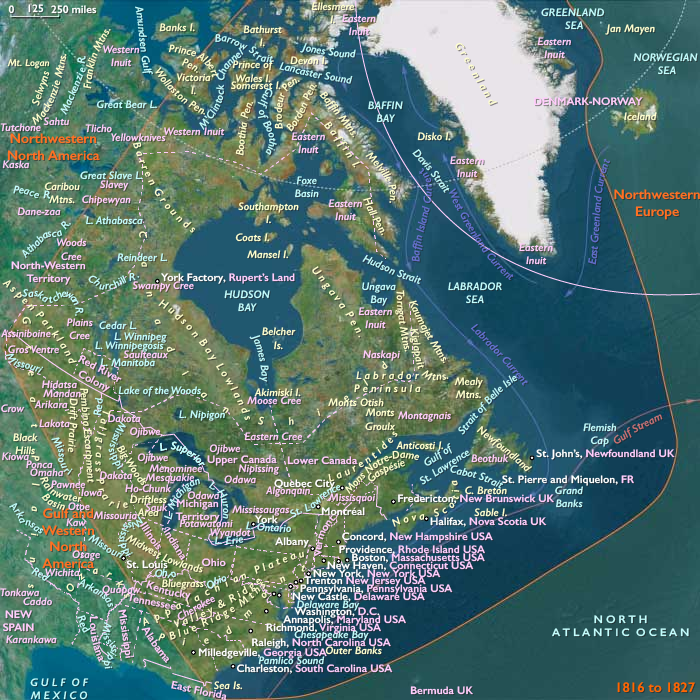
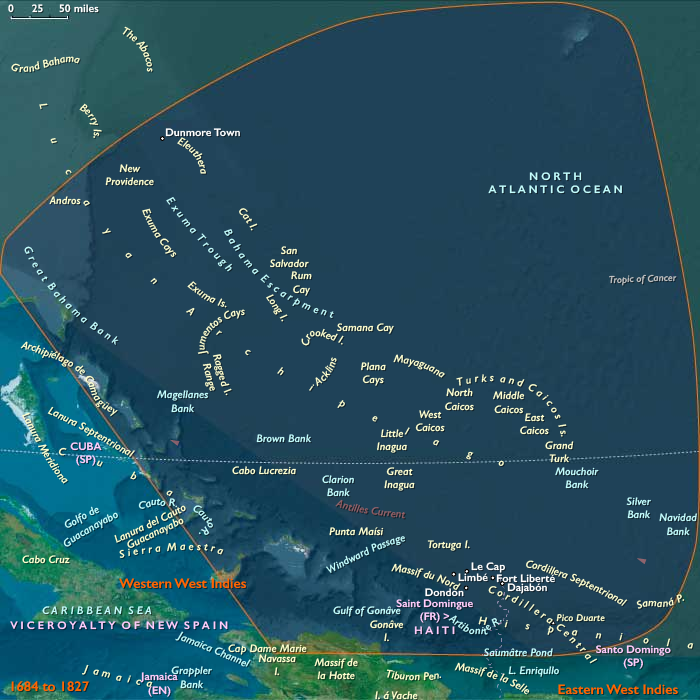
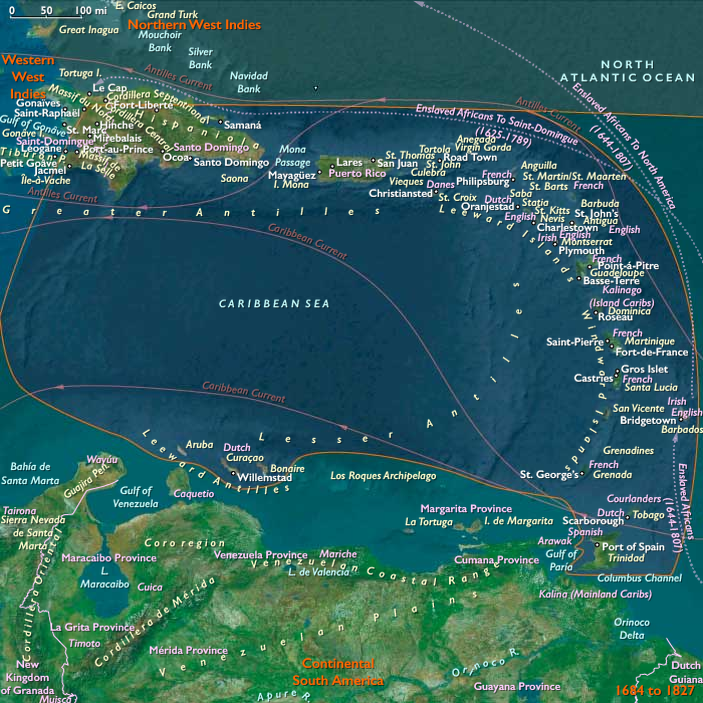
The transatlantic slave trade, one of the most infamous triangular trading systems, operated from the late 16th century to the early 19th century, transporting enslaved Africans, cash crops, and manufactured goods between West Africa, the Caribbean or American colonies, and European colonial powers. At times, New England (British North America) also played the role traditionally occupied by Europe in this system.
Structure of the Triangular Trade
The transatlantic slave trade followed a three-part cycle:
-
European Goods to Africa
- European traders shipped manufactured goods (textiles, firearms, iron, metal tools, and alcohol) to West Africa.
- These goods were exchanged for enslaved Africans, often captured by African coastal kingdoms in warfare or raids.
-
The Middle Passage: Enslaved Africans to the Americas
- Enslaved Africans were transported across the Atlantic to the Americas in the horrific Middle Passage, a journey that took five to twelve weeks.
- Conditions aboard the ships were inhumane, with disease, malnutrition, and abuse causing high mortality rates.
- Survivors were sold at auction in the Caribbean, Brazil, or North America to work on sugar, cotton, and tobacco plantations.
-
Colonial Cash Crops to Europe (or New England)
- The sugar, tobacco, and cotton produced by enslaved labor were exported to Europe, fueling industrial production and consumer markets.
- In the colonial molasses trade, Caribbean sugar was sent to Europe or New England, where it was distilled into rum.
- Profits from sugar sales were used to buy more manufactured goods, restarting the cycle.
The Role of Sugar in the Triangular Trade
- Sugar was the primary cash crop driving the expansion of slavery in the Caribbean and Brazil.
- Molasses, a byproduct of sugar refining, was sent to New England, where it was fermented into rum.
- The profits from rum and sugar helped finance further slaving expeditions to West Africa.
The Transition to Sugar Beets (1747–19th Century)
- In 1747, the German chemist Andreas Sigismund Marggraf discovered how to extract crystallized sugar from sugar beets.
- However, commercial production of beet sugar did not become widespread until the early 19th century, particularly after:
- The Haitian Revolution (1791–1804) disrupted the Caribbean sugar economy.
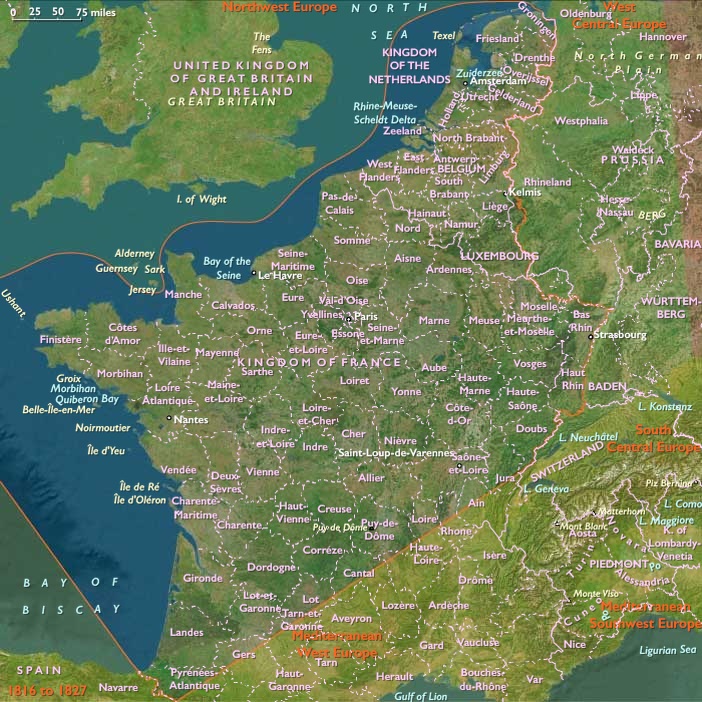
- The Napoleonic Wars cut off France’s access to Caribbean sugar, prompting investments in beet sugar production.
Conclusion: The Economic and Human Cost of the Triangular Trade
The transatlantic slave trade fueled the rise of European empires and the global economy, but at the cost of millions of African lives and generations of forced labor. The commercialization of sugar beets in the 19th century helped reduce European dependence on Caribbean sugar plantations, but the legacy of slavery and colonial exploitation remained deeply embedded in global trade and industry.
Groups
- Portuguese Empire
- Denmark-Norway, Kingdom of
- Spain, Habsburg Kingdom of
- Netherlands, United Provinces of the (Dutch Republic)
- France, (Bourbon) Kingdom of
- Portugal, Bragança Kingdom of
- Spain, Bourbon Kingdom of
- Britain, Kingdom of Great
- Britain (United Kingdom of Great Britain and Ireland)
Topics
- Interaction with Subsaharan Africa, Early European
- Colonization of the Americas, Portuguese
- Colonization of the Americas, French
- Colonization of the Americas, English
- Colonization of the Americas, Danish
- Colonization of the Americas, British
Commodoties
Subjects
Regions
- West Europe
- North Europe
- West Africa
- Southwest Europe
- Northern North America
- West Indies
- South America
Subregions
- Northeast Europe
- West Africa
- Mediterranean Southwest Europe
- Atlantic Southwest Europe
- Atlantic West Europe
- Northwest Europe
- Northeastern North America
- Northern West Indies
- Eastern West Indies
- South America Major
- Western West Indies
- Southern North America
- Gulf and Western North America
Related Events
Showing 10 events out of 30218 total
Years: 1684 - 1827
Groups
- Portuguese Empire
- Denmark-Norway, Kingdom of
- Spain, Habsburg Kingdom of
- Netherlands, United Provinces of the (Dutch Republic)
- France, (Bourbon) Kingdom of
- Portugal, Bragança Kingdom of
- Spain, Bourbon Kingdom of
- Britain, Kingdom of Great
- Britain (United Kingdom of Great Britain and Ireland)
Topics
- Interaction with Subsaharan Africa, Early European
- Colonization of the Americas, Portuguese
- Colonization of the Americas, French
- Colonization of the Americas, English
- Colonization of the Americas, Danish
- Colonization of the Americas, British
Commodoties
Subjects
Regions
- West Europe
- North Europe
- West Africa
- Southwest Europe
- Northern North America
- West Indies
- South America
Subregions
- Northeast Europe
- West Africa
- Mediterranean Southwest Europe
- Atlantic Southwest Europe
- Atlantic West Europe
- Northwest Europe
- Northeastern North America
- Northern West Indies
- Eastern West Indies
- South America Major
- Western West Indies
- Southern North America
- Gulf and Western North America