
Ernest Augustus of Brunswick-Lüneburg dies on January …
Years: 1698 - 1698
Ernest Augustus of Brunswick-Lüneburg dies on January 23, 1698, leaving all of his territories to his son George Louis with the exception of the Prince-Bishopric of Osnabrück, an office he had held since 1661.
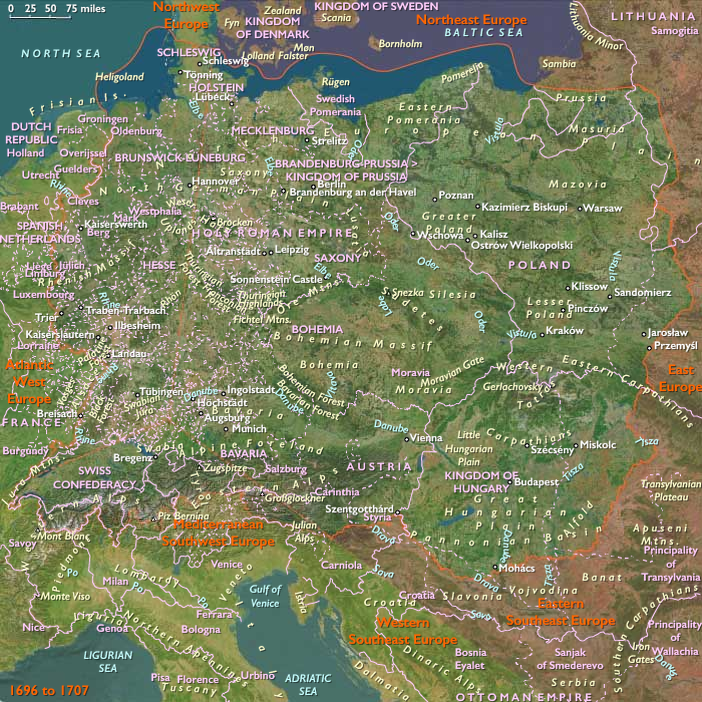
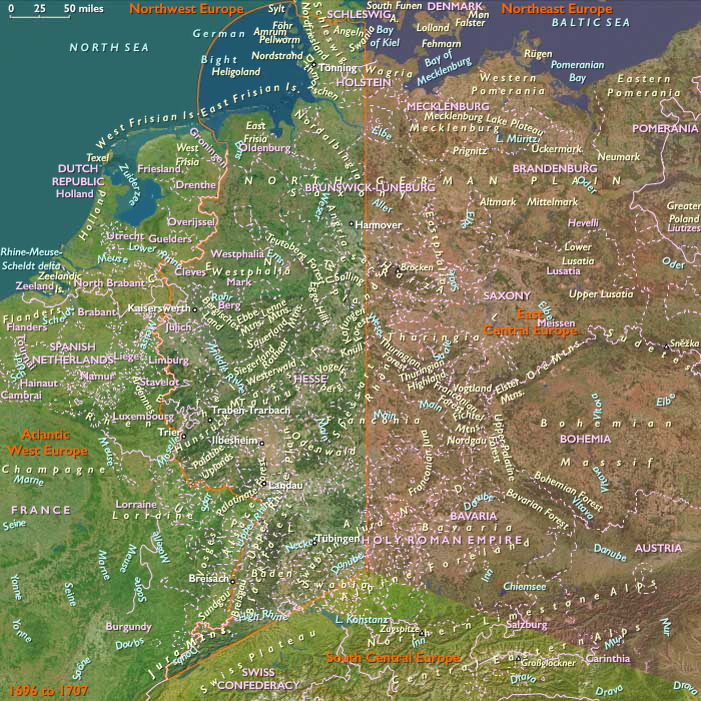
George, who has received a thorough education in the diplomatic and military arts, thus becomes Duke of Brunswick-Lüneburg (also known as Hanover, after its capital) as well as Archbannerbearer and a Prince-Elector of the Holy Roman Empire.
His court in Hanover is graced by many cultural icons such as the mathematician and philosopher Gottfried Leibniz and the composers George Frideric Händel and Agostino Steffani.
Ernest Augustus was born at Herzberg am Harz, the son of George, Duke of Brunswick-Lüneburg and Anne Eleonore of Hesse-Darmstadt (Ernest Augustus is thus descended from the Albertinian line of the Habsburg family and also the House of Hohenzollern).
He married Sophia of the Palatinate in Heidelberg in 1658.
As the fourth son, he had little chance of succeeding his father as ruler, and so, in 1662, his relatives had appointed him administrator of Osnabrück; according to the Peace of Westphalia, every second incumbent of the Osnabrück see was to be appointed by the dukes of Brunswick-Lüneburg.
However, after two of his elder brothers had died without sons, Ernest Augustus had inherited part of his father's territories in 1679, namely Calenberg (including Göttingen).
Against the protestations of his five younger sons, Ernest Augustus in 1683 had instituted primogeniture, so that his territory would not be further subdivided after his death, and also as a precondition for obtaining the coveted electorship.
He participated in the Great Turkish War on the side of Holy Roman Emperor Leopold I.
He was in 1692 appointed prince-elector by the Emperor; however, the electorship will not come into effect until 1708.
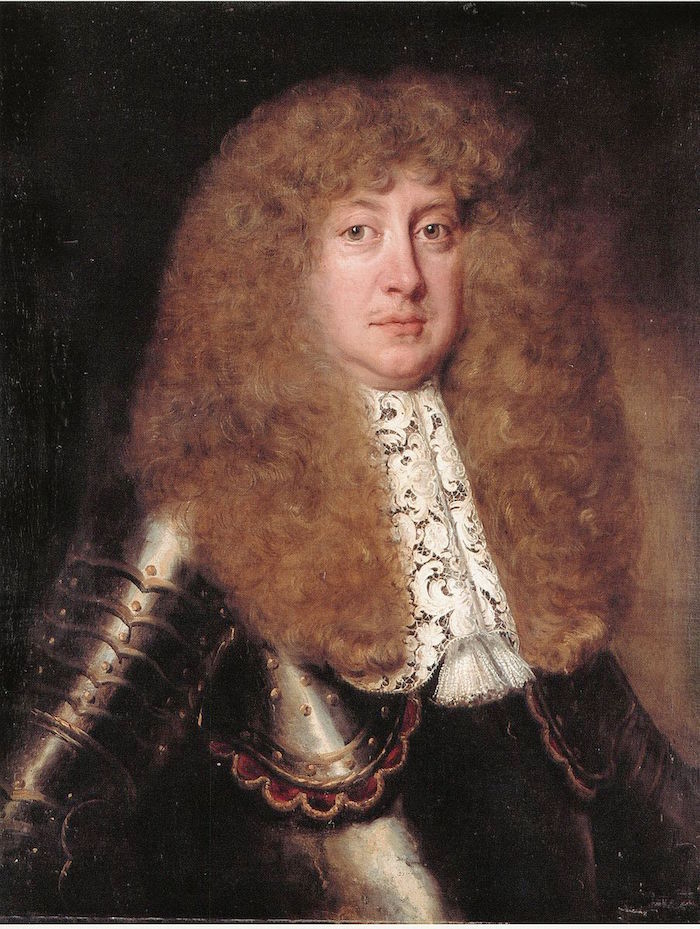
Ernest Augustus, Duke of Brunswick-Lüneburg, father of Georg Ludwig of Hanover, later George I of Great Britain.
Locations
People
Groups
Subjects
Regions
Subregions
Years: 1698 - 1698
Ernest Augustus, Duke of Brunswick-Lüneburg, father of Georg Ludwig of Hanover, later George I of Great Britain.
Locations
People
Groups
Subjects
Regions
Subregions