
Empress Dowager Wu had been set to …
Years: 690 - 690
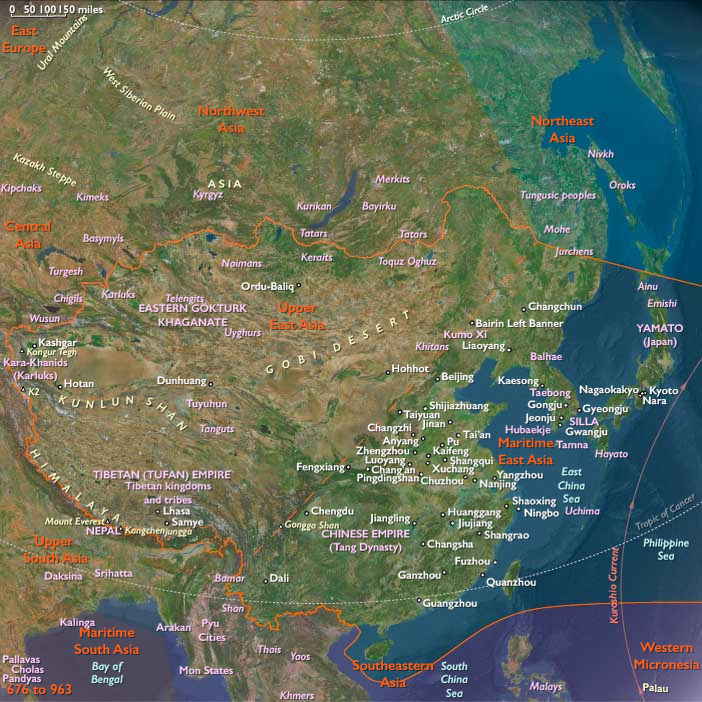
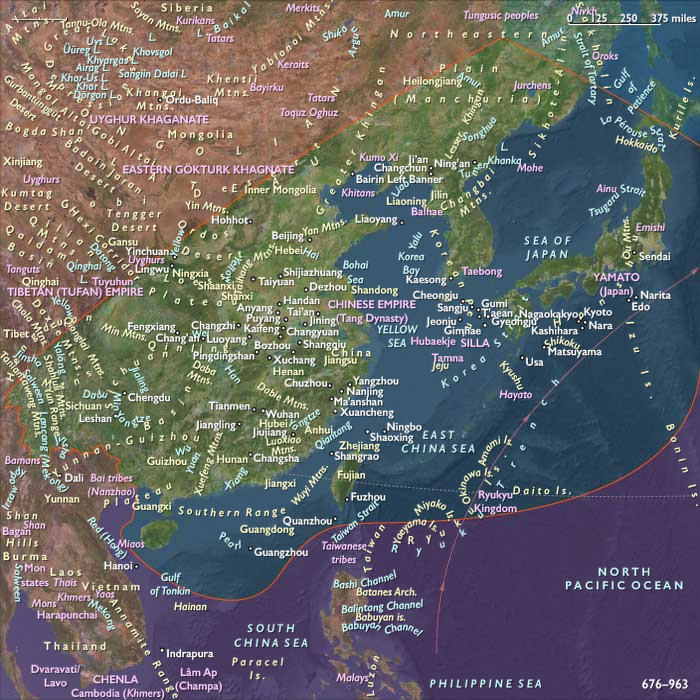
Empress Dowager Wu had been set to make sacrifices in 688 to the deity of the Luo River (flowing through the Henan province city of Luoyang, at this time the "Eastern Capital").
Wu had summoned senior members of Tang's Li imperial clan to Luoyang.
The imperial princes, worried that she planned to slaughter them and secure the throne for herself, plotted to resist her.
However, before a rebellion could be comprehensively planned out, Li Zhen and his son Li Chong the Prince of Langye rose first, at their respective posts as prefects of Yu Prefecture (roughly modern Zhumadian, Henan) and Bo Prefecture (roughly modern Liaocheng, Shandong).
The other princes were not yet ready, however, and did not rise, and forces sent by Empress Dowager Wu and the local forces crushed Li Chong and Li Zhen's forces quickly.
Empress Dowager Wu took this opportunity to arrest Emperor Gaozong's granduncles Li Yuanjia the Prince of Han, Li Lingkui the Prince of Lu, and Princess Changle, as well as many other members of the Li clan and forced them to commit suicide.
Even Princess Taiping's husband Xue Shao is implicated and starved to death.
In the subsequent years, there will continue to be many politically motivated massacres of officials and Li clan members.
In 690, Wu takes the final step, taking the regnal name Wu Zetian, and the title huangdi, as the monarch of the newly proclaimed Zhou Dynasty.
Traditional Chinese order of succession (akin to the Salic law in Europe) does not allow a woman to ascend the throne, but Wu Zetian is determined to quash the opposition, and the use of the secret police does not subside, but continued, after her taking the throne.
However, while her organization of the civil service system is criticized for its laxity of the promotion of officials, Wu Zetian is considered capable of evaluating the performance of the officials once they are in office.
Locations
People
Groups
Subjects
Regions
Subregions
Years: 690 - 690
Locations
People
Groups
Subjects
Regions
Subregions