
Emperor Zhaozong, on the way to Luoyang, …
Years: 904 - 904
September
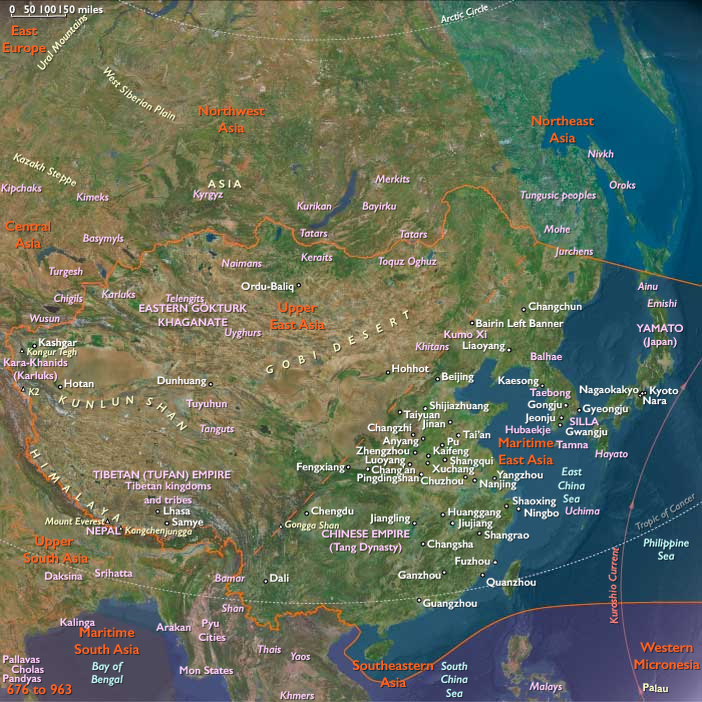
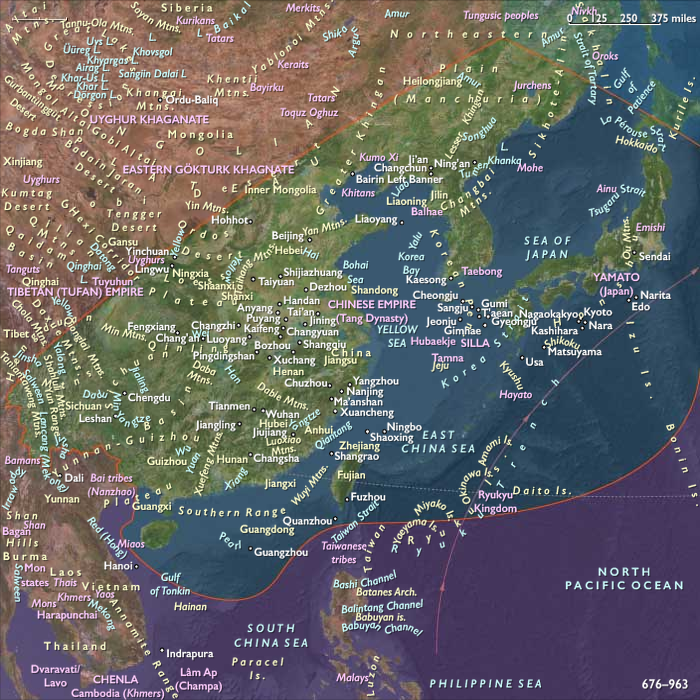
Emperor Zhaozong, on the way to Luoyang, makes a final attempt to seek aid from Li Keyong, as well as Yang Xingmi and Wang Jian the military governor of Xichuan Circuit, sending secret emissaries to them, but neither Li Keyong nor Wang Jian act on the call for aid.
(Yang does, but after making some exploratory attacks gives up on the campaign as well.)
After Emperor Zhaozong reaches Luoyang, all the imperial guards are Zhu's elite soldiers, and the emperor becomes isolated.
As a result of the forced movement of the emperor, the several remaining warlords who are not compliant to Zhu Quanzhong (Li Maozhen, Li Jihui, Li Keyong, Liu Rengong, Wang Jian, and Yang Xingmi, Zhao Kuangning, and Zhao Kuangning's brother Zhao Kuangming the military governor of Jingnan Circuit (headquartered in modern Jingzhou, Hubei, not the same circuit as Li Jihui's)) all issue declarations calling for the people to rise against Zhu and restore imperial power.
Zhu becomes apprehensive that while Emperor Zhaozong is under heavy guard, he would nevertheless try to act against Zhu's interests if Zhu left on a campaign, particularly when Zhu cannot get Emperor Zhaozong to agree to execute Li Yu (under the reasoning that Li Yu, albeit a child at the time, had wrongly occupied the throne during the eunuchs' coup against Emperor Zhaozong).
He comes to the belief that he should remove the adult emperor and replace the emperor with a more-easily-controlled child.
In fall 904, he has Zhu Yougong and Shi Shucong lead soldiers into the Luoyang palace and kill Emperor Zhaozong, and then blames the incident on Zhu Yougong and Shi, forcing them to commit suicide.
He has Li Zuo declared emperor (as Emperor Ai).
In 904, Zhu's wife Lady Zhang dies.
She is said to be a moderating influence and a wise advisor to Zhu, and it was said that after her death, his violent and licentious tendencies became uncontrolled.
Locations
People
Groups
Commodoties
Subjects
Regions
Subregions
Related Events
Showing 10 events out of 53510 total
Years: 904 - 904
September
Locations
People
Groups
Commodoties
Subjects
Regions
Subregions