
Emperor Valentinian III sends three envoys, the …
Years: 452 - 452
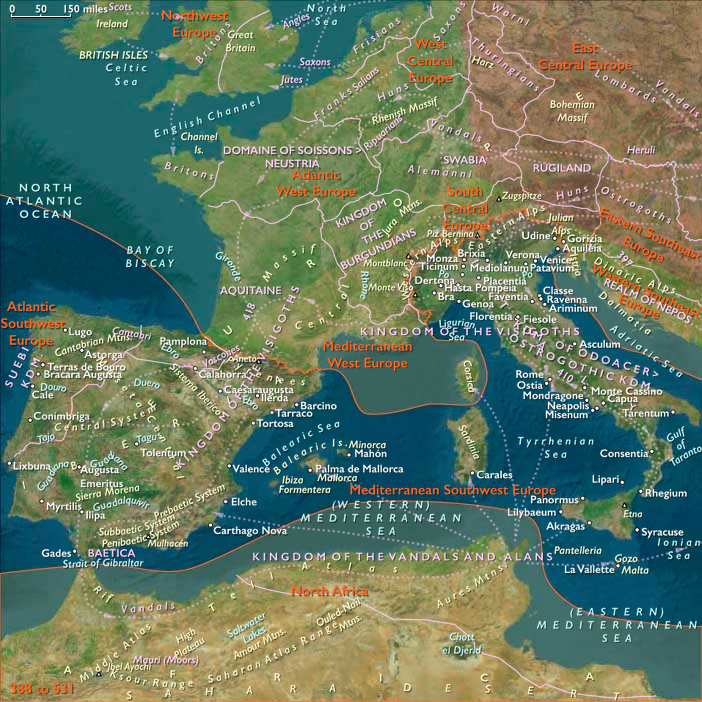
Emperor Valentinian III sends three envoys, the high civilian officers Gennadius Avienus and Trigetius, as well as the Bishop of Rome, Leo I, who meets Attila at Mincio in the vicinity of Mantua, and obtains from him the promise that he would withdraw from Italy and negotiate peace with the Emperor.
Prosper of Aquitaine gives a short description of the historic meeting, but gives all the credit of the successful negotiation to Leo.
Priscus reports that superstitious fear of the fate of Alaric—who died shortly after sacking Rome in 410—gave him pause.
In reality, Italy had suffered from a terrible famine in 451 and her crops are faring little better in 452; Attila's devastating invasion of the plains of northern Italy this year does not improve the harvest.
To advance on Rome would have required supplies which were not available in Italy, and taking the city would not have improved Attila's supply situation.
Therefore, it is more profitable for Attila to conclude peace and retreat back to his homeland.
Secondly, an East Roman force had crossed the Danube under the command of another officer also named Aetius—who had participated in the Council of Chalcedon the previous year—and proceeded to defeat the Huns who had been left behind by Attila to safeguard their home territories.
Attila, hence, faces heavy human and natural pressures to retire.
The Huns, awash in plunder, depart over the Alps.
Locations
People
Groups
- Huns
- Italy, Praetorian prefecture of
- Hunnic Empire
- Roman Empire, Western (Ravenna)
- Italy, Diocese of
Topics
- Late Antiquity
- Migration Period
- Hun Raids on the Roman Empire
- Fall of the Western Roman Empire
- Famines and plagues 400 to 800
- Migration Period Pessimum
Commodoties
Subjects
Regions
Subregions
Related Events
Showing 10 events out of 58710 total
Years: 452 - 452
Locations
People
Groups
- Huns
- Italy, Praetorian prefecture of
- Hunnic Empire
- Roman Empire, Western (Ravenna)
- Italy, Diocese of
Topics
- Late Antiquity
- Migration Period
- Hun Raids on the Roman Empire
- Fall of the Western Roman Empire
- Famines and plagues 400 to 800
- Migration Period Pessimum
Commodoties
Subjects
Regions
Subregions