
Emperor Anthemius' Appeal to the Britons and …
Years: 470 - 470
Emperor Anthemius' Appeal to the Britons and the Visigothic Advance (c. 469 CE)
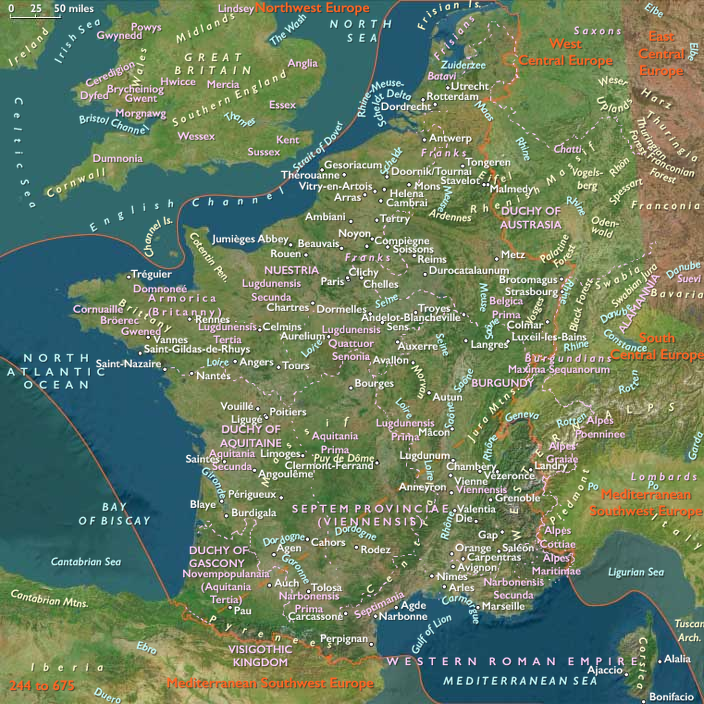
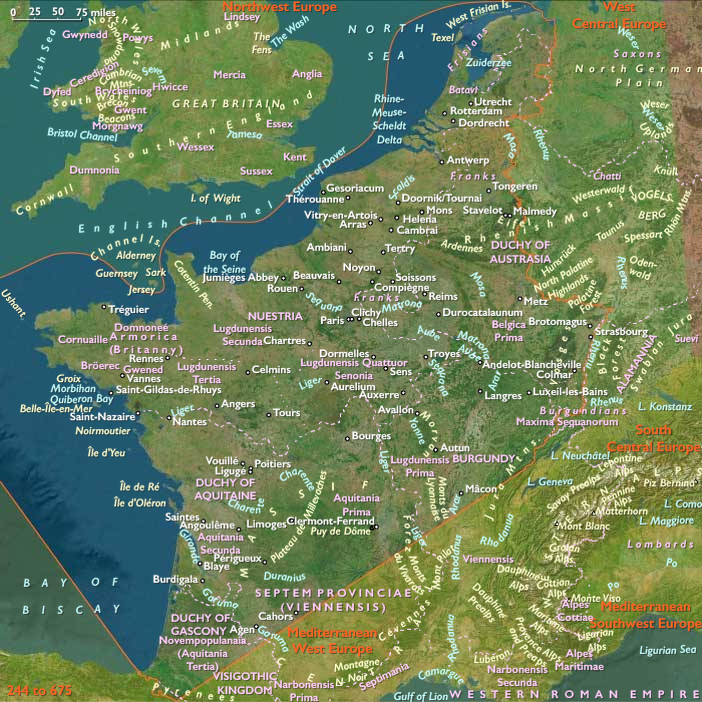
As the Western Roman Empire crumbles, Emperor Anthemius (r. 467–472) desperately seeks military aid to resist the expanding Visigothic Kingdom under King Euric. He turns to the Britons for reinforcements, though it remains unclear whether Jordanes' "Britons" refers to:
- The Britons of Great Britain, still connected to the Roman world despite increasing Saxon pressure.
- The Britons of Armorica (Brittany), where British migration has been ongoing since the early fifth century.
Regardless of their origin, a substantial force of twelve thousand Celtic warriors under the command of Riothamuslands in Gaul to aid the Roman struggle.
Riothamus’ Campaign and the Visigothic Response
- The Briton/Breton army moves into central Gaul, aiming to halt Visigothic expansion.
- The Visigoths, skillfully led by Euric, intercept them before they can fully integrate with Roman forces.
- In a major battle, Riothamus' army is overwhelmed and defeated, forcing them to retreat or scatter.
The Visigothic Expansion: Northward into Gaul
The Visigothic victory marks another turning point in the collapse of Roman Gaul. As a result:
- The Visigoths further consolidate their control over central Gaul, cementing their hold over Berry and pushing northward.
- Some sources suggest they expand as far as the Somme River, reaching the marches of Frankish territory.
- The remaining Roman forces in Gaul become even more isolated, as Syagrius’ Domain of Soissons now stands as the last remnant of Roman power in northern Gaul.
The Fate of Riothamus and the Britons
Riothamus’ fate remains uncertain:
- Some accounts suggest he survives and retreats eastward to the Burgundians, seeking asylum.
- Others believe he dies in the aftermath of the battle, marking the end of a failed attempt to halt the barbarian tide in Gaul.
The Final Decline of Roman Gaul
The defeat of Riothamus' forces and the further expansion of the Visigoths underscore the power shift in Gaul:
- The Visigoths now control much of southern and central Gaul and are no longer acting as Roman federates.
- The Franks, still consolidating their hold over northern Gaul, watch as their future rivals—the Visigoths—grow stronger.
- The Western Roman Empire, unable to stem the tide of barbarian conquests, continues its slow collapse, leaving behind a fragmented world where Germanic successor kingdoms will soon dominate.
Riothamus’ failed campaign represents one of the last significant attempts by a Roman-affiliated force to resist the Visigoths in Gaul. Within a few decades, the Franks, not the Romans, will be the only remaining power capable of challenging Visigothic rule in the region.
Locations
People
Groups
- Britons (historical)
- Armorica
- Gallia Aquitania (Roman province)
- Gallia Belgica (Roman province)
- Goths (East Germanic tribe)
- Gaul, Diocese of
- Breton people
- Gaul, Praetorian prefecture of
- Roman Empire, Western (Ravenna)
- Britain, Sub-Roman
- Visigothic Kingdom of Toulouse
- Francia (Merovingians)
Topics
- Late Antiquity
- Migration Period
- Fall of the Western Roman Empire
- Visigothic Raids on the Roman Empire, Later
- Migration Period Pessimum
Commodoties
Subjects
Regions
Subregions
Years: 470 - 470
Locations
People
Groups
- Britons (historical)
- Armorica
- Gallia Aquitania (Roman province)
- Gallia Belgica (Roman province)
- Goths (East Germanic tribe)
- Gaul, Diocese of
- Breton people
- Gaul, Praetorian prefecture of
- Roman Empire, Western (Ravenna)
- Britain, Sub-Roman
- Visigothic Kingdom of Toulouse
- Francia (Merovingians)
Topics
- Late Antiquity
- Migration Period
- Fall of the Western Roman Empire
- Visigothic Raids on the Roman Empire, Later
- Migration Period Pessimum
Commodoties
Subjects
Regions
Subregions