
Elam, an ancient name for the region …
Years: 3213BCE - 3070BCE
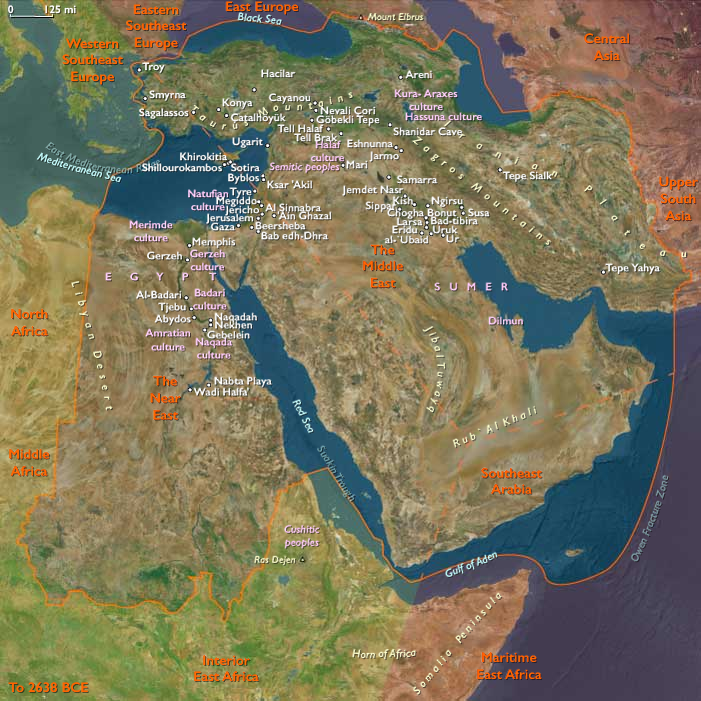
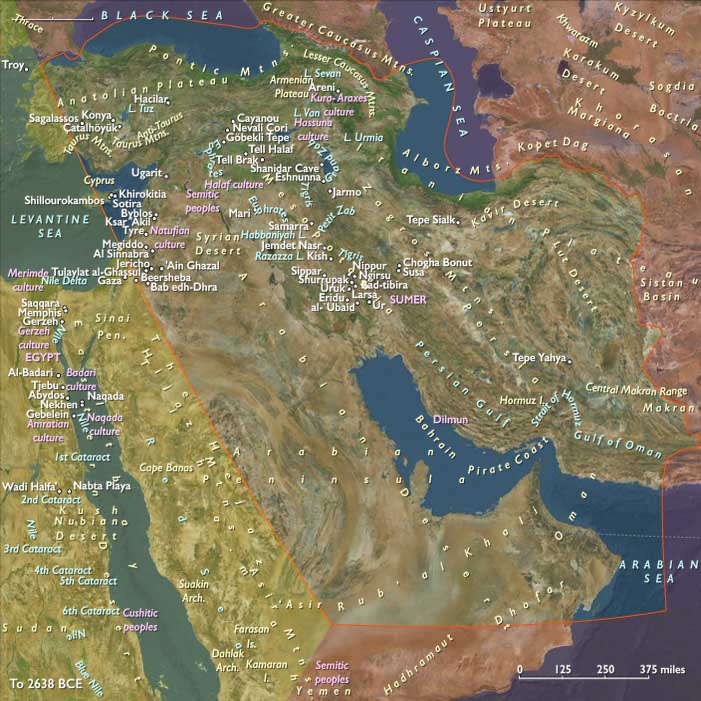
Elam, an ancient name for the region of southwestern Iran known today as Khuzestan, leads a more or less independent cultural existence in the fourth millennium BCE.
The Proto-Elamite period is the time of about 3200 BCE to 2700 BCE, when Susa, the later capital of the Elamites, began to receive influence from the cultures of the Iranian plateau.
In archaeological terms, this corresponds to the late Banesh period.
This civilization is recognized as the oldest in Iran and was largely contemporary with the neighboring Sumerian civilization, the oldest in the world, which began around 3400 BCE.
The Proto-Elamite script is an Early Bronze Age writing system briefly in use for the ancient Elamite language before the introduction of Elamite Cuneiform.
Texts in the undeciphered Proto-Elamite script found in Susa are dated to the late fourth millennium.
It is thought that the Proto-Elamites were in fact Elamites (Elamite speakers), because of the many cultural similarities (for example, the building of ziggurats), and because no large-scale migration to this area seems to have occurred between the Proto-Elamite period and the later Elamites.
Because their script is yet to be deciphered, this theory remains uncertain.
Locations
Groups
Topics
- Subboreal Period during the Neolithic Subpluvial
- Early Bronze Age I (Near and Middle East)
- Piora Oscillation ending the Neolithic Subpluvial
- Subboreal Period
Subjects
Regions
Subregions
Years: 3213BCE - 3070BCE
Locations
Groups
Topics
- Subboreal Period during the Neolithic Subpluvial
- Early Bronze Age I (Near and Middle East)
- Piora Oscillation ending the Neolithic Subpluvial
- Subboreal Period
Subjects
Regions
Subregions