
Egypt’s Protodynastic Period, sometimes known as Dynasty …
Years: 3213BCE - 3070BCE
Egypt’s Protodynastic Period, sometimes known as Dynasty 0 or the Late Predynastic Period and generally dated 3200 BCE to 3000 BCE, refers to the period of time at the very end of the Predynastic Period and is equivalent to the archaeological phase known as Naqada III, the last phase of the Naqadan period.
Egypt is undergoing the process of political unification that will lead to a unified state during the Early Dynastic Period.
The process of state formation, which had begun to take place in Naqada II, becomes highly visible, with kings heading powerful polities, their names inscribed in the form of serekhs on a variety of surfaces including pottery and tombs. (Although Naqada III is often referred to as Dynasty 0 to reflect the presence of kings at the head of influential states, the kings involved would not have been a part of a dynasty and more probably have been completely unrelated and very possibly in competition with each other.)
Moreover, it is during this time that the Egyptian language is first recorded in hieroglyphs.
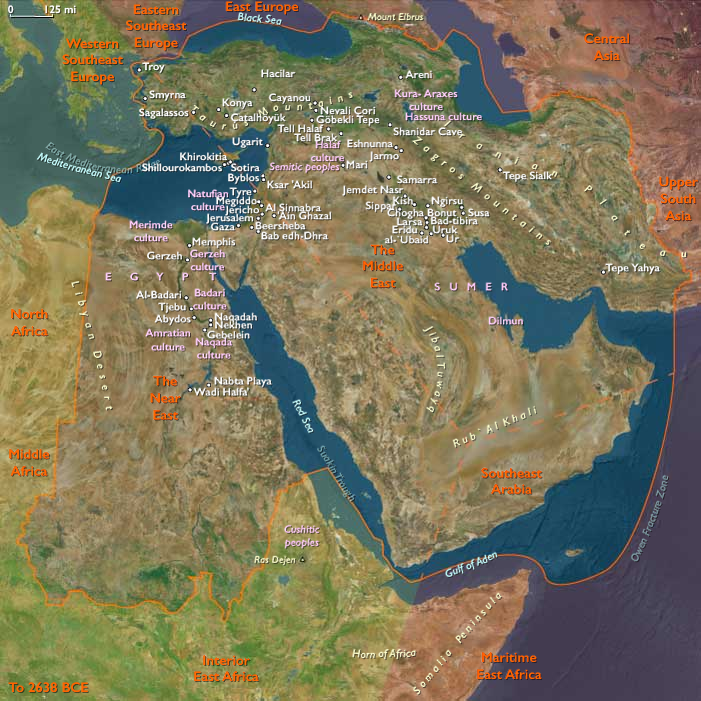
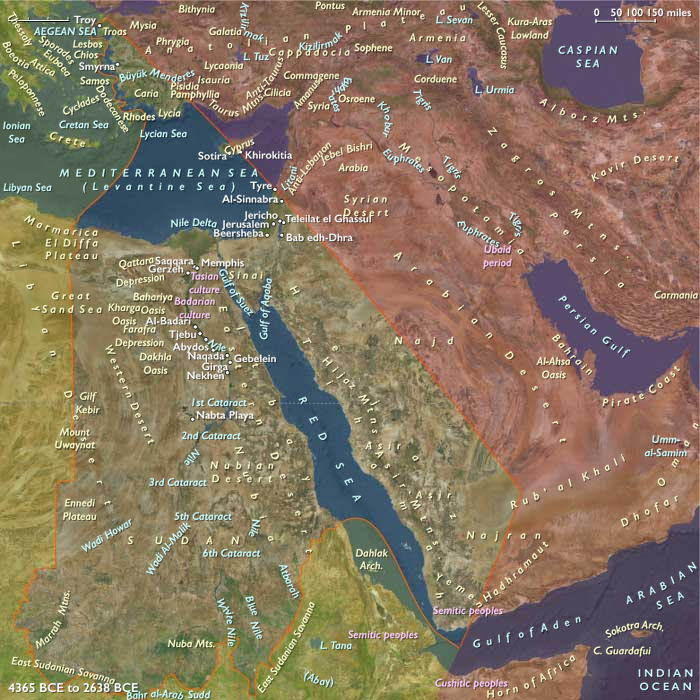
There is also strong archaeological evidence of Egyptian settlements in southern Israel during the Protodynastic Period, which have been regarded as colonies or trading entrepôts.
During his reign in Upper Egypt, King Narmer defeats his enemies on the Delta and merges both the Kingdom of Upper and Lower Egypt under his single rule.
Narmer is shown on palettes a wearing the double crown, composed of the lotus flower and the papyrus reed—a sign of the unified rule of both parts of Egypt that will be followed by all succeeding rulers.
According to Manetho, the first king of the unified Upper and Lower Egypt was Menes.
However, the name "Menes" and the name "Narmer" may refer to the same person.
The earliest recorded king of the First Dynasty was Hor-Aha, and the first king to claim to have united the two lands was Narmer (the final king of the Protodynastic Period).
His name is known because it is written on a votive palette used for grinding minerals for kohl, used by ancient Egyptians to outline the eyes.
The representational conventions of the Narmer Palette, also known as the Great Hierakonpolis Palette or the Palette of Narmer, executed in the pharaonic style of Egyptian sculpture, emphasize authority.
The carved slate tablet, from Hierakonpolis, shows the king surveying slaughtered prisoners, striking a northern enemy, and wearing the crowns of both kingdoms.
Egyptian votive objects, tomb paintings, and palettes depict battles, ships, animals, and vase bearers.
Locations
People
Groups
- Egyptians
- Egypt (Ancient), Predynastic
- Gerzeh culture (Naqada II)
- Egypt, Upper
- Egypt (Ancient), Protodynastic or Semainian (Naqada III)
Topics
- Subboreal Period during the Neolithic Subpluvial
- Early Bronze Age I (Near and Middle East)
- Piora Oscillation ending the Neolithic Subpluvial
- Subboreal Period
Commodoties
Subjects
- Commerce
- Language
- Symbols
- Watercraft
- Sculpture
- Painting and Drawing
- Environment
- Labor and Service
- Fashion
- Conflict
- Faith
- Government
- Technology
- Anthropology
- Archaeology
- Linguistics
Regions
Subregions
Related Events
Showing 10 events out of 68717 total
Years: 3213BCE - 3070BCE
Locations
People
Groups
- Egyptians
- Egypt (Ancient), Predynastic
- Gerzeh culture (Naqada II)
- Egypt, Upper
- Egypt (Ancient), Protodynastic or Semainian (Naqada III)
Topics
- Subboreal Period during the Neolithic Subpluvial
- Early Bronze Age I (Near and Middle East)
- Piora Oscillation ending the Neolithic Subpluvial
- Subboreal Period
Commodoties
Subjects
- Commerce
- Language
- Symbols
- Watercraft
- Sculpture
- Painting and Drawing
- Environment
- Labor and Service
- Fashion
- Conflict
- Faith
- Government
- Technology
- Anthropology
- Archaeology
- Linguistics
Regions
Subregions