
The Egyptians of the Old Kingdom, like …
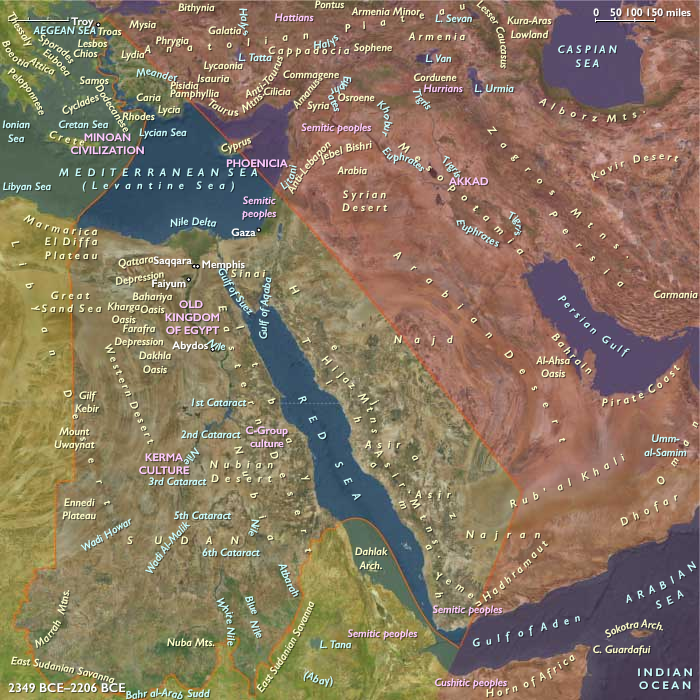
Years: 2349BCE - 2206BCE
The Egyptians of the Old Kingdom, like all peoples of this time, wear sandals.
Egyptian men wear belted loincloths wrapped around the waist; sometimes supplementing it with a linen cape or an animal hide draped over the shoulders.
Egyptian women wear linen tunics or skirts that extend from above or below the breast down to the ankle.
Shoulder straps often support the garments, although some tunics are short-sleeved.
The basic design of Egyptian clothing is minimal because of the warm temperatures, and simple: the usual fabric is linen, left in its natural off-white color, some of which is so finely woven that it is transparent. (The Egyptian practice of weaving gold thread into fabric is today a lost art.)
The elaboration and color of the costumes comes from the belts, collars, and headdresses that accessorize them.
Wide collars and other adornments are of gold and semiprecious stone or of glass.
Headdresses are ornamented with elaborate depictions of birds or serpents in gold and with colorful stones signifying rank.
Black wigs and cosmetics invariably complete the costume.
Both men and women use kohl, a paste made from soot, antimony, or galena, a form of lead ore, on the lashes, lids, and eyebrows and for protection against the sun, edging the underside of the eye with a green paste made from ground malachite and outlining the eyes with a mixture of ground ants' eggs.
Henna is used as a hair dye, and to dye the fingernails, the palms of the hands, and the soles of the feet.
Both sexes among the upper classes daily employ rouges, whitening powders, abrasives for cleaning the teeth, bath oils, and lipsticks.
Locations
People
Groups
Topics
Commodoties
Subjects
Regions
Subregions
Years: 2349BCE - 2206BCE
Locations
People
Groups
Topics
Commodoties
Subjects
Regions
Subregions