
Edwin had succeeded as Earl of Mercia …
Years: 1066 - 1066
September
Edwin had succeeded as Earl of Mercia on the death of his father, Aelfgar, in 1062.
His younger brother, Morcar, had been elected Earl of Northumbria on October 3, 1065, when Tostig Godwinson was ejected by the Northumbrians.
Tostig returns in early September with further forces recruited in Flanders and Scotland, accompanied by King Harald Hardrada, who had set sail from Norway with three hundred ships.
As he approaches the English coast, his fleet is joined by Tostig's ships and they sail together along the River Ouse towards the city of York.
The Orderic Vitalis version says that in the month of August Hardrada and Tostig set sail across the wide sea with a favorable wind and landed in Yorkshire.
Edwin had brought some soldiers to the east to prepare for an invasion by the Norwegians.
The battle starts with the English spreading out their forces to secure their flanks.
On the right flank is the River Ouse, and on the left flank is the Fordland, a swampy area.
The disadvantage to the position is that it gives Harald higher ground, which is perfect for seeing the battle from a distance.
Another disadvantage is that if one flank were to give way, the other one would be in trouble.
If the Anglo-Saxon army is forced to retreat, it will not be able to because of the marshlands.
They will have to hold off the Norwegians as long as possible.
Harald's army approaches from three routes to the south.
Harald lines his army up to oppose the Anglo-Saxons, but he knows it will take hours for all of his troops to arrive.
His least experienced troops are sent to the right and his best troops on the riverbank.
The English strike first, advancing on the Norwegian army before it can fully deploy.
Morcar's troops push Harald's back into the marshlands, making progress against the weaker section of the Norwegian line.
However, this initial success proves insufficient for victory to the English army, as the Norwegians bring their better troops to bear upon them, still fresh against the weakened Anglo-Saxons.
Harald brings more of his troops from the right flank to attack the center, and sends more men to the river.
The invaders are outnumbered, but they keep pushing and shoving the defenders back.
The Anglo-Saxons are forced to give ground.
Edwin's soldiers who are defending the bank are now cut off from the rest of the army by the marsh, so they head back to the city to make a final stand.
Other invading Norwegians, who are still arriving, find a way to get around the thick fighting and open a third front against the Anglo-Saxons.
The defenders, outnumbered and outmaneuvered, are defeated.
Edwin and Morcar however, manage to survive the fight.
It has been estimated that at Fulford the Norwegians had about ten thousand troops, of which six thousand were deployed in the battle, and the defenders five thousand.
Casualties during the battle are heavy on both sides.
Some estimates claim fifteen percent dead giving a total of sixteen hundred and fifty (based on eleven thousand troops being deployed in the battle).
It is clear from all accounts that the mobilized power of Mercia and Northumbria was cut to pieces at Fulford.
Locations
People
- Edith of Wessex
- Edward the Confessor
- Edwin
- Harald Hardrada
- Harold Godwinson
- Morcar
- Tostig Godwinson
- William the Conqueror
Groups
- Anglo-Saxons
- Welsh people
- Danes (Scandinavians)
- Flanders, County of
- Alba (Scotland), Scots Kingdom of
- Normandy, Duchy of
- Normans
- Norway, independent Kingdom of
- England, (Anglo-Saxon) Kingdom of
- England, (Norman) Kingdom of
Topics
Commodoties
Subjects
Regions
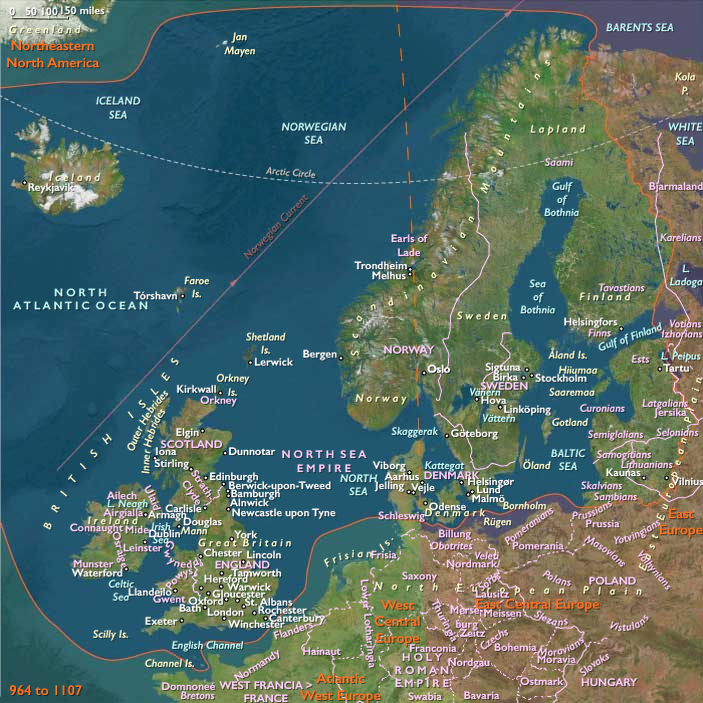
Subregions
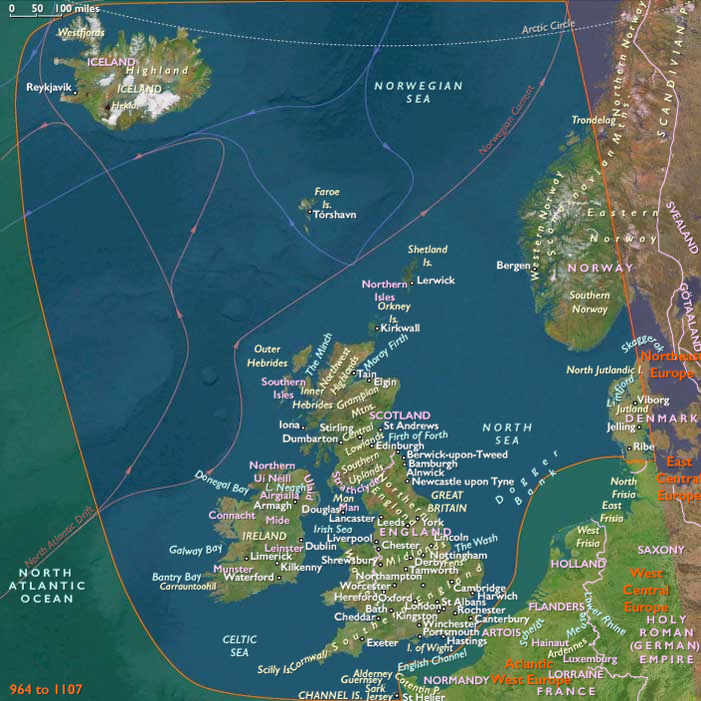
Related Events
Showing 10 events out of 50908 total
Years: 1066 - 1066
September
Locations
People
- Edith of Wessex
- Edward the Confessor
- Edwin
- Harald Hardrada
- Harold Godwinson
- Morcar
- Tostig Godwinson
- William the Conqueror
Groups
- Anglo-Saxons
- Welsh people
- Danes (Scandinavians)
- Flanders, County of
- Alba (Scotland), Scots Kingdom of
- Normandy, Duchy of
- Normans
- Norway, independent Kingdom of
- England, (Anglo-Saxon) Kingdom of
- England, (Norman) Kingdom of
Topics
Commodoties
Subjects
Regions
Subregions