
The Siege of Champtoceaux and John of …
Years: 1341 - 1341
October
The Siege of Champtoceaux and John of Montfort’s Failed Relief Attempt (October 1341)
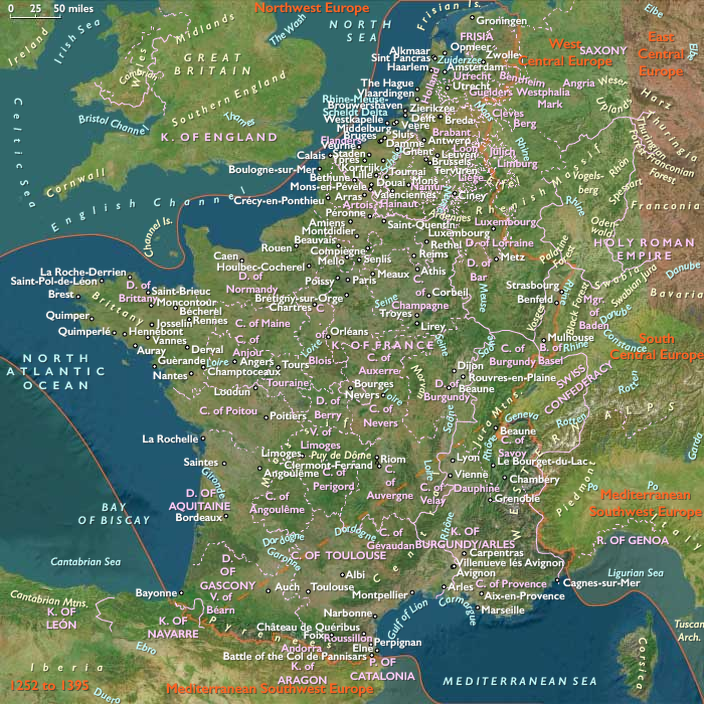
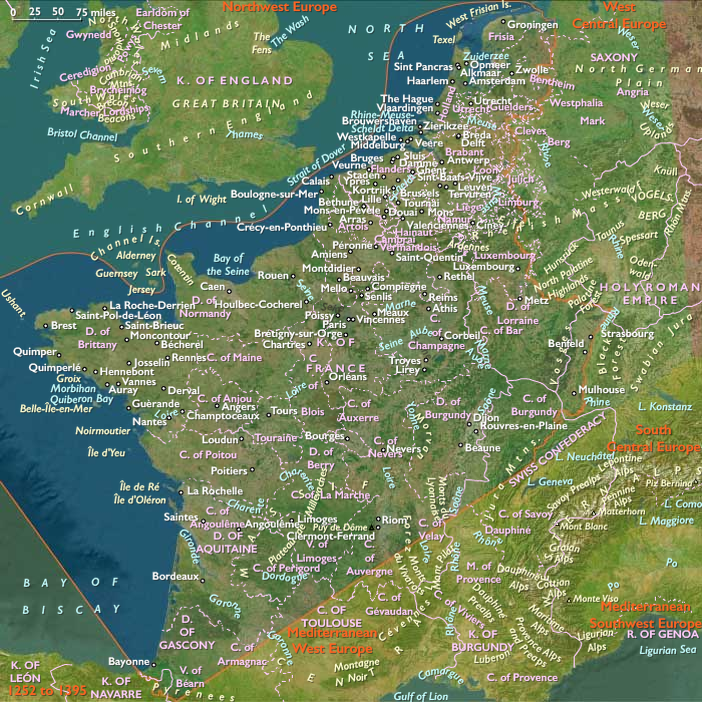
In the early months of the Breton War of Succession (1341–1365), Charles of Blois, the French-backed claimant to the Duchy of Brittany, launched a military campaign to crush John of Montfort’s forces. His first target was Champtoceaux, a fortified castle guarding the Loire Valley, which Montfort had garrisoned as part of his defensive strategy in eastern Brittany.
The Strategic Situation: The Constraints of the Truce and the French Invasion
- Edward III of England, Montfort’s potential ally, was bound by a truce with France and could not take offensive action.
- However, Philip VI of France had no such restrictions against rebellious vassals, allowing him to support Charles of Blois militarily.
- By October 1341, Charles had assembled:
- 5,000 French soldiers.
- 2,000 Genoese mercenaries.
- A large but unrecorded number of Breton troops.
- The French army encamped at Angers in the Loire Valley before beginning its march toward Nantes, with Champtoceaux as its first objective.
The Siege of Champtoceaux Begins (October 10, 1341)
- Charles arrived at Champtoceaux on October 10 and began laying siege to the castle before the rest of his army could catch up.
- John of Montfort, realizing that the balance of power could shift rapidly in medieval dynastic struggles, saw his support eroding as the French advanced deeper into Brittany.
John of Montfort’s Desperate Relief Attempt at l’Humeau
- With his forces stretched thin across multiple garrisons, Montfort was only able to gather a small force from Nantes to attempt a relief of Champtoceaux.
- He halted at l’Humeau, a farmstead three miles from the castle, expecting to find supporters who could provide intelligence on Charles' position.
- Instead, he unexpectedly stumbled upon Charles of Blois himself, nearly overwhelming his personal bodyguard.
- Charles barricaded himself inside the tower of the farmhouse, successfully defending against Montfort’s repeated attacks for two days.
The Bloody Skirmishes and Montfort’s Retreat
- Meanwhile, the main French army continued advancing toward Nantes, causing chaos and alarm among Montfort’s supporters.
- As Montfort’s position became increasingly untenable, his forces were drawn into a series of confused and bloody skirmishes around the head of the French column.
- Despite his best efforts, Montfort’s smaller force was unable to halt the French advance.
John of Montfort’s Escape and the Fall of Champtoceaux (October 26, 1341)
- Realizing he was outmatched, Montfort abandoned the siege attempt and rode at full speed to Nantes, pursued by French cavalry.
- His defeat at Champtoceaux resulted in heavy losses among his supporters and mercenaries.
- With news of Montfort’s retreat spreading, Champtoceaux surrendered on October 26, 1341.
Consequences of the Battle
- The fall of Champtoceaux gave Charles of Blois a strong foothold in Brittany, significantly weakening Montfort’s territorial control.
- Montfort’s failed relief attempt cost him key supporters, forcing him into a defensive position in Nantes.
- With Edward III still unable to intervene militarily, Montfort’s situation grew increasingly desperate.
- This early victory for Charles of Blois reinforced French control in the opening phase of the Breton War of Succession, although Montfort would continue to resist with eventual English assistance.
John of Montfort’s defeat at Champtoceaux in October 1341 marked a significant setback, demonstrating the military strength of the French-backed forces and further entrenching the conflict into the broader Hundred Years’ War.
Locations
People
- Charles of Blois Châtillon
- Edward III of England
- Joan, Duchess of Brittany
- John of Montfort
- Philip VI of France
Topics
- Hundred Years' War: Beginning of the War
- Hundred Years' War
- Breton Succession, War of the
- Champtoceaux, Battle of
Commodoties
Subjects
Regions
Subregions
Related Events
Showing 10 events out of 44460 total
Years: 1341 - 1341
October
Locations
People
- Charles of Blois Châtillon
- Edward III of England
- Joan, Duchess of Brittany
- John of Montfort
- Philip VI of France
Topics
- Hundred Years' War: Beginning of the War
- Hundred Years' War
- Breton Succession, War of the
- Champtoceaux, Battle of
Commodoties
Subjects
Regions
Subregions