
Filters:
The Black Prince’s Chevauchée and the Lead-Up …
Years: 1356 - 1356
The Black Prince’s Chevauchée and the Lead-Up to the Battle of Poitiers (August–September 1356)
By 1356, after years of war, Edward III of England sought a diplomatic resolution, proposing that France permanently cede Aquitaine in exchange for peace. However, French King John II ("the Good") rejected the proposal, prompting Edward’s eldest son, Edward, Prince of Wales (later known as the Black Prince), to launch a massive chevauchée (scorched-earth raid) deep into central France.
The Chevauchée of August 1356: Raiding Across Central France
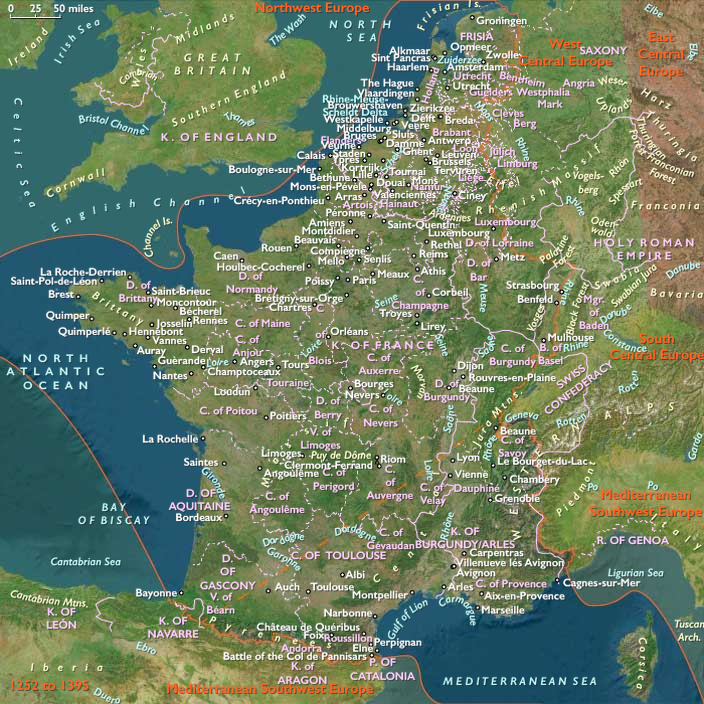
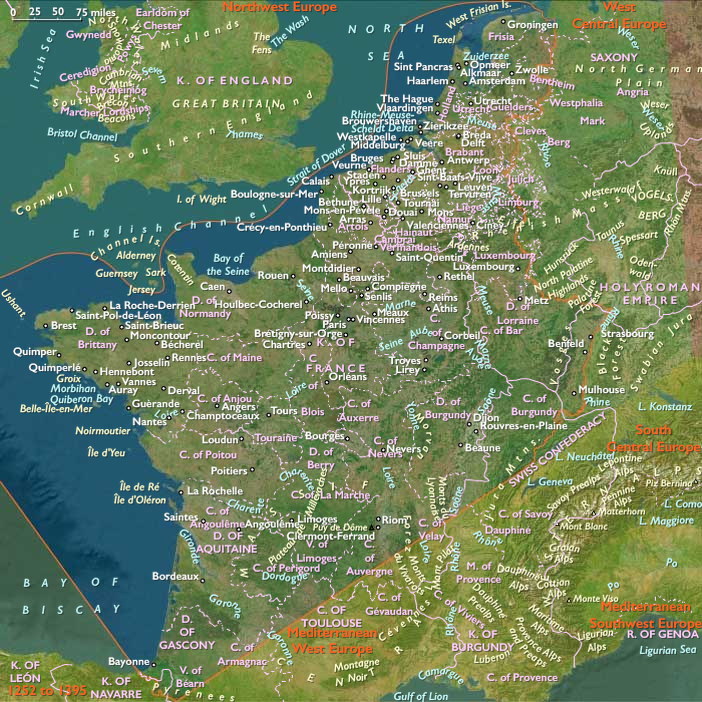
- On August 8, 1356, the Black Prince’s army began its devastating march northward from English-held Aquitaine, carrying out a chevauchée designed to weaken France’s economy, demoralize the population, and provoke the French army into battle.
- His fast-moving English and Gascon force, composed of mounted knights, men-at-arms, and archers, met little resistance and proceeded to burn numerous towns and villages to the ground, pillaging the countryside for supplies.
- The English lived off the land, creating havoc in French territories and stripping central France of valuable resources.
The Loire River and the Delay at Tours
- By early September 1356, the Black Prince’s army reached the Loire River at Tours, a key crossing point in central France.
- He attempted to capture the castle and sack the town, but was unable to breach its defenses due to a heavy rainstorm, which prevented his troops from setting fires.
- This delay at Tours proved costly, as it allowed John II of France to close in with a large army, finally putting the English force in jeopardy.
John II’s Response: The Pursuit Begins
- King John II had been assembling a powerful army to intercept the English raiders and prevent their retreat back to Aquitaine.
- The delay at Tours gave him the time he needed to maneuver into position, forcing the Black Prince’s army into a dangerous situation.
- Now, instead of freely raiding French lands, Edward’s force had to plan a strategic retreat southward, knowing that a major confrontation was inevitable.
The Path to the Battle of Poitiers
- The Black Prince’s chevauchée had succeeded in devastating central France, but his army was now being pursued by a superior French force.
- This set the stage for the decisive Battle of Poitiers (September 19, 1356), one of the most significant English victories of the Hundred Years’ War, where John II would be captured, throwing France into crisis.
Edward’s brutal chevauchée of 1356, though initially an overwhelming success, ultimately led to the climactic confrontation at Poitiers, shaping the course of the Hundred Years’ War for years to come.
Locations
People
- Charles V of France
- Edward III of England
- Edward, the Black Prince
- John II of France
- Louis I, Duke of Anjou
- Philip the Bold
Groups
Topics
- Scottish Independence, Second War of
- Hundred Years' War: Beginning of the War
- Hundred Years' War
- Edward the Black Prince, Raids of
- Poitiers, Battle of
Commodoties
Subjects
Regions
Subregions
Years: 1356 - 1356
Locations
People
- Charles V of France
- Edward III of England
- Edward, the Black Prince
- John II of France
- Louis I, Duke of Anjou
- Philip the Bold
Groups
Topics
- Scottish Independence, Second War of
- Hundred Years' War: Beginning of the War
- Hundred Years' War
- Edward the Black Prince, Raids of
- Poitiers, Battle of
Commodoties
Subjects
Regions
Subregions