
…Edessa, the capital of Osroene, a small …
Years: 116 - 116
…Edessa, the capital of Osroene, a small Roman client state between Asia Minor and Syria, …
Locations
People
Groups
- Iranian peoples
- Jews
- Parthian Empire
- Osroene, Kingdom of
- Characene (Mesene)
- Adiabene, Kingdom of
- Roman Empire (Rome): Nerva-Antonine dynasty
- Mesopotamia (Roman province)
- Syrian people
Topics
- Classical antiquity
- Pax Romana
- Jewish–Roman wars
- Kitos War, or Second Jewish-Roman War, or Jewish Revolt of 115-17
Commodoties
Subjects
Regions
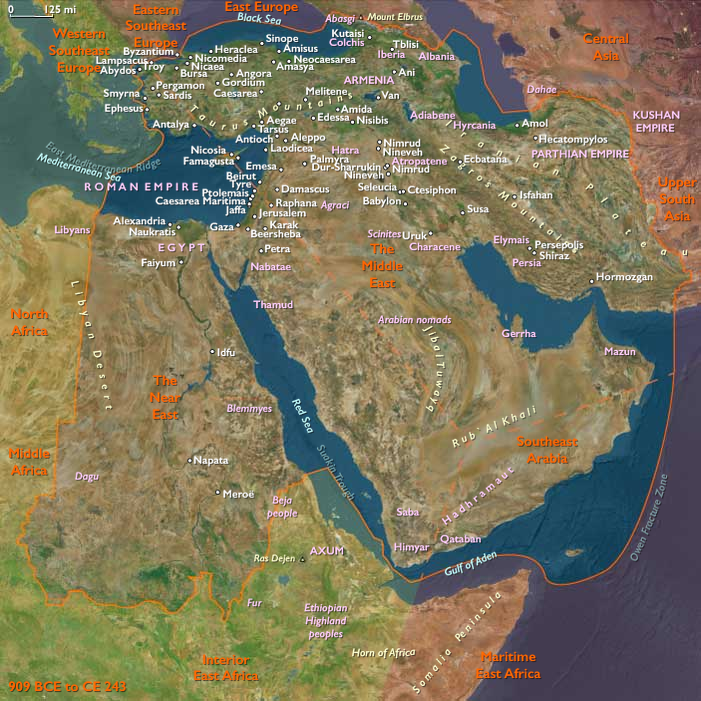
Subregions
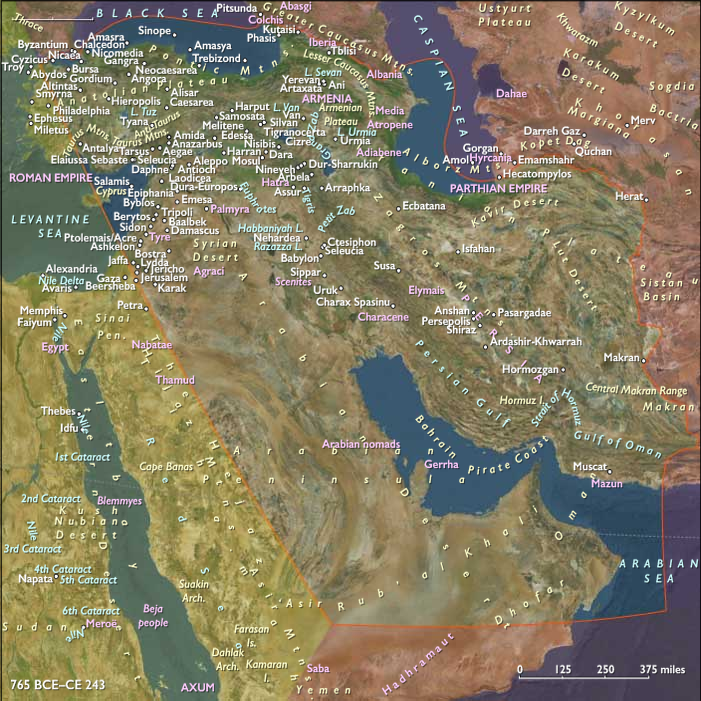
Related Events
Showing 10 events out of 61236 total
Years: 116 - 116
Locations
People
Groups
- Iranian peoples
- Jews
- Parthian Empire
- Osroene, Kingdom of
- Characene (Mesene)
- Adiabene, Kingdom of
- Roman Empire (Rome): Nerva-Antonine dynasty
- Mesopotamia (Roman province)
- Syrian people
Topics
- Classical antiquity
- Pax Romana
- Jewish–Roman wars
- Kitos War, or Second Jewish-Roman War, or Jewish Revolt of 115-17
Commodoties
Subjects
Regions
Subregions