
Factional fighting at the imperial court continues …
Years: 784 - 795
Factional fighting at the imperial court continues throughout the Nara period.
Imperial family members, leading court families, such as the Fujiwara, and Buddhist priests all contend for influence.
In the late Nara period, financial burdens on the state increase, and the court begins dismissing nonessential officials.
In 792 universal conscription is abandoned, and district heads are allowed to establish private militia forces for local police work.
Decentralization of authority becomes the rule despite the reforms of the Nara period.
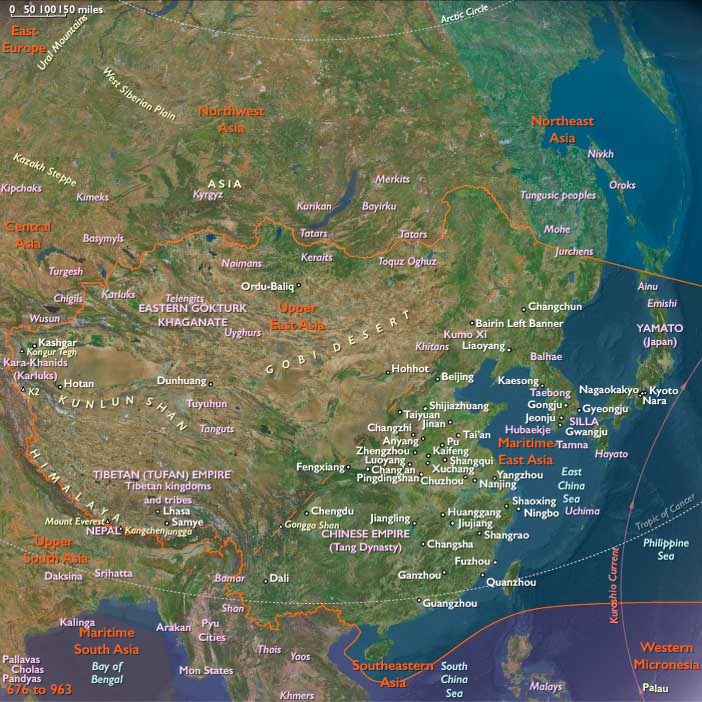
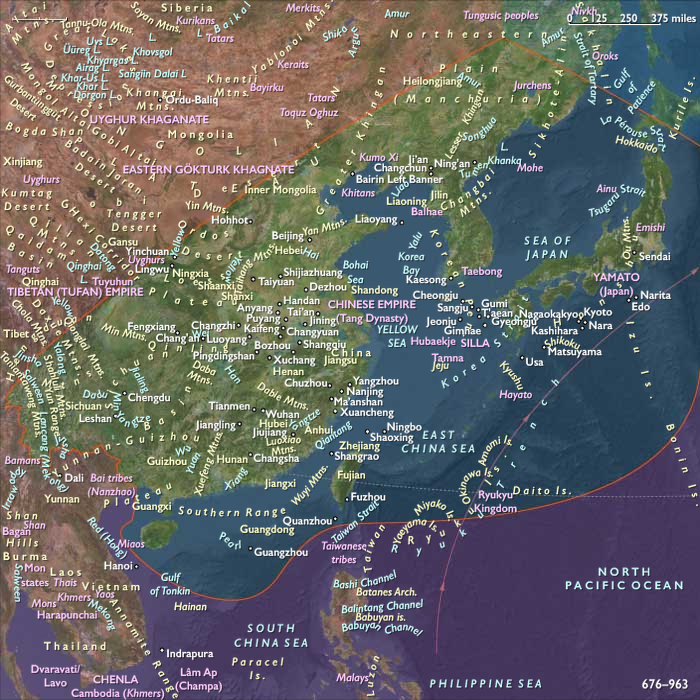
Eventually, to return control to imperial hands, the capital is moved in 784 to Nagaoka and in 794 to Heiankyo (Capital of Peace and Tranquility) or Heian, about twenty-six kilometers north of Nara.
By the late eleventh century, the city will popularly be called Kyoto (Capital City), the name it will have ever since.
Locations
Groups
- Japanese people
- Buddhists, Zen or Chán
- Japan, Yamato Hakuho (Late Asuka) Period
- Japan, Nara Period
- Japan, Heian Period
Subjects
Regions
Subregions
Years: 784 - 795
Locations
Groups
- Japanese people
- Buddhists, Zen or Chán
- Japan, Yamato Hakuho (Late Asuka) Period
- Japan, Nara Period
- Japan, Heian Period
Subjects
Regions
Subregions