
Eastern West Indies (1828–1971 CE): Emancipation, Nation-Making, …
Years: 1828 - 1971
Eastern West Indies (1828–1971 CE): Emancipation, Nation-Making, and New Economies
Geographic & Environmental Context
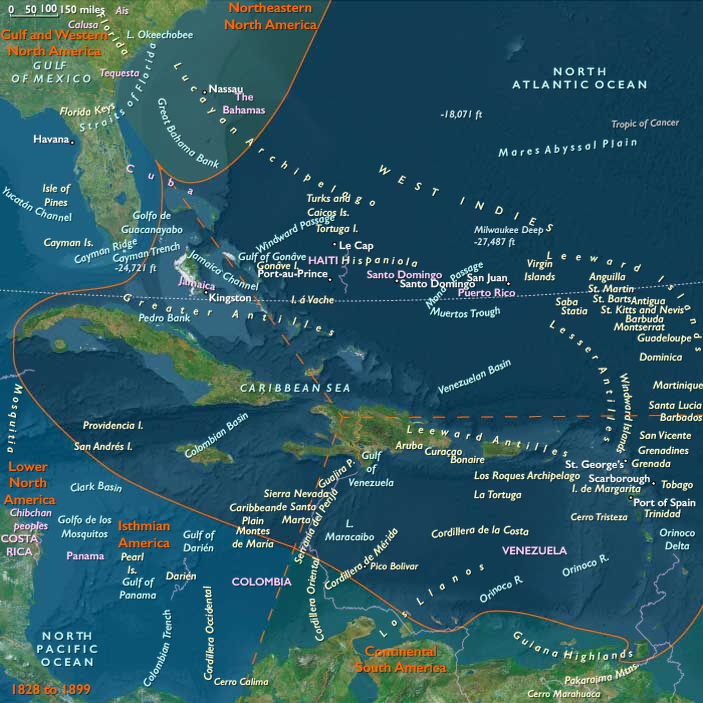
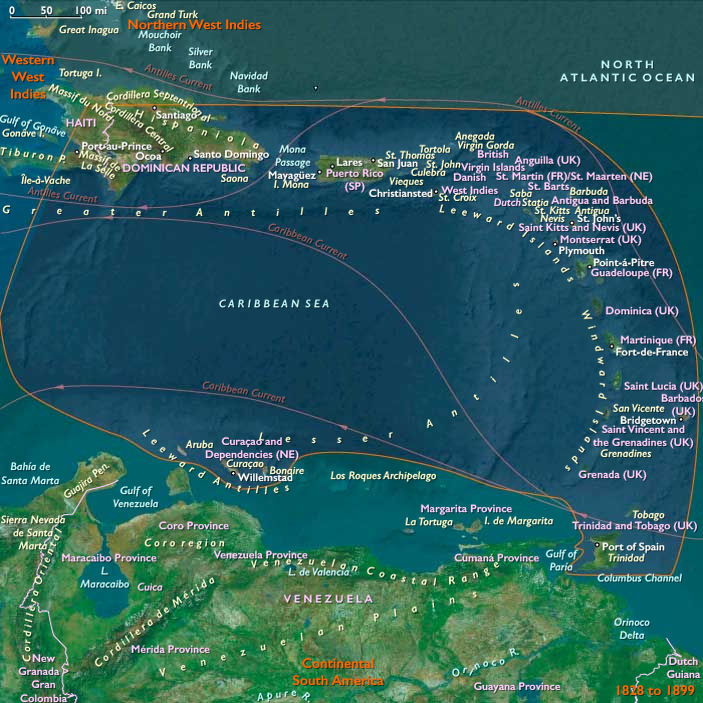
The subregion of Eastern West Indies includes Trinidad, Saint Lucia, Barbados, most of Haiti, most of the Dominican Republic, Puerto Rico, and the Virgin Islands. Anchors include Kingston-to-San Juan sea lanes, the Hispaniolan cordilleras, the Caroni and Naparima plains (Trinidad), and the Windward–Leeward channels that structured trade, migration, and navies.
Climate & Environmental Shifts
Recurring major hurricanes (e.g., 1899 in Puerto Rico; 1930 in the Dominican Republic; 1955/1963 across the arc) and periodic droughts tested smallholders and towns. Deforestation for cane and charcoal reduced watershed resilience; mid-20th-century reforestation and conservation began piecemeal.
Subsistence & Settlement
-
Haiti: Independent since 1804; rural peasantry consolidated smallholdings (lakou systems) in coffee/food crops. Political instability, debt, and later the U.S. occupation (1915–1934) constrained growth.
-
Dominican Republic: Independence from Haiti in 1844; annexation to Spain (1861–1865) and restoration followed. Coffee, cacao, tobacco, and cattle underpinned regional economies; the U.S. occupation (1916–1924) reshaped customs and finance.
-
Puerto Rico: Spanish colony until 1898, then under U.S. sovereignty; sugar corporations expanded, later giving way to industrialization and migration under Operation Bootstrap (1947–1950s).
-
Barbados & Saint Lucia: Emancipation (1834–1838) reconfigured labor; sharecropping and peasantries grew alongside estates. 20th-century diversification moved toward tourism and services; Barbados achieved independence (1966).
-
Trinidad: Emancipation (1834–1838); post-emancipation estates imported indentured labor (primarily from India, from 1845). Oil and asphalt (Pitch Lake) shifted the economy; independence (1962) arrived mid-century.
-
Virgin Islands: The Danish West Indies (St. Thomas, St. John, St. Croix) abolished slavery in 1848; sold to the United States (1917) as the U.S. Virgin Islands. British Virgin Islands remained a small, agrarian colony moving toward financial/tourism niches.
Technology & Material Culture
Railways, centrals, and company towns modernized cane zones; oil refineries and ports transformed Trinidad. Concrete sea defenses, lighthouses, and breakwaters hardened coasts. Urban fabrics—Havana-style arcades in San Juan’s old quarter, gingerbread houses in Cap-Haïtien, Georgian stone in Bridgetown, cast-iron galleries in Castries—signaled layered colonial inheritances. Afro-Indo-Creole cuisines, steelpan (Trinidad), and carnival costuming flourished.
Movement & Interaction Corridors
-
Steamship and later air routes knit Port of Spain, Bridgetown, San Juan, and St. Thomas to New York, London, and Caracas.
-
Labor migrations: post-1838 indenture to Trinidad; 20th-century movements from Barbados and St. Lucia to Panama, Britain’s Windrush era, and the U.S. mainland; circular migration within Hispaniola.
-
Naval corridors shifted with U.S. ascendancy (Guantánamo nearby; U.S. bases in Puerto Rico and the U.S. Virgin Islands).
Cultural & Symbolic Expressions
-
Afro-Caribbean faiths—vodou (Haiti), orisha/Ifá strands in Trinidad, Shango and Spiritual Baptist practices—coexisted with Catholic and Protestant establishments.
-
Mass festivals—Carnival (Trinidad/Barbados), Jounen Kwéyòl strands in Saint Lucia, Fête Dieu processions—encoded memory and resilience.
-
Literary and musical renaissances (calypso, son, merengue, steelpan) articulated post-emancipation identities; nationalist symbols crystallized in independence movements.
Environmental Adaptation & Resilience
Peasant mosaics (cacao/coffee/intercropping) stabilized hillsides; terrace and contour farming limited erosion. Coastal towns rebuilt repeatedly after cyclones with concrete and hurricane-strapped roofs. Oil and tourism diversified beyond sugar; cooperative credit, diaspora remittances, and mutual-aid lodges buffered shocks.
Transition
By 1971 CE, the Eastern West Indies spanned independent states (Trinidad and Barbados), U.S. territories (Puerto Rico, U.S. Virgin Islands), British colonies on paths toward autonomy (Saint Lucia, British Virgin Islands), and Hispaniolan republics wrestling with debt, dictatorship, and development. Across the arc, the legacies of slavery, emancipation, indenture, and revolution had yielded a distinctly Caribbean modernity—maritime, migratory, and culturally incandescent.
People
- Buenaventura Báez
- Fabre Geffrard
- François Duvalier
- Jean-Pierre Boyer
- Joaquín Balaguer
- Juan Bosch
- Luis Muñoz Marín
- Lysius Salomon
- Pedro Santana
- Rafael Leonidas Trujillo
- Ulises Heureaux
Groups
- Indian people
- Chinese (Han) people
- Saint Vincent
- Puerto Rico (Spanish Colony)
- Saba (Dutch Colony)
- Sint Maarten, Dutch Territory of
- Danish West Indies
- Virgin Islands (Royal Danish Colony)
- Grenada (British colony)
- Dominica (British colony)
- Sint Eustatius (Dutch Colony)
- United States of America (US, USA) (Washington DC)
- Barbados (British colony)
- Haiti, Republic of
- Spain, Bourbon Kingdom (first restoration) of
- Trinidad, British colony
- Martinique, (French colony)
- Denmark, Kingdom of
- Tobago, British colony of
- Saint Lucia (British colony)
- Guadeloupe, (French colony)
- Dominican Republic
- Dominican Republic (restored)
- Trinidad, British Crown Colony of
- Puerto Rico, Commonwealth of
- Virgin Islands, United States (United States insular area)
- Martinique, (French overseas) Department of
- Guadeloupe, (French) Department of
- Puerto Rico, Commonweath of
- Trinidad and Tobago, Republic of
- Barbados
Topics
- Colonization of the Americas, Spanish
- Santo Domingo, Haitian Occupation of
- Dominican War of Independence
- Dominican Restoration War
- Spanish-American War
- Haiti, United States occupation of
- Dominican Occupation Revolt
- Haitian Occupation Revolt of 1918-19
- Dominican "Era of Trujillo"
- Dominican Republic, Civil War of 1965-66
Commodoties
Subjects
Regions
Subregions
Years: 1828 - 1971
People
- Buenaventura Báez
- Fabre Geffrard
- François Duvalier
- Jean-Pierre Boyer
- Joaquín Balaguer
- Juan Bosch
- Luis Muñoz Marín
- Lysius Salomon
- Pedro Santana
- Rafael Leonidas Trujillo
- Ulises Heureaux
Groups
- Indian people
- Chinese (Han) people
- Saint Vincent
- Puerto Rico (Spanish Colony)
- Saba (Dutch Colony)
- Sint Maarten, Dutch Territory of
- Danish West Indies
- Virgin Islands (Royal Danish Colony)
- Grenada (British colony)
- Dominica (British colony)
- Sint Eustatius (Dutch Colony)
- United States of America (US, USA) (Washington DC)
- Barbados (British colony)
- Haiti, Republic of
- Spain, Bourbon Kingdom (first restoration) of
- Trinidad, British colony
- Martinique, (French colony)
- Denmark, Kingdom of
- Tobago, British colony of
- Saint Lucia (British colony)
- Guadeloupe, (French colony)
- Dominican Republic
- Dominican Republic (restored)
- Trinidad, British Crown Colony of
- Puerto Rico, Commonwealth of
- Virgin Islands, United States (United States insular area)
- Martinique, (French overseas) Department of
- Guadeloupe, (French) Department of
- Puerto Rico, Commonweath of
- Trinidad and Tobago, Republic of
- Barbados
Topics
- Colonization of the Americas, Spanish
- Santo Domingo, Haitian Occupation of
- Dominican War of Independence
- Dominican Restoration War
- Spanish-American War
- Haiti, United States occupation of
- Dominican Occupation Revolt
- Haitian Occupation Revolt of 1918-19
- Dominican "Era of Trujillo"
- Dominican Republic, Civil War of 1965-66
Commodoties
Subjects
Regions
Subregions