
Eastern West Indies (1744–1755 CE): Colonial Warfare …
Years: 1744 - 1755
Eastern West Indies (1744–1755 CE): Colonial Warfare and Shifts in Territorial Control
War of the Austrian Succession in the Caribbean
Between 1744 and 1755, the War of the Austrian Succession extended European conflicts into Caribbean colonial territories, intensifying military confrontations and strategic maneuvering. British forces from Saint Kitts invaded the French-controlled half of neighboring Saint Martin in 1744, occupying it until the Treaty of Aix-la-Chapelle in 1748.
French Invasion of Anguilla
In retaliation, a French fleet led by Commodore La Touché, consisting of two royal frigates, three privateers, and two Dutch support vessels, departed Martinique in late May 1745 to capture Anguilla. The British defenders, comprising around 150 militia and regular soldiers under Governor Arthur Hodge, fortified their position despite being outnumbered.
On May 21, the French forces, numbering 759 men, landed unexpectedly at Rendezvous Bay, achieving initial surprise. However, Governor Hodge strategically positioned British defenders along a narrow path, resulting in a highly effective ambush. British forces, led by Captain Richardson, inflicted heavy casualties, quickly breaking French ranks. The subsequent British counterattack turned the French retreat into a rout, forcing the attackers back to their ships amid chaos, heavy losses, and drownings.
The French fleet withdrew to Martinique following the battle, leaving behind at least 100 French casualties, including notable officers such as Commodore La Touché's second captain, the first lieutenant of another frigate, Captain Rolough of a privateer, and the son of the Governor of Saint Barthélemy. La Touché himself was wounded and later negotiated unsuccessfully for prisoner exchanges. The British, suffering only seven casualties, captured two French colors, firearms, grenades, and swivel guns, rewarding the enslaved Africans who aided in their defense efforts.
Treaty of Aix-la-Chapelle and Colonial Adjustments
The Treaty of Aix-la-Chapelle (1748) provided minimal clarity regarding territorial claims in the Caribbean, leaving many disputes unresolved. However, the treaty established neutrality for Tobago, Grenada, Saint Vincent, and Dominica, allowing economic access without garrisons. Significantly, France gained definitive control of Saint Luciaas a colony.
Danish Administrative Changes
The Danish presence in the Caribbean, through the Danish West India and Guinea Company, continued its economic prosperity based primarily on the North Atlantic triangular trade. In 1754, administrative control of St. Croix, St. John, and St. Thomas transitioned directly to the Danish crown under King Frederick V, making them royal Danish colonies and marking the end of the Danish West India Company's governance.
Conclusion
The period from 1744 to 1755 in the Eastern West Indies was marked by intense colonial warfare and territorial readjustments. Battles like the decisive British victory on Anguilla demonstrated the volatility of colonial control, while diplomatic outcomes such as the Treaty of Aix-la-Chapelle reshaped political boundaries and colonial policies. Simultaneously, the Danish shift to direct royal governance underscored the evolving complexities and geopolitical significance of the Caribbean colonies.
People
Groups
- Saint Barthélemy
- Saint Vincent
- Denmark-Norway, Kingdom of
- France, (Bourbon) Kingdom of
- Martinique, (French colony)
- Saint Martin, French Territory of
- Grenada (French colony)
- Anguilla (British colony)
- Danish West India and Guinea Company
- Virgin Islands, British (Overseas Territory of the United Kingdom)
- Britain, Kingdom of Great
- Dominica (French colony)
- Saint Kitts (British Colony)
- Danish West Indies
Topics
- Colonization of the Americas, French
- Colonization of the Americas, Danish
- Colonization of the Americas, British
- Austrian Succession, War of the
Commodoties
Subjects
Regions
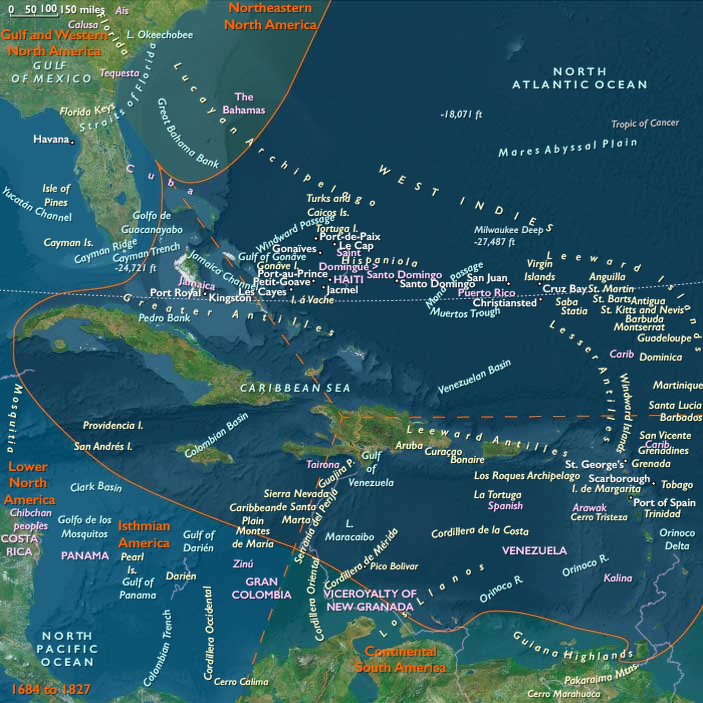
Subregions
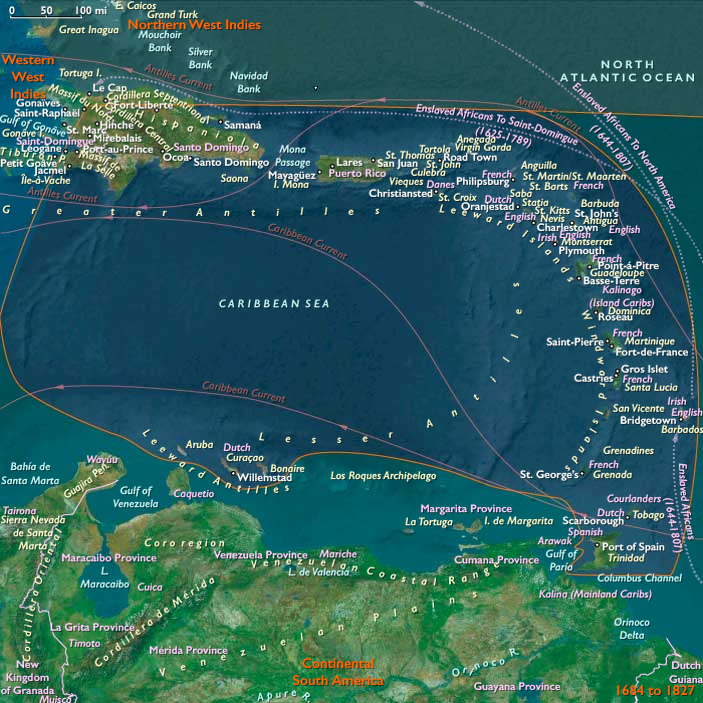
Years: 1744 - 1755
People
Groups
- Saint Barthélemy
- Saint Vincent
- Denmark-Norway, Kingdom of
- France, (Bourbon) Kingdom of
- Martinique, (French colony)
- Saint Martin, French Territory of
- Grenada (French colony)
- Anguilla (British colony)
- Danish West India and Guinea Company
- Virgin Islands, British (Overseas Territory of the United Kingdom)
- Britain, Kingdom of Great
- Dominica (French colony)
- Saint Kitts (British Colony)
- Danish West Indies
Topics
- Colonization of the Americas, French
- Colonization of the Americas, Danish
- Colonization of the Americas, British
- Austrian Succession, War of the
Commodoties
Subjects
Regions
Subregions