
Eastern West Indies (1732–1743 CE): Danish Expansion …
Years: 1732 - 1743
Eastern West Indies (1732–1743 CE): Danish Expansion and the St. John Slave Insurrection
Danish Colonization and Plantation Economy
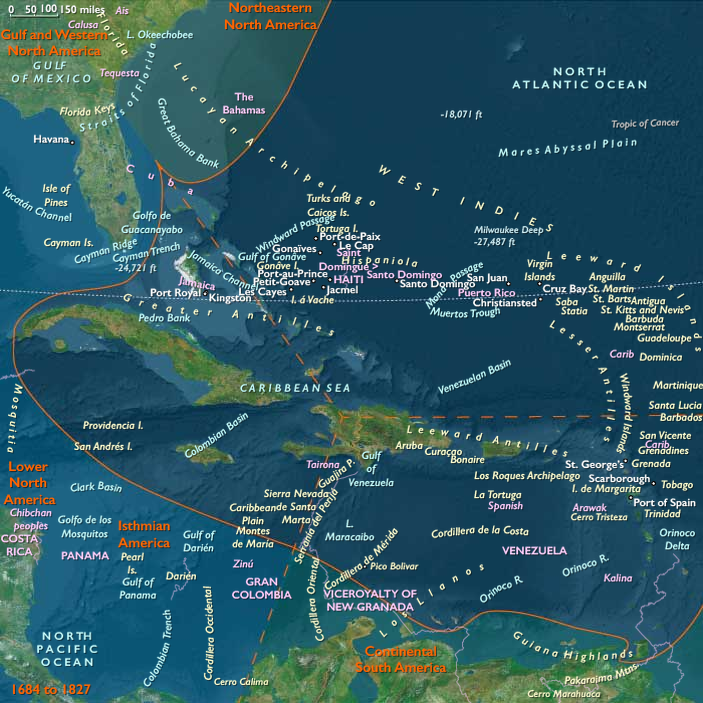
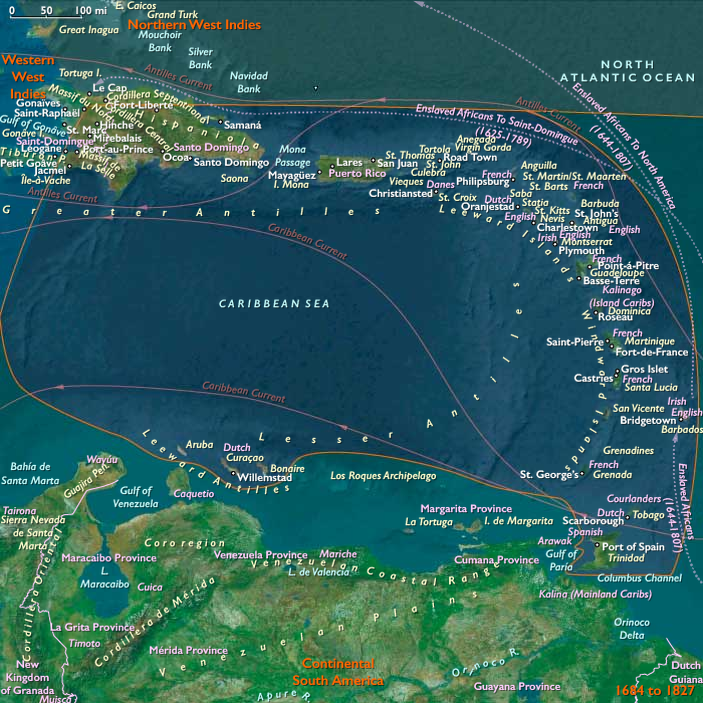
Between 1732 and 1743, Denmark expanded its Caribbean holdings significantly. Having established colonies on St. Thomas in 1671–1672 and St. John in 1683 (though British claims lingered until 1718), Denmark acquired Saint Croix from France in 1733, completing the trio known today as the United States Virgin Islands.
Due to the lack of local labor resulting from the near-total disappearance of indigenous populations, Denmark relied heavily on enslaved Africans. Attempts to use Danish indentured servants or young emigrants proved insufficient, prompting increased reliance on the transatlantic slave trade. From 1660 to 1806, approximately 85,000 enslaved Africans were transported on Danish ships, primarily through the Danish West India and Guinea Company operating near Accra, Ghana.
The 1733 Slave Insurrection on St. John
By 1733, conditions on St. John were dire due to drought, a severe hurricane, and widespread crop failures. The island’s 1,087 enslaved Africans, mostly from the Akwamu tribe of present-day Ghana, vastly outnumbered the 206 white inhabitants. Many enslaved people from plantations, including the Suhm and Company estates near Coral Bay, began marooning—fleeing plantations due to harsh conditions.
On November 23, 1733, a carefully planned rebellion erupted, led by prominent Akwamu figures such as King June, Kanta, King Bolombo, Prince Aquashie, and Breffu. Rebels, initially admitted into Coral Bay fort under a ruse, swiftly took control after killing most stationed soldiers. A group led by King June maintained control of the fort, while others spread out, capturing estates and killing numerous white settlers.
Battles and Resistance
The rebels intended to establish an independent Akwamu-ruled nation, maintaining sugar production and enslaving non-Akwamu Africans. Moving swiftly from Coral Bay, they targeted the Cinnamon Bay Plantation, encountering resistance from owners John and Lieven Jansen and their loyal enslaved individuals, who eventually escaped to Durloe’s Plantation.
Despite capturing and looting several plantations, rebel advances were halted at Durloe’s Plantation, allowing many planters and their families to flee to safety in St. Thomas.
Suppression and Aftermath
In response, French forces arrived from Martinique on April 23, 1734, providing substantial military strength. By mid-May, these forces successfully reestablished colonial control, returning to Martinique on June 1 and leaving the local militia to pursue remaining rebels. The insurrection ended officially on August 25, 1734, with the capture of surviving maroons by Sergeant Øttingen.
The rebellion had lasting impacts, including significant loss of life and property, prompting many landowners to relocate to St. Croix. Notably, Franz Claasen, an enslaved individual loyal to the van Stell family, was deeded the Mary Point Estate in recognition of his role in alerting the family and facilitating their escape. Recorded officially on August 20, 1738, Claasen became the first documented free colored landowner on St. John.
Conclusion
The era 1732–1743 dramatically reshaped the Eastern West Indies. Denmark solidified its territorial presence, yet faced intense internal conflict exemplified by the 1733 slave rebellion on St. John. This rebellion underscored the profound tensions inherent within plantation-based economies, significantly influencing future colonial policies and social dynamics.
Groups
- Denmark-Norway, Kingdom of
- France, (Bourbon) Kingdom of
- Martinique, (French colony)
- Danish West India and Guinea Company
- Virgin Islands, British (Overseas Territory of the United Kingdom)
Topics
Commodoties
Subjects
Regions
Subregions
Years: 1732 - 1743
Groups
- Denmark-Norway, Kingdom of
- France, (Bourbon) Kingdom of
- Martinique, (French colony)
- Danish West India and Guinea Company
- Virgin Islands, British (Overseas Territory of the United Kingdom)
Topics
Commodoties
Subjects
Regions
Subregions