
Eastern West Indies (1540–1683 CE): Consolidation, Resistance, …
Years: 1540 - 1683
Eastern West Indies (1540–1683 CE): Consolidation, Resistance, and Maritime Corridors
Geographic & Environmental Context
The subregion of Eastern West Indies includes Trinidad, Saint Lucia, Barbados, most of Haiti, most of the Dominican Republic, Puerto Rico, and the Virgin Islands. Anchors included the Orinoco–Trinidad seaway, the Cordillera Central of Hispaniola, the karst valleys of Puerto Rico, and the volcanic arc from Saint Lucia through the northern Lesser Antilles. Coral reefs, fertile valleys, and hurricane-exposed coasts structured settlement and strategy.
Climate & Environmental Shifts
The Little Ice Age persisted with cooler decades and heightened hurricane frequency (notably mid-1600s). Drought cycles struck leeward islands; windward slopes on volcanic islands retained higher rainfall. Floods alternated with dry spells on Hispaniola’s north, shaping ranching and smallholder agriculture.
Subsistence & Settlement
-
Spanish Hispaniola and Puerto Rico: After demographic collapse, Spanish society reorganized around cattle hatós (ranches), small farms, and coastal towns. Enslaved Africans and their descendants worked ranches, mines (declining), and ports; free Afro-descended communities grew in rural zones.
-
Trinidad & the Lesser Antilles: Kalinago (Carib) communities maintained shifting cultivation, fishing, and canoe raiding/trading networks; Spanish footholds remained tenuous outside main towns.
-
Barbados (from 1627, English): Rapid plantation shift to sugar with enslaved African labor; small farms gave way to estates, and the island became a key English sugar hub.
-
Virgin Islands & northern Lesser Antilles: Intermittent Spanish presence met rising French and English settlements (mid-17th century), while Kalinago resistance persisted from strongholds on mountainous isles.
Technology & Material Culture
Spanish towns displayed masonry churches, plazas, and coastal forts; ranching technologies (lasso, corral, brand) dominated Hispaniola’s interior. English Barbados installed wind-powered sugar mills, boiling houses, and curing facilities; plantation house forms and stone/brick windmills dotted ridges. Afro-Caribbean craft, music, and cuisine expanded—ironwork, basketry, drum traditions—blending with European and surviving Taíno elements. Kalinago weaponry (bow, lance) and seaworthy canoes underpinned mobility and defense.
Movement & Interaction Corridors
-
Treasure-fleet and convoy routes funneled through the Windward Passage and past Puerto Rico; Havana remained the principal rally point, but Hispaniola’s north and Puerto Rico supplied cattle, hides, and timber.
-
Barbados–England–North America circuits exported sugar and imported provisions, enslaved people, and equipment.
-
Kalinago canoe corridors linked Saint Lucia, Dominica, Guadeloupe, and the Virgin Islands for trade/raids, intercepting colonial shipping.
-
Smuggling networks connected Hispaniola’s north with Tortuga and Saint-Domingue (French) for hides, tobacco, and textiles.
Cultural & Symbolic Expressions
Spanish Catholicism structured public ritual on Hispaniola and Puerto Rico, while Afro-descended confraternities and cabildos nurtured mutual aid and syncretic devotion. On Barbados, Anglican worship anchored planters’ identity; African ritual life persisted covertly in quarters and nighttime gatherings. Kalinago spirituality—ancestor veneration, warrior rites, and healing—remained central to island autonomy. Music, drum/dance, and festival cycles expressed memory and power across all societies.
Environmental Adaptation & Resilience
Hurricane rebuilding fostered stone foundations, buttressed churches, and wind-smart siting. On Hispaniola, mixed herding–cropping buffered drought; free and enslaved Afro-descended farmers sustained provision grounds (cassava, plantains, yams). Barbados shifted soils under cane; provision plots and inter-island provisioning mitigated food shortfalls. Kalinago mobility and upland refuges enabled long resistance amid encroaching colonies.
Transition
By 1683 CE, the Eastern West Indies had polarized: Spanish Hispaniola and Puerto Rico stabilized as provisioning and ranching nodes; Barbados rose as England’s sugar powerhouse; Kalinago strongholds still contested the Lesser Antilles even as French and English settlements multiplied. The subregion’s future would pivot on sugar-driven slavery, imperial rivalry, and the endurance of Afro-Caribbean and Indigenous lifeways.
People
Groups
- Taíno
- Spanish Empire
- Santo Domingo, Captaincy General of
- Puerto Rico (Spanish Colony)
- Santiago, Colony of (Spanish Jamaica)
- Santo Domingo, Real Audiencia de
- Spaniards (Latins)
- Spain, Habsburg Kingdom of
- New Spain, Viceroyalty of
- Netherlands, United Provinces of the (Dutch Republic)
- France, (Bourbon) Kingdom of
- Dutch East India Company (Vereenigde Oostindische Compagnie or VOC in Dutch, literally "United East Indies Company")
- Barbados (English colony)
- Dutch Brazil (New Holland)
- Jamaica (English Colony)
- England, (Stewart, Restored) Kingdom of
- French West India Company
Topics
Commodoties
Subjects
Regions
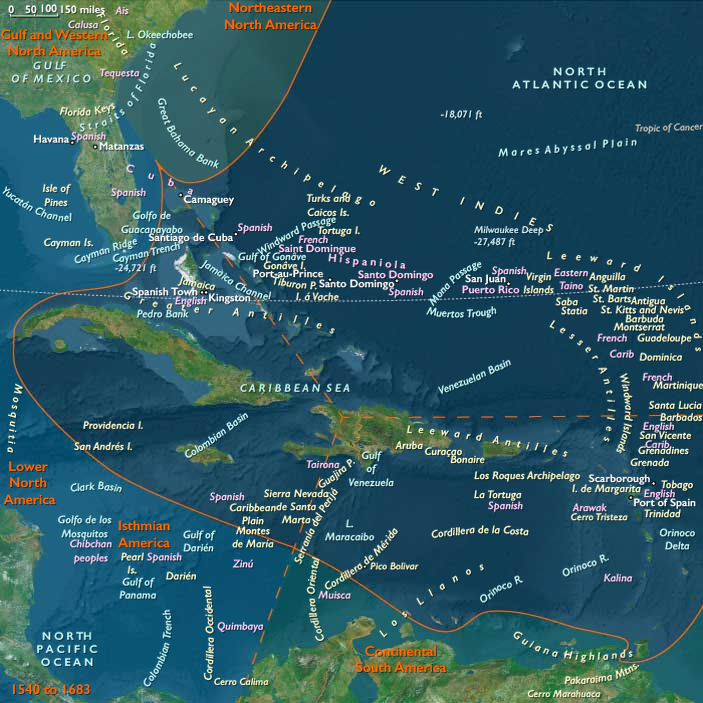
Subregions
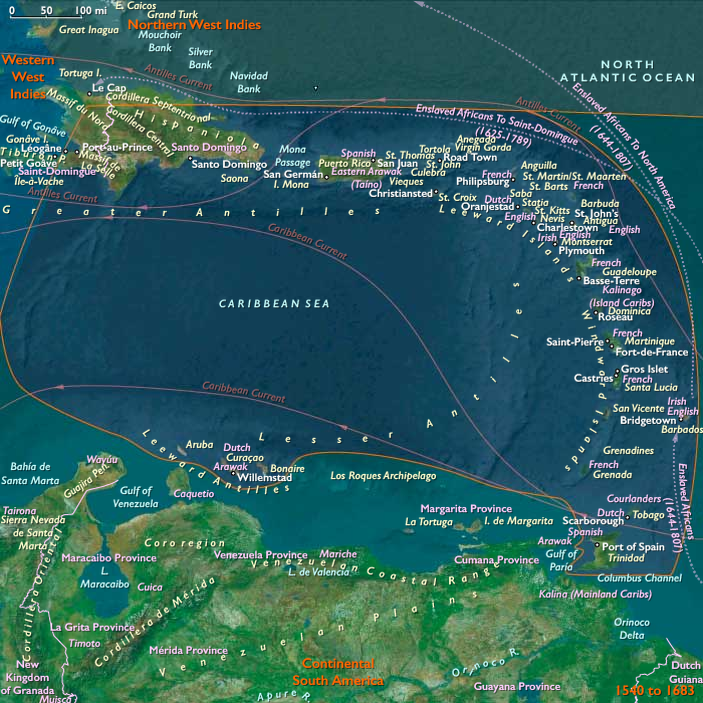
Years: 1540 - 1683
People
Groups
- Taíno
- Spanish Empire
- Santo Domingo, Captaincy General of
- Puerto Rico (Spanish Colony)
- Santiago, Colony of (Spanish Jamaica)
- Santo Domingo, Real Audiencia de
- Spaniards (Latins)
- Spain, Habsburg Kingdom of
- New Spain, Viceroyalty of
- Netherlands, United Provinces of the (Dutch Republic)
- France, (Bourbon) Kingdom of
- Dutch East India Company (Vereenigde Oostindische Compagnie or VOC in Dutch, literally "United East Indies Company")
- Barbados (English colony)
- Dutch Brazil (New Holland)
- Jamaica (English Colony)
- England, (Stewart, Restored) Kingdom of
- French West India Company
Topics
Commodoties
Subjects
Regions
Subregions