
Eastern West Indies (1648–1659 CE): Intensified Colonial …
Years: 1648 - 1659
Eastern West Indies (1648–1659 CE): Intensified Colonial Rivalries and the Rise of Sugar Economies
End of the Thirty Years' War and Renewed Colonial Focus
The conclusion of Europe's devastating Thirty Years' War in 1648, formalized by the Peace of Westphalia, allowed European powers—particularly England, France, and the Netherlands—to intensify their focus and redirect their military and economic resources toward overseas expansion in the Caribbean. This shift significantly escalated competition among colonial powers for dominance over strategic territories and lucrative trade routes, particularly those linked to the rapidly growing sugar industry.
England's Western Design and the Capture of Jamaica
Under the English Commonwealth, Oliver Cromwell initiated the ambitious "Western Design" in 1655, aimed at weakening Spanish colonial power and asserting English dominance in the Caribbean. This campaign resulted in the capture of Jamaica from Spain in the same year, marking a pivotal shift in regional power dynamics. Jamaica quickly emerged as a crucial colony, becoming another central hub for sugar production and significantly enhancing England's economic influence in the Caribbean.
Dutch Economic Dominance
The Dutch, maintaining their formidable economic position, continued to dominate the slave trade and sugar commerce, thereby facilitating the plantation economies of other European colonies. The Dutch West India Company provided the enslaved African laborers essential for sugar cultivation and secured critical trade networks, reinforcing their strategic importance within the Caribbean colonial system.
Expansion and Fortification of French Territories
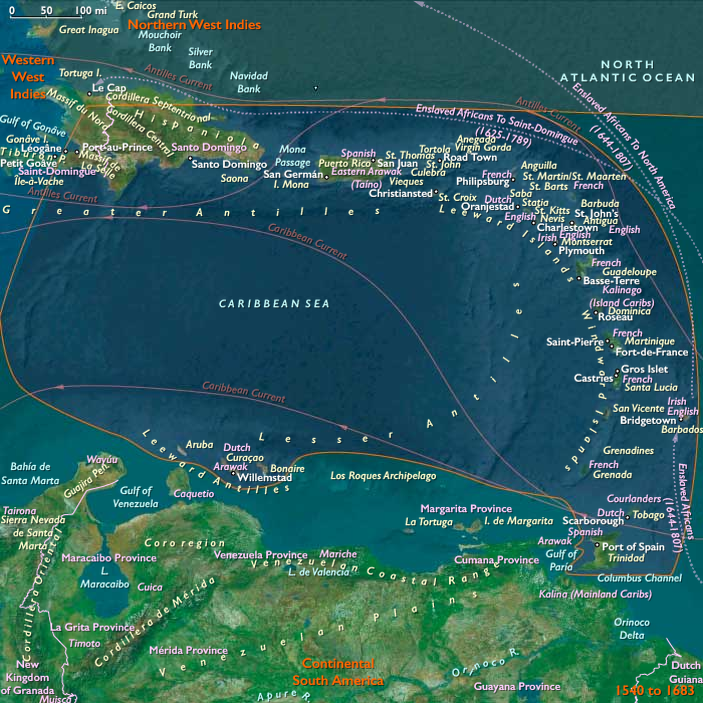
During this era, the French solidified and expanded their territorial presence, particularly on Martinique and Guadeloupe, reinforcing these colonies against rival incursions and potential slave revolts. French colonists intensified sugar production, transforming these islands into prosperous centers of economic activity and colonial wealth.
Economic Prosperity and Human Cost
This era witnessed substantial economic prosperity driven by sugar cultivation, accompanied by increased importation of enslaved Africans to sustain plantation operations. Conditions for enslaved laborers became increasingly brutal, characterized by severe hardship, high mortality rates, and oppressive plantation regimes. In stark contrast, European plantation owners and merchants accumulated vast wealth, further entrenching social and economic inequalities.
Continued Impact of Yellow Fever
The devastating impact of yellow fever, first definitively recorded in 1647 on Barbados, continued throughout this period, significantly affecting colonial populations and workforce productivity. The disease disproportionately impacted European colonists, who lacked immunity, and contributed to demographic instability and economic disruptions within plantation societies.
Conclusion
The period 1648–1659 was marked by heightened colonial competition, significant territorial shifts, and economic expansion centered around sugar production. The establishment and fortification of European colonies, coupled with the tragic escalation of enslaved African labor, decisively shaped the socio-economic landscape of the Eastern West Indies, laying the foundation for future patterns of regional development and exploitation.
People
Groups
- Kalinago (Amerind tribe)
- Saint Barthélemy
- England, (Tudor) Kingdom of
- Spanish Empire
- Saint Lucia
- Nevis
- Santo Domingo, Captaincy General of
- Sint Eustatius
- Montserrat
- Santo Domingo, Real Audiencia de
- Spaniards (Latins)
- Spain, Habsburg Kingdom of
- New Spain, Viceroyalty of
- Anglicans (Episcopal Church of England)
- Huguenots (the “Reformed”)
- Calvinists
- Peru, Viceroyalty of
- Brazil, Colonial
- Trinidad, Spanish colony
- Netherlands, United Provinces of the (Dutch Republic)
- France, (Bourbon) Kingdom of
- Dutch East India Company (Vereenigde Oostindische Compagnie or VOC in Dutch, literally "United East Indies Company")
- Saint Kitts (English Colony)
- Barbados (English colony)
- Nevis (English Colony)
- Dutch Brazil (New Holland)
- Saint Martin, colonial
- Antigua (English colony)
- Montserrat (English Colony)
- Guadeloupe, (French Compagnie des Îles de l'Amérique)
- Martinique, (French colony)
- Jamaica (English Colony)
Topics
- Colonization of the Americas, Portuguese
- Colonization of the Americas, Spanish
- Encomienda system
- Thirty Years' War
Commodoties
Subjects
Regions
Subregions
Years: 1648 - 1659
People
Groups
- Kalinago (Amerind tribe)
- Saint Barthélemy
- England, (Tudor) Kingdom of
- Spanish Empire
- Saint Lucia
- Nevis
- Santo Domingo, Captaincy General of
- Sint Eustatius
- Montserrat
- Santo Domingo, Real Audiencia de
- Spaniards (Latins)
- Spain, Habsburg Kingdom of
- New Spain, Viceroyalty of
- Anglicans (Episcopal Church of England)
- Huguenots (the “Reformed”)
- Calvinists
- Peru, Viceroyalty of
- Brazil, Colonial
- Trinidad, Spanish colony
- Netherlands, United Provinces of the (Dutch Republic)
- France, (Bourbon) Kingdom of
- Dutch East India Company (Vereenigde Oostindische Compagnie or VOC in Dutch, literally "United East Indies Company")
- Saint Kitts (English Colony)
- Barbados (English colony)
- Nevis (English Colony)
- Dutch Brazil (New Holland)
- Saint Martin, colonial
- Antigua (English colony)
- Montserrat (English Colony)
- Guadeloupe, (French Compagnie des Îles de l'Amérique)
- Martinique, (French colony)
- Jamaica (English Colony)
Topics
- Colonization of the Americas, Portuguese
- Colonization of the Americas, Spanish
- Encomienda system
- Thirty Years' War
Commodoties
Subjects
Regions
Subregions