
Eastern West Indies (1624–1635 CE): Rival Empires …
Years: 1624 - 1635
Eastern West Indies (1624–1635 CE): Rival Empires and New Settlements
Geopolitical Shifts in the Caribbean
Conditions became increasingly favorable for European colonial exploits in the Eastern West Indies during this period due to Spain’s preoccupation with the Thirty Years' War (1618–1648) in Europe. Exploiting this vulnerability, other European powers—particularly the Dutch, English, and French—expanded aggressively into previously uncontested Spanish territories.
Dutch Expansion and Trade
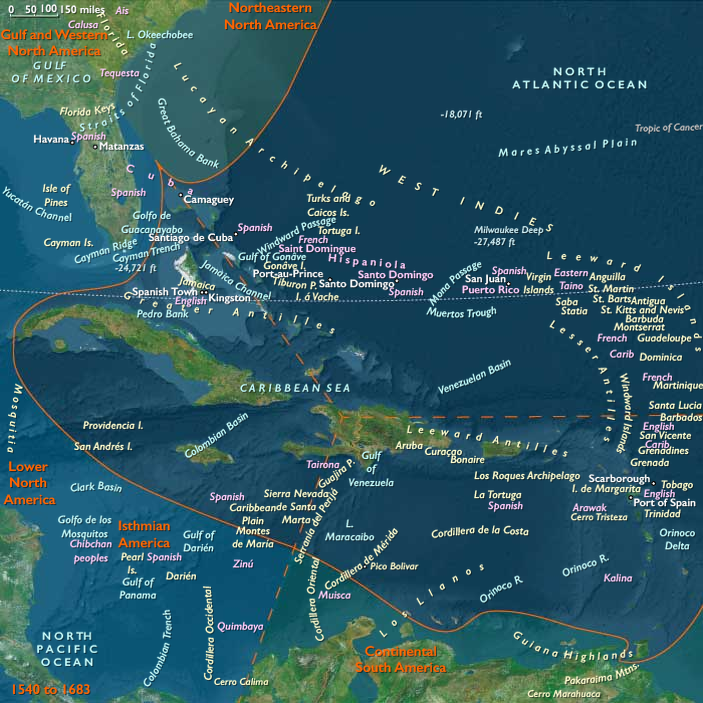
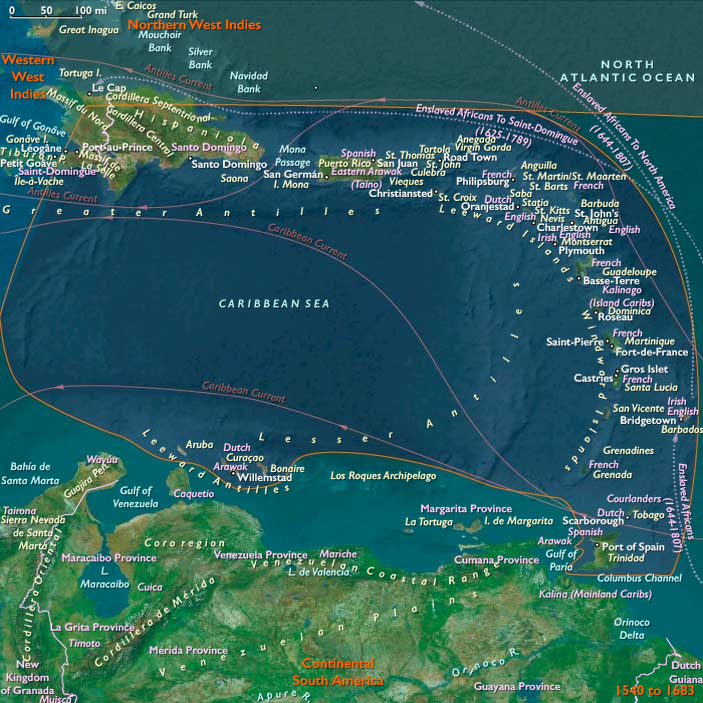
Beginning in 1621, the Dutch aggressively challenged Spanish hegemony in the Americas, notably in Brazil(temporarily under Spanish control from 1580 to 1640). By 1625, the Dutch had established settlements in the Leeward Islands, specifically Sint Eustatius, Sint Maarten (part of the divided island of Saint Martin/Sint Maarten), and Saba, along with the strategically valuable island of Curaçao, off the Venezuelan coast. These territories significantly expanded the Dutch presence beyond their existing holdings in the Guianas and along the Venezuelan coast at Araya and Cumana.
The Dutch also facilitated the spread of sugarcane cultivation throughout the Caribbean after 1625, carrying this valuable crop from South America to their Caribbean territories. Sugar rapidly became one of the region’s most valuable commodities, frequently compared in worth to musk, pearls, and spices. The Dutch West India Company’s holdings in the Virgin Islands, known collectively as the Dutch Virgin Islands, became notable centers for sugar production.
English and French Colonization Efforts
Simultaneously, the English and French moved swiftly to capitalize on Spain's distractions. The English successfully established a colony on Barbados in 1625 and made an unsuccessful attempt to settle Tobago. Expanding their territorial foothold, they occupied Nevis in 1628, followed by Antigua and Montserrat in 1632. An English effort to colonize St. Lucia initially begun in 1605 had failed due to strong resistance by the indigenous Kalinago. Another attempt in 1638 also proved unsuccessful.
Conflict and Cooperation on St. Kitts
Saint Christopher Island (St. Kitts) became a focal point of European rivalry. While initial contacts dated back to Columbus and a short-lived French Huguenot settlement in 1538, permanent colonization began in earnest with an English settlement in 1623, followed closely by the French in 1625. The two European powers briefly united in 1626 to preemptively massacre the local Kalinago inhabitants, thwarting a planned Kalinago attack. After this brutal event, the English and French partitioned the island, with the English holding the central region and the French controlling the northern and southern portions.
Long-term Implications
This era marked a decisive shift from a primarily Spanish-controlled Caribbean toward a more fragmented region characterized by multiple competing European powers. The rapid expansion of sugar plantations began reshaping the economic landscape, setting the stage for increased importation of African slaves and profoundly influencing the cultural and social development of the Eastern West Indies.
Groups
- Kalinago (Amerind tribe)
- England, (Tudor) Kingdom of
- Spanish Empire
- Saint Lucia
- Nevis
- Montserrat
- Sint Eustatius
- Santo Domingo, Captaincy General of
- Santo Domingo, Real Audiencia de
- Spaniards (Latins)
- Spain, Habsburg Kingdom of
- New Spain, Viceroyalty of
- Anglicans (Episcopal Church of England)
- Calvinists
- Huguenots (the “Reformed”)
- Peru, Viceroyalty of
- Trinidad, Spanish colony
- Netherlands, United Provinces of the (Dutch Republic)
- France, (Bourbon) Kingdom of
- Saint Kitts (English Colony)
- Barbados (English colony)
- Nevis (English Colony)
- Antigua (English colony)
- Montserrat (English Colony)
Topics
- Colonization of the Americas, Portuguese
- Colonization of the Americas, Spanish
- Encomienda system
- Thirty Years' War
Commodoties
Subjects
Regions
Subregions
Years: 1624 - 1635
Groups
- Kalinago (Amerind tribe)
- England, (Tudor) Kingdom of
- Spanish Empire
- Saint Lucia
- Nevis
- Montserrat
- Sint Eustatius
- Santo Domingo, Captaincy General of
- Santo Domingo, Real Audiencia de
- Spaniards (Latins)
- Spain, Habsburg Kingdom of
- New Spain, Viceroyalty of
- Anglicans (Episcopal Church of England)
- Calvinists
- Huguenots (the “Reformed”)
- Peru, Viceroyalty of
- Trinidad, Spanish colony
- Netherlands, United Provinces of the (Dutch Republic)
- France, (Bourbon) Kingdom of
- Saint Kitts (English Colony)
- Barbados (English colony)
- Nevis (English Colony)
- Antigua (English colony)
- Montserrat (English Colony)
Topics
- Colonization of the Americas, Portuguese
- Colonization of the Americas, Spanish
- Encomienda system
- Thirty Years' War
Commodoties
Subjects
Regions
Subregions