
Eastern West Indies (1600–1611 CE): Consolidation and …
Years: 1600 - 1611
Eastern West Indies (1600–1611 CE): Consolidation and Maritime Conflict
During this era, the Eastern West Indies remained a focal point of European rivalry and economic transformation. The Spanish continued to strengthen their defenses and administrative structures across key islands, while increasing numbers of European privateers and pirates threatened their dominance.
Military and Maritime Conflicts
San Juan in Puerto Rico emerged as an essential military and administrative hub, fortified extensively against the persistent threats of English and Dutch privateers. Spanish authorities expanded El Morro fortress, improving defenses with additional artillery and reinforced walls. These efforts were justified by growing European naval rivalry, particularly England’s aggressive maritime strategies under Queen Elizabeth I.
In 1605, Spanish Admiral Luis Fajardo led campaigns against Dutch and English piracy throughout the Lesser Antilles, notably suppressing privateer outposts that disrupted Spanish trade routes.
Economic Development and Trade
Sugar cultivation steadily intensified, solidifying the plantation economy and increasing reliance on African slave labor. The growing sugar trade led to improved port infrastructure at Santo Domingo and San Juan, though it also made these ports more attractive targets for European raiders.
Social and Cultural Shifts
The social fabric continued to evolve, characterized by a rigid class hierarchy dominated by Spanish elites, a growing population of enslaved Africans, and a mixed class of free individuals of African and Indigenous descent. The indigenous Taíno population was by this point severely diminished, surviving primarily in isolated communities or through integration into the mixed-heritage population.
The Roman Catholic Church remained integral, expanding missions and reinforcing religious orthodoxy, even as syncretic religious practices persisted among enslaved and marginalized groups.
Geopolitical Realignments
Throughout this era, Spain's dominance in the Caribbean faced increasing challenge from rival European powers, particularly the English and Dutch, who were beginning to assert their presence more forcefully in the region. Despite frequent skirmishes and naval confrontations, the Spanish retained control of most territories in the Eastern West Indies, though their monopoly over Caribbean trade began to erode significantly.
This era laid the groundwork for greater European competition, setting the stage for significant territorial and economic shifts in the following decades.
People
Groups
- England, (Tudor) Kingdom of
- Santo Domingo, Captaincy General of
- Santo Domingo, Real Audiencia de
- Spain, Habsburg Kingdom of
- Spaniards (Latins)
- Netherlands, United Provinces of the (Dutch Republic)
Topics
Commodoties
Subjects
Regions
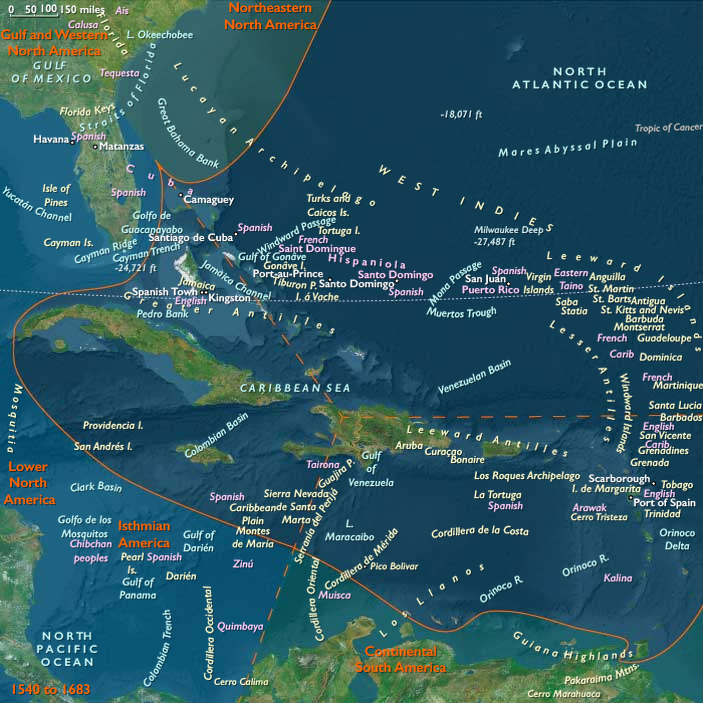
Subregions
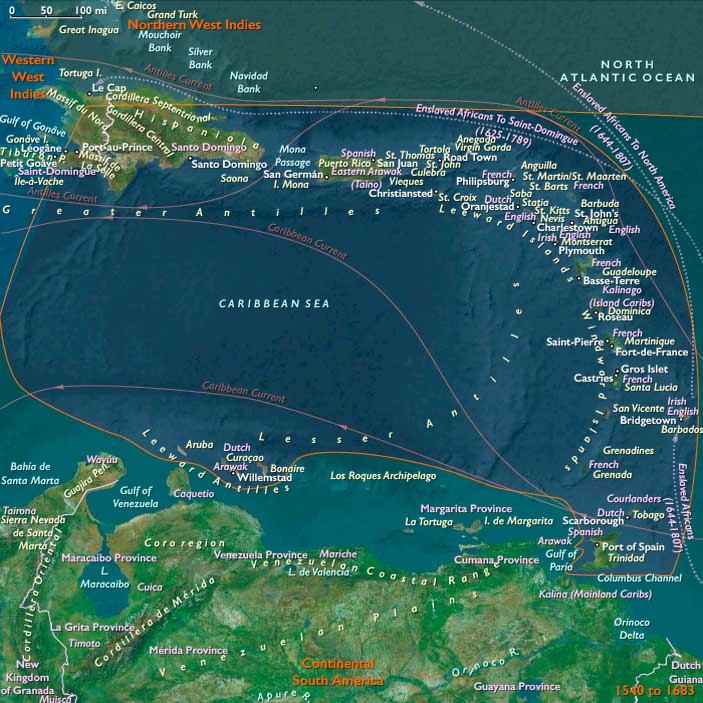
Years: 1600 - 1611
People
Groups
- England, (Tudor) Kingdom of
- Santo Domingo, Captaincy General of
- Santo Domingo, Real Audiencia de
- Spain, Habsburg Kingdom of
- Spaniards (Latins)
- Netherlands, United Provinces of the (Dutch Republic)
Topics
Commodoties
Subjects
Regions
Subregions