
Eastern West Indies (1588–1599 CE): Heightened Piracy …
Years: 1588 - 1599
Eastern West Indies (1588–1599 CE): Heightened Piracy and Economic Expansion
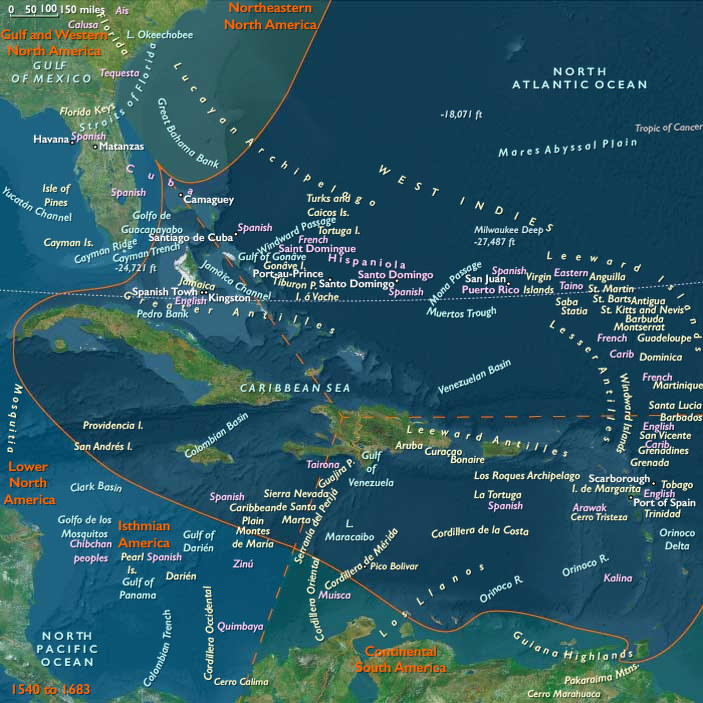
The period from 1588 to 1599 in the Eastern West Indies witnessed heightened piracy, expanded plantation economies, and intensified colonial fortifications. The era was marked by increased European competition in the Caribbean, prompting Spain to consolidate its military, economic, and religious hold on the islands.
Intensifying Pirate Threats and Fortification Efforts
Piracy reached unprecedented levels in this era, driven particularly by English and French privateers who challenged Spanish dominance in the Caribbean. Prominent figures such as Sir Francis Drake and other European corsairs repeatedly threatened San Juan in Puerto Rico and Santo Domingo on Hispaniola. In response, Spain significantly reinforced its fortifications, expanding and completing critical defensive structures such as the Castillo San Felipe del Morro in San Juan and the fortifications surrounding Santo Domingo, fortifying the cities into near-impregnable bastions.
Expansion of the Sugar Economy and Enslaved Labor
Sugar production continued to expand dramatically, strengthening the economic importance of the region within the broader Spanish Empire. Plantations flourished across Puerto Rico and Hispaniola, driven by increased European demand and technological improvements in sugar refining. The demand for enslaved African labor intensified, leading to greater importation of slaves and a deeper entrenchment of slavery as the backbone of the Caribbean economy. The resulting demographic shifts further shaped the cultural and social landscapes of the islands.
Religious and Cultural Consolidation
The Roman Catholic Church deepened its influence, overseeing religious education and missionary activities among both indigenous peoples and enslaved Africans. The era saw the completion and consecration of major ecclesiastical projects, including expansions to cathedrals in Santo Domingo and San Juan, reinforcing Spanish religious and cultural hegemony throughout the Eastern West Indies.
Shifting Geopolitical Realities
The conclusion of hostilities between England and Spain after the defeat of the Spanish Armada in 1588 only temporarily reduced the scale of conflict in the Caribbean. The Caribbean remained a contested geopolitical arena, with Spain facing ongoing threats from European rivals eager to exploit Caribbean resources and disrupt Spanish trade routes. The Eastern West Indies thus assumed a critical role in Spain’s imperial defense strategy, further cementing the region's importance within Spain's global empire.
This era marked significant strides in Spain’s efforts to secure its Caribbean territories amidst growing international competition, solidifying the islands’ central role in global trade networks and laying the groundwork for future economic and social developments.
People
Groups
- England, (Tudor) Kingdom of
- Santo Domingo, Captaincy General of
- Santo Domingo, Real Audiencia de
- Spain, Habsburg Kingdom of
- Spaniards (Latins)
Topics
Commodoties
Subjects
Regions
Subregions

Years: 1588 - 1599
People
Groups
- England, (Tudor) Kingdom of
- Santo Domingo, Captaincy General of
- Santo Domingo, Real Audiencia de
- Spain, Habsburg Kingdom of
- Spaniards (Latins)
Topics
Commodoties
Subjects
Regions
Subregions