
Eastern West Indies (1552–1563 CE): Strengthening Defenses …
Years: 1552 - 1563
Eastern West Indies (1552–1563 CE): Strengthening Defenses and Colonial Economy
The era from 1552 to 1563 in the Eastern West Indies was characterized by continued emphasis on military fortifications, growing economic reliance on plantation agriculture, and the entrenchment of slavery as a foundational institution. These developments unfolded against a backdrop of increasing threats from piracy and the expansion of Spain's New World ambitions.
Fortifications and Military Enhancements
Following earlier fortification efforts, Spain further enhanced its defenses across its critical colonial outposts, notably in Santo Domingo and San Juan. Recognizing the strategic value of these territories in the Caribbean, authorities completed extensive defensive works, such as walls, fortresses, and fortified ports. The construction of the imposing El Morro fortress in San Juan, initiated during this era, became a crucial protective measure against maritime threats posed by pirates and rival European powers. This period thus solidified the defensive military architecture that would define the region for centuries.
Plantation Economy and Slave Labor
Economic activities continued to revolve around sugar plantations, which grew increasingly profitable and essential to colonial wealth. The agricultural sector's demand for labor prompted intensified reliance on enslaved Africans, resulting in greater importation and more entrenched slave systems. The slave trade expanded dramatically during these years, altering the demographic makeup of the islands and deepening socio-economic divides. The growing wealth from sugar production primarily benefited a small elite, exacerbating social inequalities.
Religious Consolidation and Cultural Integration
The Roman Catholic Church further solidified its central role in colonial life, reinforcing religious and cultural conformity throughout the islands. Ecclesiastical authority expanded, notably through increased missionary activities aimed at both indigenous populations and enslaved Africans. Catholic missions became instrumental in cultural integration and social control, reinforcing colonial structures and aiding in the administration of these expanding and increasingly complex societies.
Geopolitical Significance
During this era, the Eastern West Indies became increasingly central to Spain’s geopolitical strategy. The colonies served not only as vital hubs for transatlantic trade but also as strategic bulwarks in Spain’s broader imperial competition with other European powers, particularly England and France, who intensified their interest in Caribbean territories.
This era thus marked a critical juncture in the Eastern West Indies, defined by enhanced military preparedness, expanding economic exploitation, and deepening social and cultural transformations.
Groups
- Arawak peoples (Amerind tribe)
- Kalinago (Amerind tribe)
- Taíno
- Santo Domingo, Captaincy General of
- Santo Domingo, Real Audiencia de
- Spain, Habsburg Kingdom of
- Spaniards (Latins)
Topics
Commodoties
Subjects
Regions
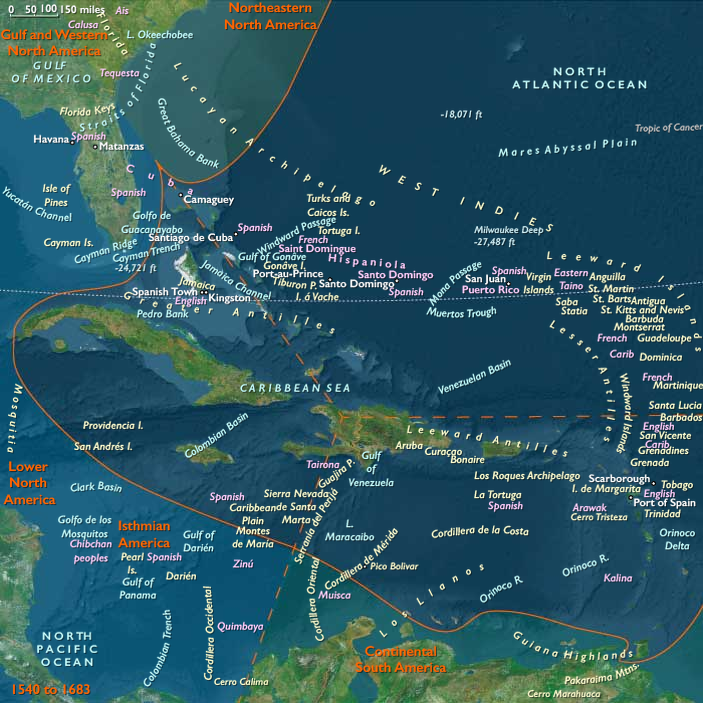
Subregions
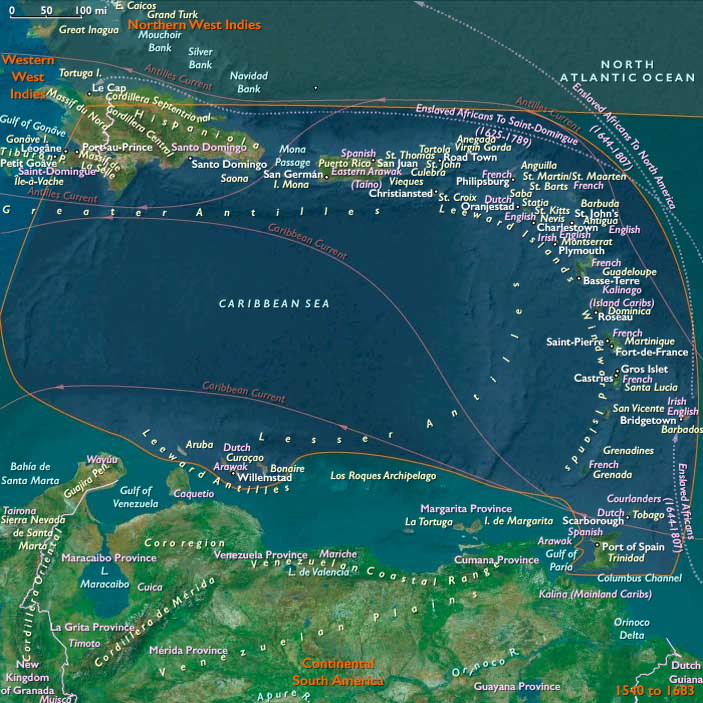
Years: 1552 - 1563
Groups
- Arawak peoples (Amerind tribe)
- Kalinago (Amerind tribe)
- Taíno
- Santo Domingo, Captaincy General of
- Santo Domingo, Real Audiencia de
- Spain, Habsburg Kingdom of
- Spaniards (Latins)
Topics
Commodoties
Subjects
Regions
Subregions