
Eastern West Indies (1564–1575 CE): Piracy, Plantation …
Years: 1564 - 1575
Eastern West Indies (1564–1575 CE): Piracy, Plantation Growth, and Intensified Colonial Struggles
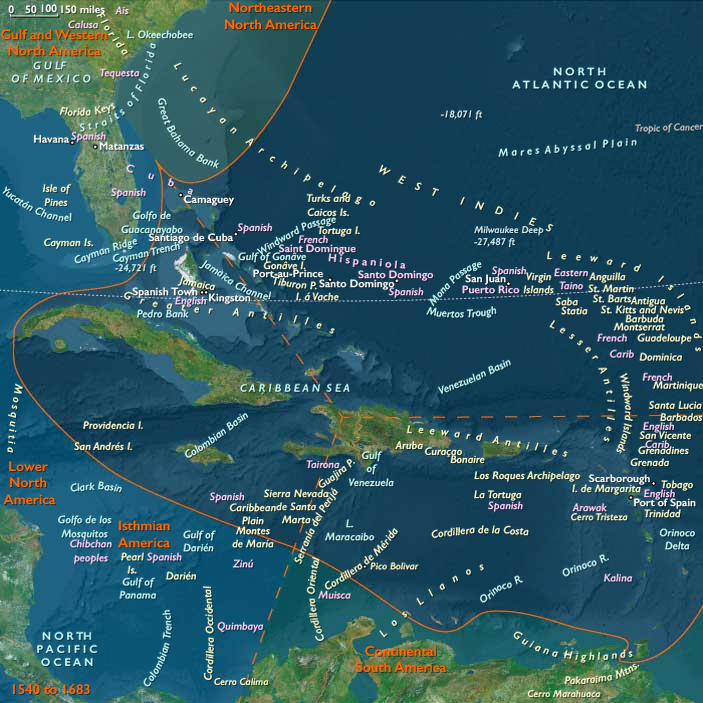
The era from 1564 to 1575 in the Eastern West Indies witnessed heightened pirate activity, substantial growth in the plantation economy, and the consolidation of Spanish colonial authority. These developments brought prosperity to a select few, intensified hardship for the enslaved and indigenous populations, and increased rivalry with other European powers in the Caribbean.
Heightened Piracy and Maritime Threats
Pirate raids, particularly by French corsairs and English privateers, intensified dramatically during this period. Spanish maritime trade routes became perilous, and the waters surrounding Puerto Rico, Hispaniola, and the Lesser Antilles turned into prime hunting grounds for pirates such as John Hawkins and Francis Drake. These incursions compelled colonial administrators to further expand defensive fortifications at key ports, notably El Morro in San Juan, which evolved into a nearly impregnable stronghold during these years.
Expansion and Consolidation of the Sugar Economy
The sugar industry continued to dominate economic life, resulting in rapid plantation expansion throughout Hispaniola and Puerto Rico. Wealth from sugar exports fueled further investment, increasing the demand for enslaved African laborers. Conditions for enslaved peoples became harsher as plantations sought maximum productivity, firmly entrenching slavery as the region’s primary labor system. The social hierarchy became increasingly rigid, with wealthy plantation owners gaining extensive power at the expense of both enslaved Africans and remaining indigenous communities.
Decline of Indigenous Populations
The era also witnessed the continuing decline of indigenous populations, notably the Taíno, whose numbers were severely reduced by disease, forced labor, and cultural disruption. By the mid-1570s, indigenous communities had nearly disappeared from the major islands, surviving mostly in isolated areas. The resultant demographic shift led to an increased reliance on enslaved Africans, permanently altering the region’s cultural and social landscapes.
Religious Influence and Social Control
The Roman Catholic Church strengthened its position by expanding missionary and educational activities aimed at both the enslaved and free populations. Missions served dual purposes: religious instruction and social regulation, promoting a degree of cultural conformity essential to Spanish colonial control. Missionaries attempted, with varying degrees of success, to instill Catholic teachings among enslaved Africans, blending European beliefs with African traditions, a process that gradually reshaped the spiritual landscape of the region.
Geopolitical Rivalries and Colonial Ambitions
The increased wealth and strategic value of the Eastern West Indies intensified European rivalries in the Caribbean basin. Spain’s dominance faced continuous challenges from England and France, whose growing interest in the region foreshadowed further colonial conflicts. The strategic importance of Hispaniola, Puerto Rico, and the Lesser Antilles ensured that they remained pivotal territories in the ongoing European power struggles for control of the Americas.
The era 1564–1575 thus solidified the socio-economic patterns that would characterize the Eastern West Indies for centuries, including plantation agriculture, racial hierarchies, and geopolitical rivalries, setting the stage for intensified conflict and transformation in subsequent periods.
People
Groups
- Arawak peoples (Amerind tribe)
- Kalinago (Amerind tribe)
- Taíno
- Santo Domingo, Captaincy General of
- Santo Domingo, Real Audiencia de
- Spain, Habsburg Kingdom of
- Spaniards (Latins)
Topics
Commodoties
Subjects
Regions
Subregions

Years: 1564 - 1575
People
Groups
- Arawak peoples (Amerind tribe)
- Kalinago (Amerind tribe)
- Taíno
- Santo Domingo, Captaincy General of
- Santo Domingo, Real Audiencia de
- Spain, Habsburg Kingdom of
- Spaniards (Latins)
Topics
Commodoties
Subjects
Regions
Subregions