
Eastern West Indies (1540–1551 CE): Consolidation and …
Years: 1540 - 1551
Eastern West Indies (1540–1551 CE): Consolidation and Defense of Spanish Colonies
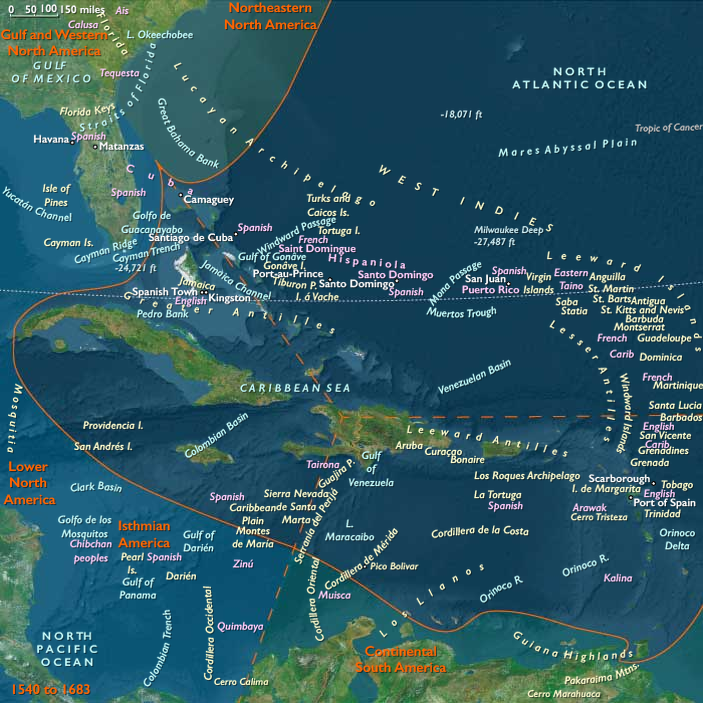
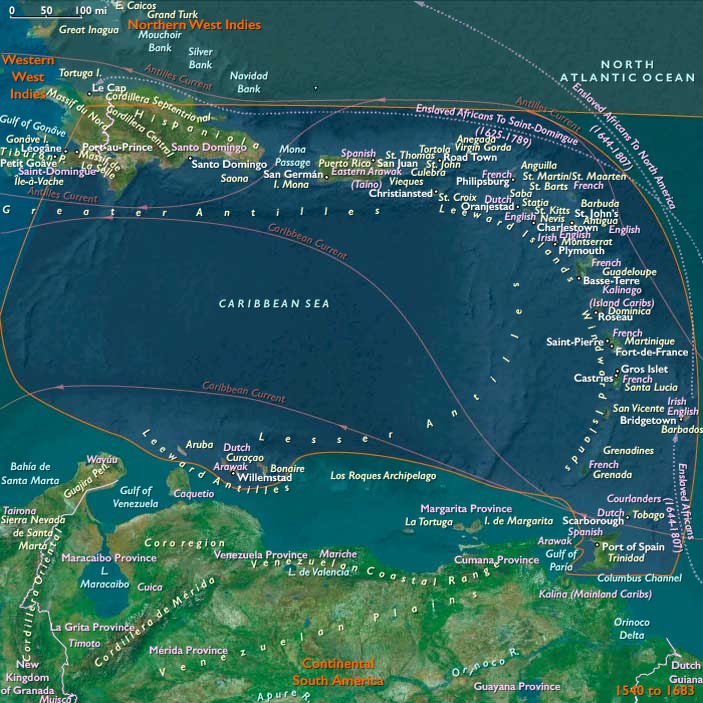
The mid-sixteenth century marked a period of strategic consolidation and defensive strengthening in the Eastern West Indies, particularly within the critical Spanish colonial centers of Santo Domingo on Hispaniola and San Juan on Puerto Rico. Recognizing the islands' pivotal roles as gateways and administrative hubs for their expansive New World territories, Spanish authorities prioritized fortifying these colonies against increasingly frequent and daring pirate attacks.
Both Santo Domingo and San Juan underwent significant enhancements to their defensive infrastructure during this era, notably the expansion and completion of elaborate fortification networks. The construction of these defenses symbolized Spain's resolve to maintain control over its Caribbean dominions and underscored the colonies' importance as vital transatlantic stopovers and administrative centers.
Ecclesiastical Expansion and Influence
Simultaneously, this period saw profound religious developments with the completion of two of the earliest cathedrals in the Americas. The Cathedral of Santa María la Menor in Santo Domingo, originally begun in the earlier part of the sixteenth century, reached its completion during this era. It was constructed in the Plateresque style, a richly ornate architectural form popular in Spain but soon replaced by newer styles in Europe. Notably, despite its decline in Europe, this style persisted throughout Spanish America, notably influencing ecclesiastical architecture in Mexico and beyond.
Similarly, the Cathedral of San Juan Bautista in Puerto Rico became a central religious and cultural institution, reinforcing Catholic authority and identity in the region. The establishment of these cathedrals cemented Catholicism’s centrality to colonial life and reflected the increasingly sophisticated administrative and social structures emerging in these islands.
Shifts in Colonial Dynamics
While fortifications and religious institutions reinforced colonial stability, the economic foundation of these colonies continued to rely heavily on sugar production and slave labor, underscoring a socio-economic system becoming ever more entrenched. The plantation economy, supported by increasing imports of enslaved Africans, defined the socio-economic landscape of the Eastern West Indies, perpetuating a system of stark inequality but considerable wealth for the colonial elite.
The era thus witnessed a dual emphasis on military preparedness against external threats and the consolidation of colonial society through religious and economic structures. These developments profoundly influenced the social, political, and economic trajectory of the Eastern West Indies for generations.
Groups
- Arawak peoples (Amerind tribe)
- Kalinago (Amerind tribe)
- Taíno
- Santo Domingo, Captaincy General of
- Santo Domingo, Real Audiencia de
- Spain, Habsburg Kingdom of
- Spaniards (Latins)
Topics
Commodoties
Subjects
Regions
Subregions
Years: 1540 - 1551
Groups
- Arawak peoples (Amerind tribe)
- Kalinago (Amerind tribe)
- Taíno
- Santo Domingo, Captaincy General of
- Santo Domingo, Real Audiencia de
- Spain, Habsburg Kingdom of
- Spaniards (Latins)
Topics
Commodoties
Subjects
Regions
Subregions