
Eastern West Indies (820 – 963 CE): …
Years: 820 - 963
Eastern West Indies (820 – 963 CE): Arawakan Migrations and Island Adaptations
Geographic and Environmental Context
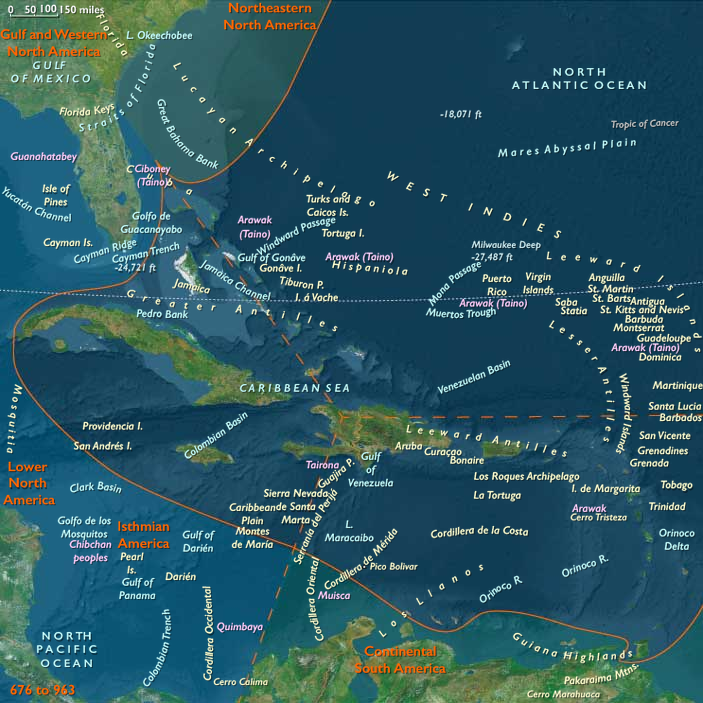
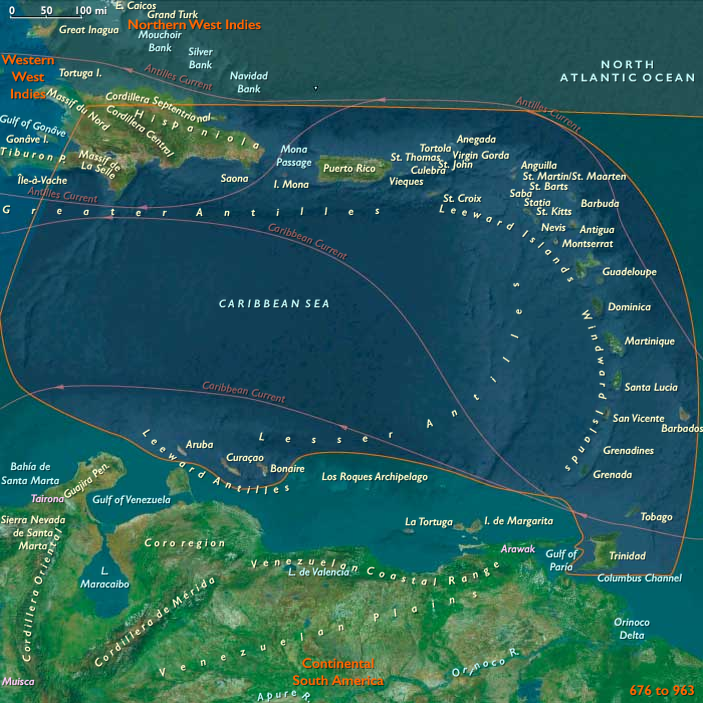
Eastern West Indies includes: most of Hispaniola (eastern Haiti and all but the northern fringe of the Dominican Republic), Puerto Rico, the Virgin Islands, the Lesser Antilles (from Anguilla down to Aruba), and Trinidad and Tobago.
-
Anchors: the Cibao–Vega Real valleys of Hispaniola, Puerto Rico, the Virgin Islands, the Lesser Antilles chain, and Trinidad and Tobago.
Climate and Environmental Shifts
-
Warm, humid climate supported year-round agriculture.
-
Fertile valleys (Hispaniola, Puerto Rico, Trinidad) enabled cassava and maize cultivation; smaller islands relied on mixed horticulture and marine harvests.
-
Hurricanes periodically reshaped settlements.
Societies and Political Developments
-
Arawakan-speaking migrants from South America spread north into Puerto Rico and Lesser Antilles, ancestors of the Taíno.
-
Hispaniola’s eastern valleys hosted growing horticultural villages.
-
Trinidad acted as a bridge between Orinoco societies and islanders.
Economy and Trade
-
Cassava, maize, beans, and cotton formed the basis of village subsistence.
-
Fishing, reef harvesting, and canoe voyaging tied islands into exchange networks.
-
Shell ornaments, stone tools, and cotton thread circulated.
Belief and Symbolism
-
Animist worldviews linked zemí spirits to fertility, weather, and ancestors.
-
Ceremonial ball games and plazas emerged in Hispaniola.
Long-Term Significance
By 963, the Eastern West Indies was an Arawakan cultural corridor, binding Hispaniola to South America through Trinidad.
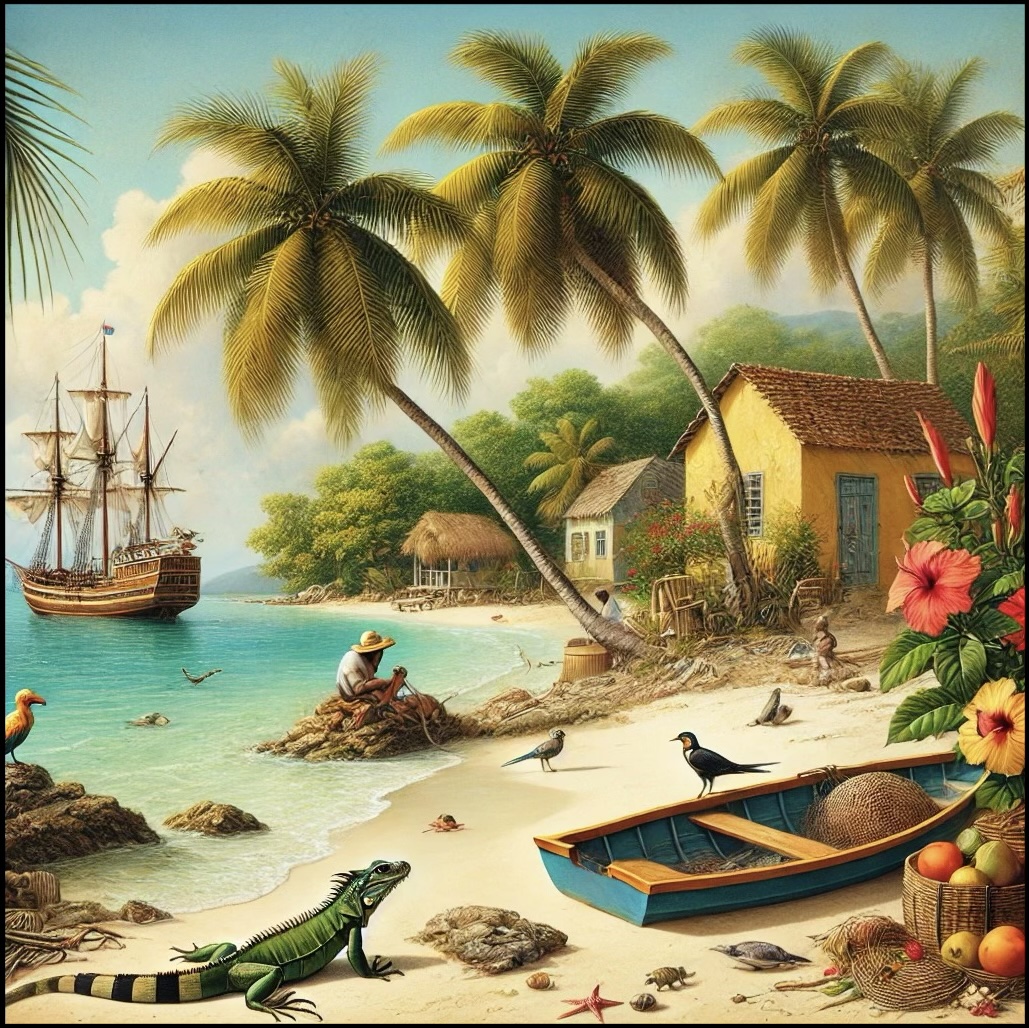
Eastern West Indies (with civilization) ©2024-25 Electric Prism, Inc. All rights reserved.
Groups
Topics
Commodoties
Subjects
Regions
Subregions
Years: 820 - 963
Eastern West Indies (with civilization) ©2024-25 Electric Prism, Inc. All rights reserved.
Groups
Topics
Commodoties
Subjects
Regions
Subregions