
Eastern Southeast Europe (976–987 CE): Byzantine Revolts …
Years: 976 - 987
Eastern Southeast Europe (976–987 CE): Byzantine Revolts and Intensified Bulgarian Conflict
Settlement and Migration Patterns
Stability Amidst Turmoil
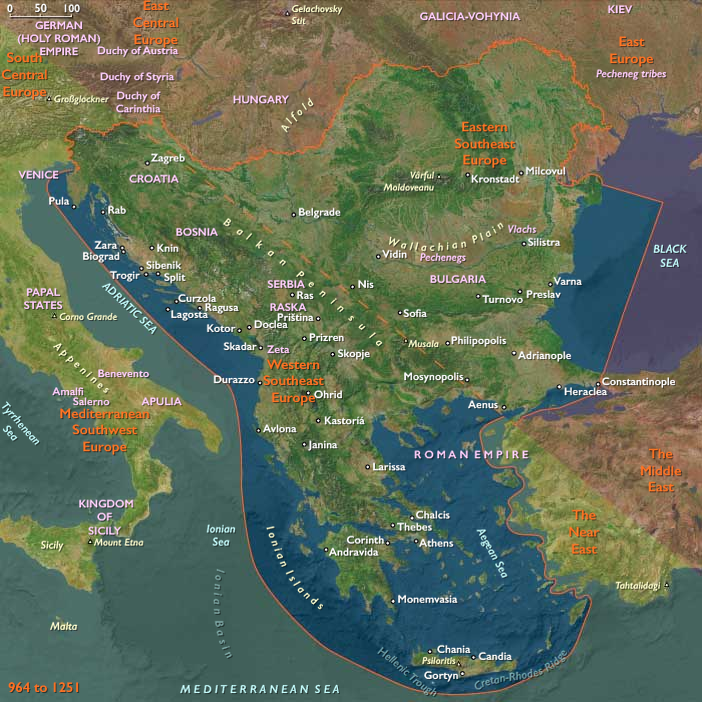
From 976 to 987 CE, Eastern Southeast Europe experienced continued demographic stability despite significant military and political upheaval stemming from Byzantine internal revolts and intensified conflict with Bulgaria.
Political and Military Developments
Byzantine Internal Revolts (976–989 CE)
The Byzantine Empire faced significant internal challenges during this era, notably marked by widespread revolts (976–989 CE) that weakened central authority. These rebellions underscored internal power struggles and factional divisions, temporarily disrupting Byzantine military effectiveness.
Bulgarian-Byzantine War and the Battle of the Gates of Trajan (981–1018 CE)
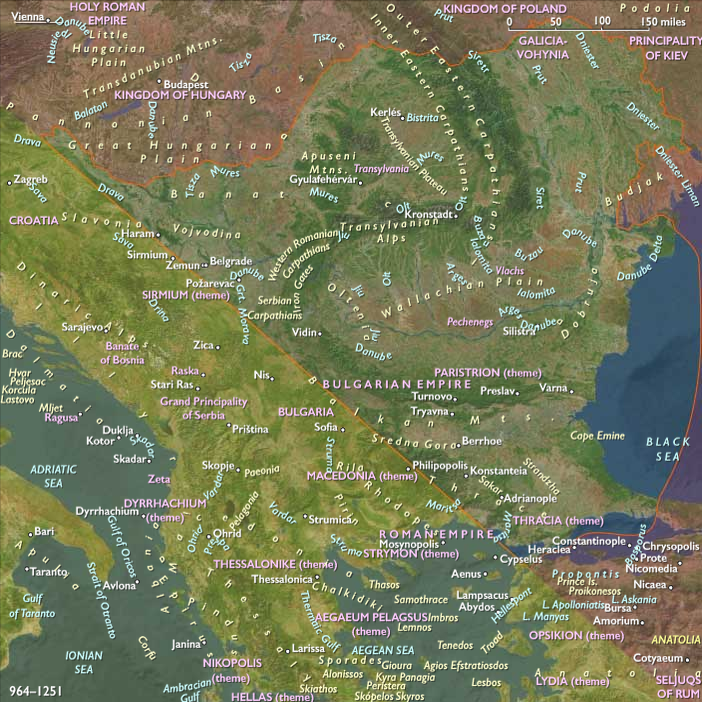
The Bulgarian-Byzantine conflict intensified significantly, highlighted by the Battle of the Gates of Trajan in 986 CE. The Bulgarian forces achieved a notable victory, temporarily halting Byzantine advances and demonstrating Bulgaria’s continuing resilience despite its previous territorial losses.
Byzantine Reconsolidation Efforts
Despite internal and external challenges, Byzantine forces under Emperor Basil II began a determined campaign to reconsolidate territories lost during the revolts and stabilize the Empire, setting the stage for a prolonged conflict aimed at the complete conquest of Bulgaria.
Economic and Technological Developments
Economic Strain and Resilience
The Byzantine revolts and ongoing Bulgarian-Byzantine war strained regional economies, disrupting trade and agricultural production. Despite these challenges, core economic activities persisted, demonstrating notable resilience in face of continuous conflict.
Enhanced Military Infrastructure
In response to the intensified military conflicts, significant investments continued in fortifications, particularly along critical conflict zones, strengthening territorial defenses and safeguarding economic resources.
Cultural and Artistic Developments
Sustained Cultural Activities
Cultural and artistic traditions continued to flourish despite political disruptions, maintaining regional artistic identity through ongoing craftsmanship, literary production, and manuscript preservation in Byzantine educational institutions and Bulgarian cultural centers.
Intellectual Resilience
Intellectual activities persisted robustly, particularly in scholarly communities and scriptoria, preserving classical and theological knowledge amid political and military upheaval.
Social and Religious Developments
Continued Religious Influence
Orthodox Christianity remained the region's predominant religious and social influence, providing stability and cohesion during this turbulent period. Religious institutions played critical roles in maintaining community stability amid political instability and military conflicts.
Bogomil and Local Religious Movements
Bogomilism continued its influence, shaping rural religious practices and societal structures. This dualistic, evangelical reform movement persisted as an important element of regional religious life.
Long-Term Consequences and Historical Significance
The period from 976 to 987 CE saw significant internal and external challenges for the Byzantine Empire, marked by revolts, the pivotal Battle of the Gates of Trajan, and intensified Bulgarian-Byzantine conflicts. These developments significantly shaped the geopolitical landscape, setting the stage for prolonged Byzantine military campaigns and reshaping regional power dynamics for subsequent decades.
People
Groups
- Thrace, Theme of
- Christianity, Chalcedonian
- Greeks, Medieval (Byzantines)
- Bulgarian Empire (First)
- Bulgarians (South Slavs)
- Macedonia, East Roman Theme of
- Roman Empire, Eastern: Macedonian dynasty
- Bulgarian Orthodox Church
- Bogomilism
Topics
- Middle Subatlantic Period
- Renaissance, Macedonian
- Byzantine Revolts of 976-89
- Bulgarian-Byzantine War of 981-1018
- Gates of Trajan, Battle of the
Commodoties
Subjects
Regions
Subregions
Years: 976 - 987
People
Groups
- Thrace, Theme of
- Christianity, Chalcedonian
- Greeks, Medieval (Byzantines)
- Bulgarian Empire (First)
- Bulgarians (South Slavs)
- Macedonia, East Roman Theme of
- Roman Empire, Eastern: Macedonian dynasty
- Bulgarian Orthodox Church
- Bogomilism
Topics
- Middle Subatlantic Period
- Renaissance, Macedonian
- Byzantine Revolts of 976-89
- Bulgarian-Byzantine War of 981-1018
- Gates of Trajan, Battle of the
Commodoties
Subjects
Regions
Subregions