
Eastern Southeast Europe (909 BCE – …
Years: 909BCE - 819
Eastern Southeast Europe (909 BCE – 819 CE) Early Iron & Antiquity — Greek Poleis, Thracians & Dacians, Rome & Byzantium, Migrations and Bulgars
Geographic and Environmental Context
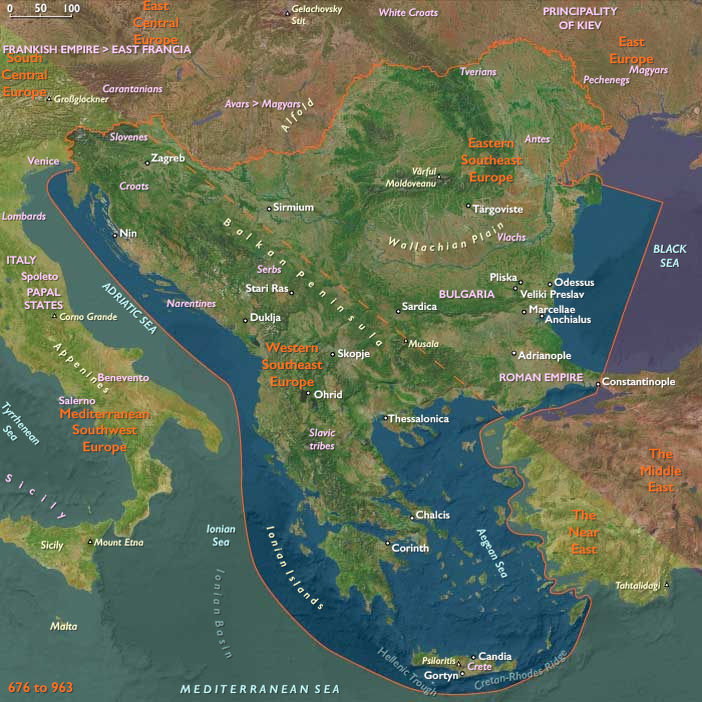
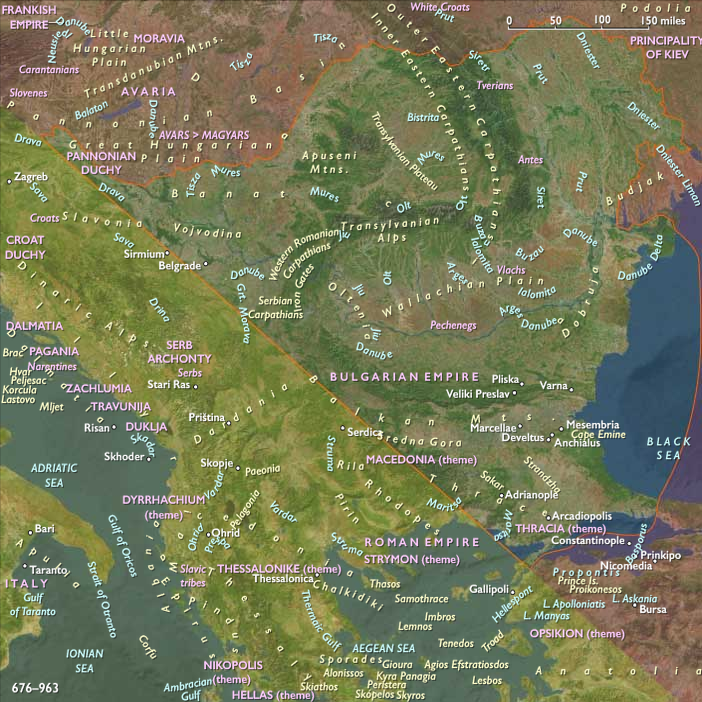
Eastern Southeast Europe includes Turkey-in-Europe (Thrace); Greece’s Thrace; Bulgaria (except its southwest); Romania & Moldova; northeastern Serbia; northeastern Croatia; extreme northeastern Bosnia & Herzegovina.
-
Anchors: Greek Black Sea poleis (Histria, Tomis/Constanța, Callatis/Mangalia, Odessos/Varna, Mesambria/Nessebar, Apollonia/Sozopol), Thrace (Odrysian kingdom), Moesia (Danube limes), Dacia(Transylvania & Wallachia), Lower Danube legionary line, Carpathian–Balkan passes.
Climate & Environmental Shifts
-
First-millennium variability; fertile Thracian and Wallachian plains supported dense settlement; Danube avulsions required continual river management.
Societies & Political Developments
-
Greek colonies flourished (7th–5th c. BCE) along the western Black Sea.
-
Thracian Odrysian kingdom (5th–4th c. BCE) and Geto-Dacians north of the Danube rose to prominence.
-
Rome annexed Moesia and Thrace; Dacia (106–271 CE) north of the Danube briefly Romanized with cities, mines, roads; Danube limes fortified.
-
Migrations: Goths (3rd–4th c.), Huns (5th c.), Avars and Slavs (6th–7th c.) reconfigured the region;
-
First Bulgarian Empire (from 681 CE) entrenched in Moesia/Thrace; Byzantium held Thrace and coastal cities.
Economy & Trade
-
Grain, wine, salt, and livestock moved along the Danube; Black Sea ports exported to the Aegean–Mediterranean; mining (gold/silver in Dacia, iron in Thrace).
-
Roman urbanism (roads, bridges e.g., Apollodorus’ bridge near Drobeta) integrated the frontier.
Technology & Material Culture
-
Iron plowshares; Roman engineering; Thracian/Dacian metalwork; Byzantine fortifications.
-
Urban mosaics, inscriptions, temples; later churches and monasteries.
Belief & Symbolism
-
Thracian and Dacian cults (horseman, Zalmoxis); Greek polytheism; Roman state cults → Christianity (by late Roman/Byzantine era).
-
Early Slavic and Bulgar paganisms persisted into 8th–9th c., gradually Christianizing.
Environmental Adaptation & Resilience
-
Riverine transport and oasis agriculture stabilized supply; fortified towns and hillforts provided refuge; steppe pastoralism remained flexible under aridity pulses.
Legacy & Transition
By 819 CE, Eastern Southeast Europe was a braided frontier of Byzantine Thrace, Bulgar power, Slavic communities, and legacy Roman–Greek Black Sea cities. The Lower Danube’s fortified line, Thracian plain granaries, and coastal emporia formed the scaffolding for the medieval dynamics to come.
Groups
- Polytheism (“paganism”)
- Roman Empire: Tetrarchy
- Christianity, Arian
- Hungarian people
- Roman Empire: Constantinian dynasty (Nicomedia)
- Roman Empire: Constantinian dynasty (Constantinople)
- Slavs, South
- Christianity, Chalcedonian
- Roman Empire, Eastern: Leonid dynasty
- Avars, Eurasian
- Roman Empire, Eastern: Justinian dynasty
- Avar Khaganate (Eurasian Avars)
- Roman Empire, Eastern: Non-dynastic
- Roman Empire, Eastern: Heraclian dynasty
- Bulgarian Empire (First)
- Roman Empire, Eastern: Non-dynastic
- Roman Empire, Eastern: Heraclian dynasty
- Roman Empire, Eastern: Non-dynastic
- Roman Empire, Eastern: Isaurian dynasty
- Roman Empire, Eastern: Nikephorian dynasty
- Roman Empire, Eastern: Non-dynastic
Topics
Commodoties
- Domestic animals
- Oils, gums, resins, and waxes
- Grains and produce
- Textiles
- Ceramics
- Salt
- Sweeteners
- Beer, wine, and spirits
Subjects
Regions
Subregions
Years: 909BCE - 819
Groups
- Polytheism (“paganism”)
- Roman Empire: Tetrarchy
- Christianity, Arian
- Hungarian people
- Roman Empire: Constantinian dynasty (Nicomedia)
- Roman Empire: Constantinian dynasty (Constantinople)
- Slavs, South
- Christianity, Chalcedonian
- Roman Empire, Eastern: Leonid dynasty
- Avars, Eurasian
- Roman Empire, Eastern: Justinian dynasty
- Avar Khaganate (Eurasian Avars)
- Roman Empire, Eastern: Non-dynastic
- Roman Empire, Eastern: Heraclian dynasty
- Bulgarian Empire (First)
- Roman Empire, Eastern: Non-dynastic
- Roman Empire, Eastern: Heraclian dynasty
- Roman Empire, Eastern: Non-dynastic
- Roman Empire, Eastern: Isaurian dynasty
- Roman Empire, Eastern: Nikephorian dynasty
- Roman Empire, Eastern: Non-dynastic
Topics
Commodoties
- Domestic animals
- Oils, gums, resins, and waxes
- Grains and produce
- Textiles
- Ceramics
- Salt
- Sweeteners
- Beer, wine, and spirits
Subjects
Regions
Subregions