
Eastern Southeast Europe (952–963 CE): Fragmentation of …
Years: 952 - 963
Eastern Southeast Europe (952–963 CE): Fragmentation of Bulgarian Power
Settlement and Migration Patterns
Demographic Continuity Amid Political Instability
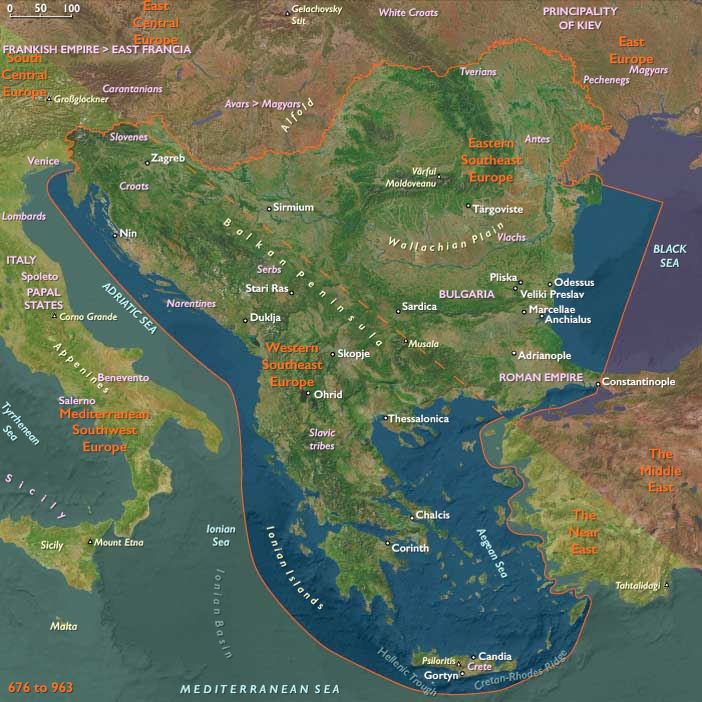
Between 952 and 963 CE, Eastern Southeast Europe continued to experience demographic stability, despite the growing political instability and territorial fragmentation resulting from the declining Bulgarian Empire.
Political and Military Developments
Disintegration of the Bulgarian Empire
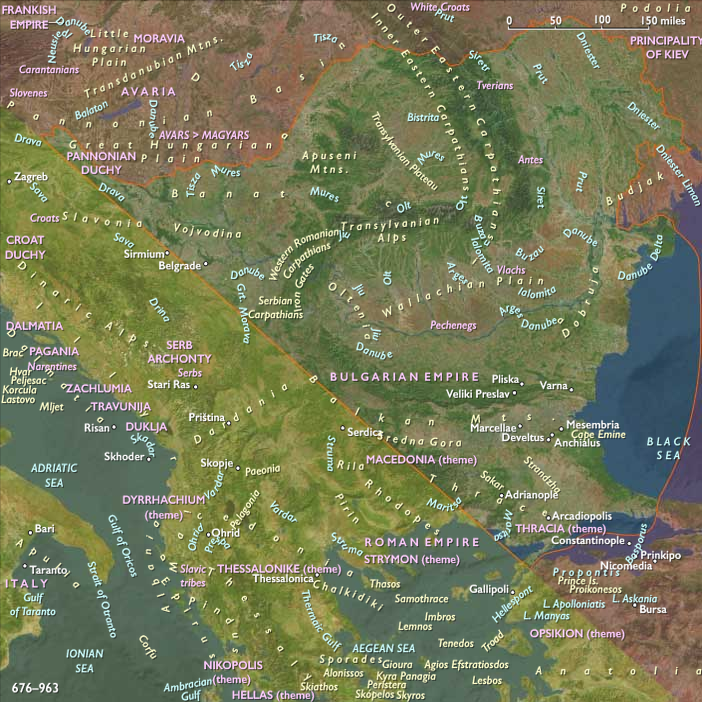
Following the prosperous and influential reign of Tsar Simeon, the Bulgarian Empire entered a phase of rapid disintegration under his successor, Tsar Peter. The central authority weakened considerably, leading to internal divisions, loss of territorial control, and diminished regional influence, significantly altering the political landscape.
Byzantine Exploitation of Bulgarian Weakness
The declining Bulgarian state provided opportunities for the Byzantine Empire to strengthen its regional position. Byzantine diplomatic and military initiatives took advantage of the fragmented Bulgarian political structure, expanding influence into previously contested territories.
Economic and Technological Developments
Economic Challenges Amid Political Instability
The economic stability of the region was somewhat strained due to the weakening central authority in Bulgaria. Trade and agricultural activities persisted, but the political fragmentation disrupted previously secure economic networks.
Fortification and Defense Strategies
Military fortifications and defensive strategies were reinforced, especially in Byzantine-controlled territories, to secure borders and protect economic interests amid regional instability and changing power dynamics.
Cultural and Artistic Developments
Continued Cultural Resilience
Despite political instability, cultural and artistic activities continued to thrive. Local centers maintained their craftsmanship traditions, especially in ceramics and metalwork, preserving regional cultural identities.
Scholarly Activity
Educational and scholarly institutions continued producing manuscripts and preserving classical and theological knowledge, ensuring cultural continuity and intellectual resilience during this turbulent period.
Social and Religious Developments
Persistence of Religious Movements
Paulician and Bogomil movements continued influencing rural populations and significantly shaped religious practices and social dynamics. These movements remained important, especially as centralized authority declined.
Dominance of Orthodox Christianity
Orthodox Christianity persisted as the predominant religious institution, offering societal stability and cultural cohesion even amidst political fragmentation and uncertainty.
Long-Term Consequences and Historical Significance
The period from 952 to 963 CE was marked by the rapid decline and fragmentation of Bulgarian power, dramatically altering regional political dynamics. The resulting political instability reshaped territorial control, allowed Byzantine reconsolidation, and underscored the resilience of cultural and religious institutions in Eastern Southeast Europe.
People
Groups
- Thrace, Theme of
- Christianity, Chalcedonian
- Greeks, Medieval (Byzantines)
- Paulicians
- Bulgarian Empire (First)
- Bulgarians (South Slavs)
- Serbian Principality
- Macedonia, East Roman Theme of
- Roman Empire, Eastern: Macedonian dynasty
- Bulgarian Orthodox Church
- Bogomilism
Topics
Commodoties
Subjects
Regions
Subregions
Related Events
Showing 10 events out of 52909 total
Years: 952 - 963
People
Groups
- Thrace, Theme of
- Christianity, Chalcedonian
- Greeks, Medieval (Byzantines)
- Paulicians
- Bulgarian Empire (First)
- Bulgarians (South Slavs)
- Serbian Principality
- Macedonia, East Roman Theme of
- Roman Empire, Eastern: Macedonian dynasty
- Bulgarian Orthodox Church
- Bogomilism
Topics
Commodoties
Subjects
Regions
Subregions