
Eastern Southeast Europe (904–915 CE): Renewed Byzantine …
Years: 904 - 915
Eastern Southeast Europe (904–915 CE): Renewed Byzantine Pressures and Bulgarian Dominance
Settlement and Migration Patterns
Stability and Integration
Between 904 and 915 CE, Eastern Southeast Europe maintained relative demographic stability, continuing the integration and consolidation of diverse populations such as Bulgarians, Slavs, and Daco-Romans.
Political and Military Developments
Byzantine Military Initiatives
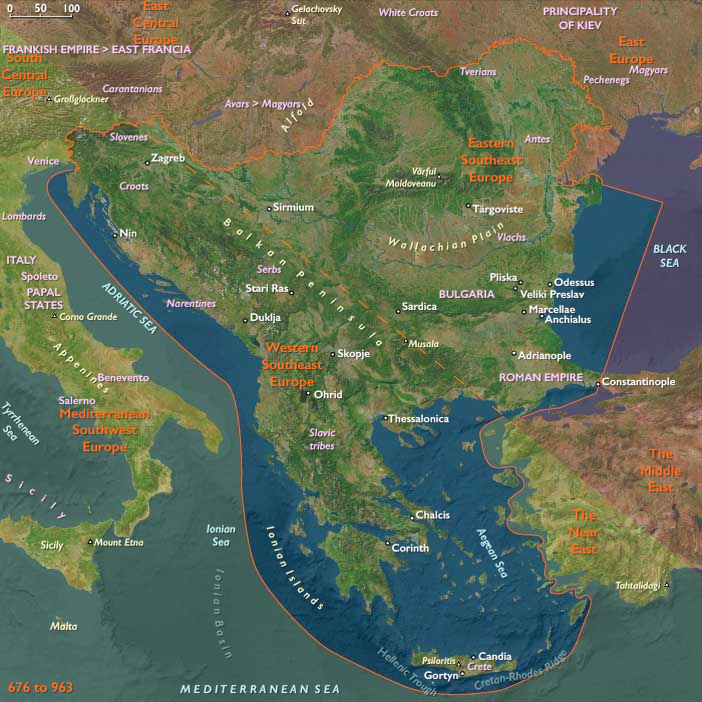
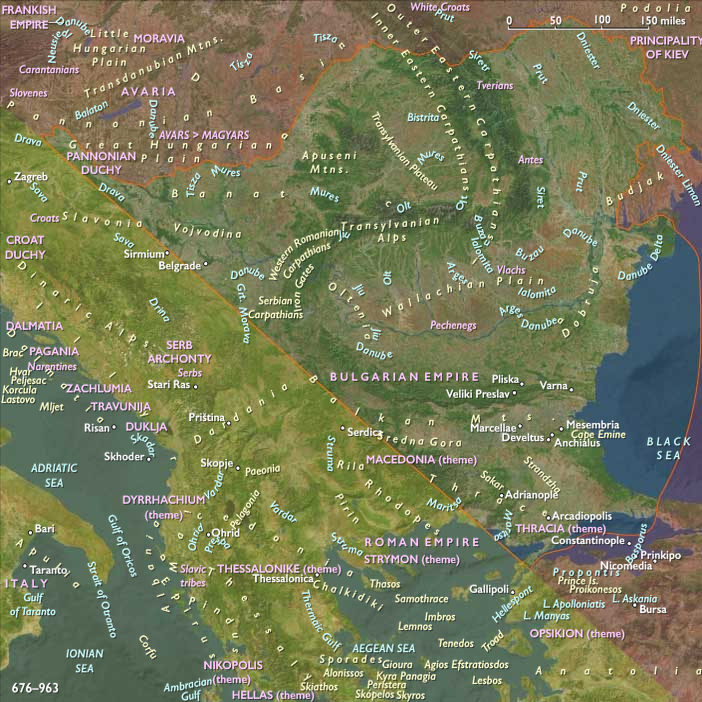
This period saw renewed military pressures from the Byzantine Empire aimed at reclaiming lost territories and reasserting control over critical regions. These initiatives resulted in increased tensions and intermittent clashes along the Byzantine-Bulgarian frontiers. Notably, the imperial stronghold of Adrianople fell to the expanding Bulgarian Empire, significantly altering regional military dynamics.
Bulgarian Consolidation and Regional Dominance
Under the continued leadership of Tsar Simeon I, Bulgaria reinforced its regional dominance, successfully defending its expanded territory and maintaining significant political leverage over the Byzantine Empire. The annual tribute paid by Constantinople reinforced Bulgaria's strengthened political position.
Serbian Positioning
The Serbian principality continued its consolidation process, cautiously navigating between Byzantine and Bulgarian influences. This delicate political balancing act enabled Serbia to strengthen its internal structures and regional significance gradually.
Role of the Paulicians
The Paulicians gained increased importance in Thrace, where many had been forcibly relocated by the Byzantine authorities to serve as a frontier force against Bulgarian advances. Their presence further highlighted the strategic defensive measures employed by the empire during this period.
Economic and Technological Developments
Economic Resilience
The regional economy continued its resilience, driven by sustained agricultural productivity, robust trade networks, and stable infrastructure. Trade activities, particularly those involving the Italian maritime republics, played a pivotal role in supporting regional economic stability.
Defensive Enhancements
Military fortifications and defensive strategies continued to evolve, reflecting ongoing geopolitical tensions. Both Bulgarian and Byzantine territories saw significant investments in defensive capabilities to secure borders and protect economic interests.
Cultural and Artistic Developments
Continued Cultural Flourishing
Artistic and cultural activities thrived during this period, supported by sustained stability and regional prosperity. Byzantine and Bulgarian artistic expressions continued to evolve, reflecting broader cultural exchanges and influences.
Scholarly and Literary Expansion
Educational institutions and scriptoria experienced further growth, reinforcing cultural continuity and intellectual resilience. The ongoing production of manuscripts and literary works contributed significantly to regional cultural heritage.
Social and Religious Developments
Strengthening of Orthodox Christianity
Eastern Orthodox Christianity continued to significantly influence societal structures, shaping cultural identity and community cohesion. Religious institutions played a vital role in regional stability and cultural unity.
Ecclesiastical Stability
Despite earlier ecclesiastical tensions, relations between Eastern and Western Christian institutions remained stable during this period. The continued influence of Eastern Orthodoxy facilitated ongoing religious harmony and social integration across the region.
Long-Term Consequences and Historical Significance
The period from 904 to 915 CE was characterized by renewed Byzantine military initiatives, continued Bulgarian dominance, and sustained regional stability. These developments significantly shaped the geopolitical dynamics and cultural landscape of Eastern Southeast Europe, laying the groundwork for future historical trajectories and enduring regional influences.
People
Groups
- Thrace, Theme of
- Christianity, Chalcedonian
- Paulicians
- Bulgarian Empire (First)
- Bulgarians (South Slavs)
- Serbian Principality
- Serbs (South Slavs)
- Roman Empire, Eastern: Macedonian dynasty
- Bulgarian Orthodox Church
- Romanians
Topics
Commodoties
Subjects
Regions
Subregions
Years: 904 - 915
People
Groups
- Thrace, Theme of
- Christianity, Chalcedonian
- Paulicians
- Bulgarian Empire (First)
- Bulgarians (South Slavs)
- Serbian Principality
- Serbs (South Slavs)
- Roman Empire, Eastern: Macedonian dynasty
- Bulgarian Orthodox Church
- Romanians
Topics
Commodoties
Subjects
Regions
Subregions