
Eastern Southeast Europe (832–843 CE): Icon Restoration …
Years: 832 - 843
Eastern Southeast Europe (832–843 CE): Icon Restoration and Regional Conflicts
Settlement and Migration Patterns
Continued Stability Amid Renewed Conflicts
From 832 to 843 CE, Eastern Southeast Europe maintained relative demographic stability despite increased regional tensions and renewed conflicts. The region continued adapting to shifting political realities, marked by Byzantine diplomatic maneuvers and military campaigns.
Political and Military Developments
Restoration of Icons Under Michael III
The reign of Emperor Michael III, the last ruler of the Amorian (Phrygian) dynasty, along with his regents, was notably marked by the restoration of icon veneration within the Greek Church in 843 CE. This restoration significantly impacted religious and political unity within the Byzantine Empire.
Successful Campaigns Against Arabs and Slavs
Under Michael III’s regency and subsequent reign, the Byzantine Empire conducted successful military campaigns against Arab incursions and Slavic tribes. These victories temporarily strengthened the empire’s defenses and restored some of its regional prestige.
Bulgarian-Serbian Conflict
The period witnessed the first recorded conflict between Bulgarians and Serbs, prompted by Byzantine diplomatic strategy. This war, occurring during the reign of Bulgarian Khan Presian between 839 and 842, underscored the complexities of regional politics and Byzantine influence in local disputes.
Economic and Technological Developments
Continued Economic Adaptation
Economic adjustments continued, reflecting territorial shifts and military dynamics. Despite geopolitical turbulence, economic resilience persisted, supported by strategic trade and fortified infrastructures that protected vital economic interests.
Reinforced Defensive Strategies
Strategic military fortifications continued to be a priority, with ongoing efforts to strengthen defensive structures around critical frontier and urban regions, notably Constantinople. These fortifications were essential in maintaining regional stability against external threats.
Cultural and Artistic Developments
Revitalized Religious Art and Iconography
The restoration of icons in 843 CE revitalized religious art and significantly shaped cultural and spiritual practices within the Byzantine Empire. Artistic production flourished, emphasizing renewed expressions of faith and communal identity.
Scholarly and Intellectual Continuity
Educational institutions and scholarly communities remained active, preserving and advancing classical, theological, and philosophical traditions. Intellectual continuity supported cultural resilience during a period marked by significant religious and political shifts.
Social and Religious Developments
Impact of Icon Restoration
The official restoration of icon veneration had profound social and religious implications, reinforcing Eastern Orthodoxy's role in societal cohesion and spiritual life. Religious institutions regained prominence, further shaping regional identity and community stability.
Ecclesiastical Strength and Community Resilience
The renewed emphasis on icon veneration strengthened ecclesiastical influence, guiding social dynamics and fortifying community resilience amidst geopolitical uncertainties and regional conflicts.
Long-Term Consequences and Historical Significance
The period from 832 to 843 CE was characterized by significant religious restoration, successful military actions against external threats, and the emergence of notable regional conflicts. These developments significantly reshaped Eastern Southeast Europe’s religious, political, and cultural landscapes, setting enduring foundations for future historical trajectories.
People
Groups
- Arab people
- Thrace, Theme of
- Slavs, South
- Christianity, Chalcedonian
- Bulgarian Empire (First)
- Abbasid Caliphate (Baghdad)
- Abbasid Caliphate (Samarra)
Topics
Commodoties
Subjects
Regions
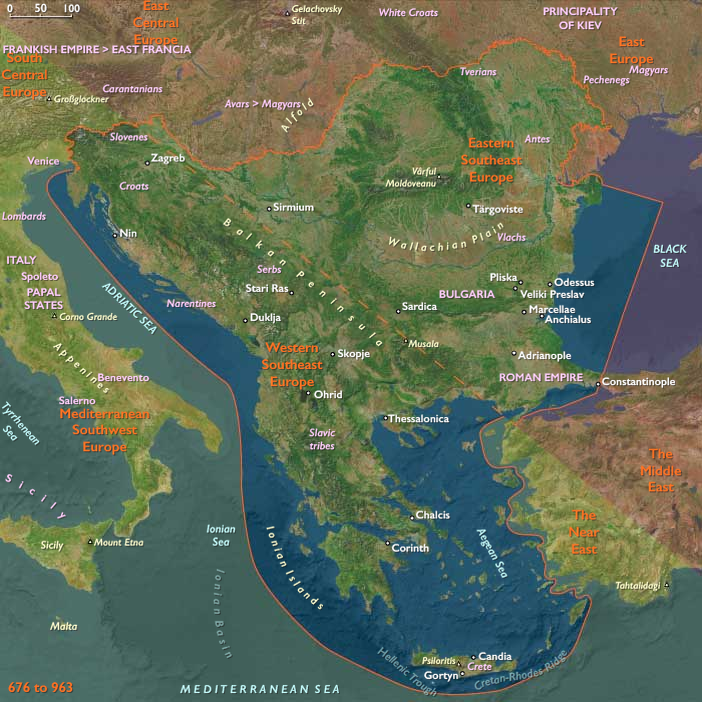
Subregions
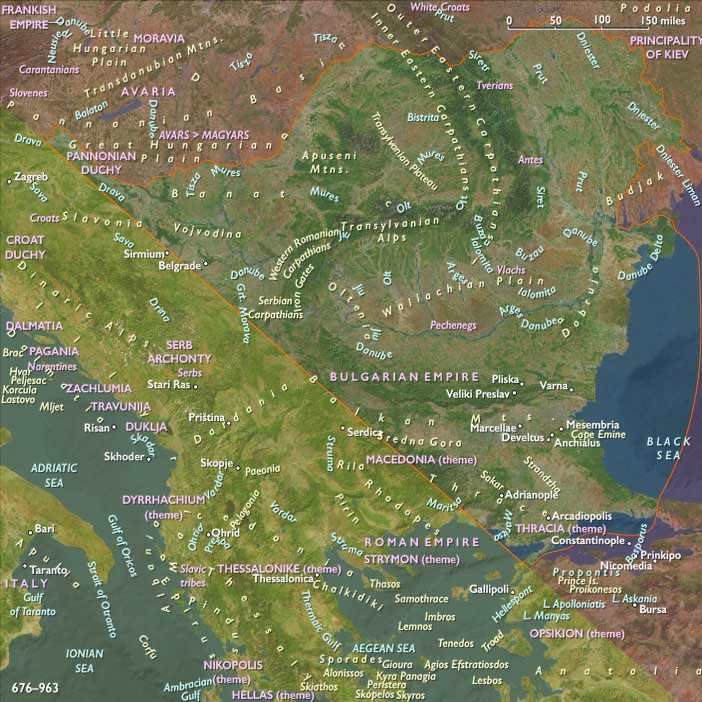
Years: 832 - 843
People
Groups
- Arab people
- Thrace, Theme of
- Slavs, South
- Christianity, Chalcedonian
- Bulgarian Empire (First)
- Abbasid Caliphate (Baghdad)
- Abbasid Caliphate (Samarra)
Topics
Commodoties
Subjects
Regions
Subregions