
Eastern Southeast Europe (616–627 CE): Navigating New …
Years: 616 - 627
Eastern Southeast Europe (616–627 CE): Navigating New Challenges
Settlement and Migration Patterns
Persistent Migration and Urban Integration
Between 616 and 627 CE, Eastern Southeast Europe faced ongoing migratory pressures, primarily from Slavic and Avar groups. Urban centers and rural settlements effectively integrated incoming populations, continually adapting infrastructure and urban planning to maintain societal stability.
Reinforced Fortifications
Cities such as Constantinople, Philippopolis, Adrianople, and Serdica continued strengthening their defensive infrastructures. Enhanced fortifications played crucial roles in safeguarding populations and ensuring consistent urban growth and resilience.
Economic and Technological Developments
Sustained Economic Resilience
Regional economies continued demonstrating resilience through stable agricultural productivity and active trade networks. Constantinople remained an essential commercial hub, significantly facilitating resource distribution and economic vitality.
Defensive Technological Innovations
Technological developments maintained their focus on military defenses, fortification improvements, and logistical advancements. These innovations reinforced regional security and provided essential support for economic stability and community safety.
Cultural and Artistic Developments
Cultural Persistence and Development
Despite external pressures, cultural life remained vibrant, integrating classical traditions and emerging Christian influences. Artistic production, including public monuments and religious architecture, continued reinforcing regional identity and cultural continuity.
Intellectual Resilience
Scholarly institutions maintained their critical roles in preserving and advancing classical and theological knowledge. Intellectual and educational activities persisted actively, effectively responding to societal needs and ensuring cultural resilience.
Social and Religious Developments
Adaptive and Efficient Governance
Administrative structures continued to function efficiently, enhancing governance, resource management, and civic oversight. Adaptive provincial administration effectively supported regional stability and managed external challenges proactively.
Expanding Influence of Christianity
Christianity’s societal role further expanded, deeply integrating into regional social, cultural, and political structures. The continued growth of religious institutions provided critical community support, reinforcing societal cohesion and resilience.
Long-Term Consequences and Historical Significance
The period from 616 to 627 CE was defined by the region’s proactive management of demographic shifts, fortified urban resilience, sustained economic stability, and persistent cultural and intellectual vitality. These elements significantly contributed to Eastern Southeast Europe's ongoing resilience and preparedness, laying critical foundations for future historical stability.
Groups
- Dacians, or Getae, or Geto-Dacians
- Thrace, Theme of
- Thracia (Roman province)
- Dacia Ripensis (Roman province)
- Dacia Mediterranea (Roman province)
- Moesia I (Roman province)
- Moesia II (Roman province)
- Europa (Roman province)
- Slavs, South
- Christianity, Chalcedonian
- Roman Empire, Eastern: Justinian dynasty
- Avar Khaganate (Eurasian Avars)
- Roman Empire, Eastern: Non-dynastic
Topics
Commodoties
Subjects
Regions
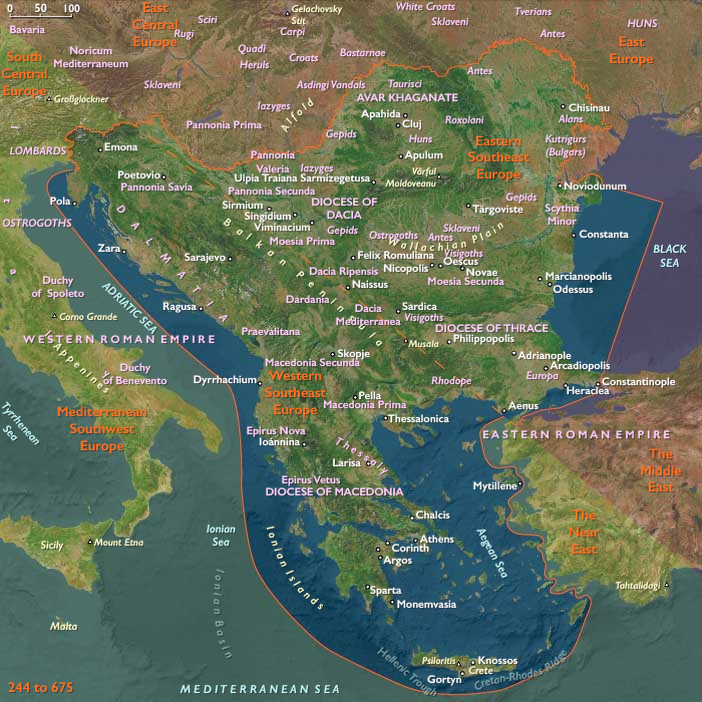
Subregions
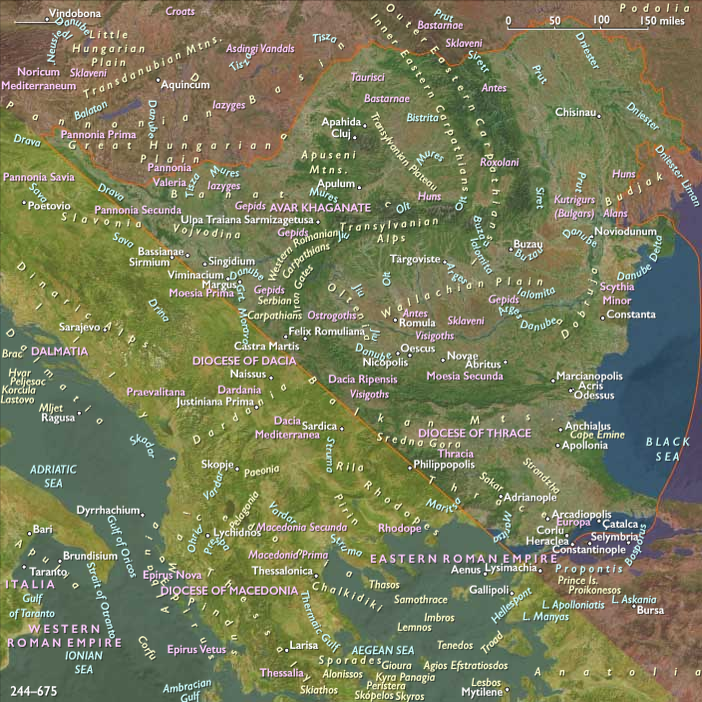
Years: 616 - 627
Groups
- Dacians, or Getae, or Geto-Dacians
- Thrace, Theme of
- Thracia (Roman province)
- Dacia Ripensis (Roman province)
- Dacia Mediterranea (Roman province)
- Moesia I (Roman province)
- Moesia II (Roman province)
- Europa (Roman province)
- Slavs, South
- Christianity, Chalcedonian
- Roman Empire, Eastern: Justinian dynasty
- Avar Khaganate (Eurasian Avars)
- Roman Empire, Eastern: Non-dynastic
Topics
Commodoties
Subjects
Regions
Subregions