
Eastern Southeast Europe (604–615 CE): Major Demographic …
Years: 604 - 615
Eastern Southeast Europe (604–615 CE): Major Demographic and Cultural Realignments
Settlement and Migration Patterns
Avar-Slavic Penetration and Settlement
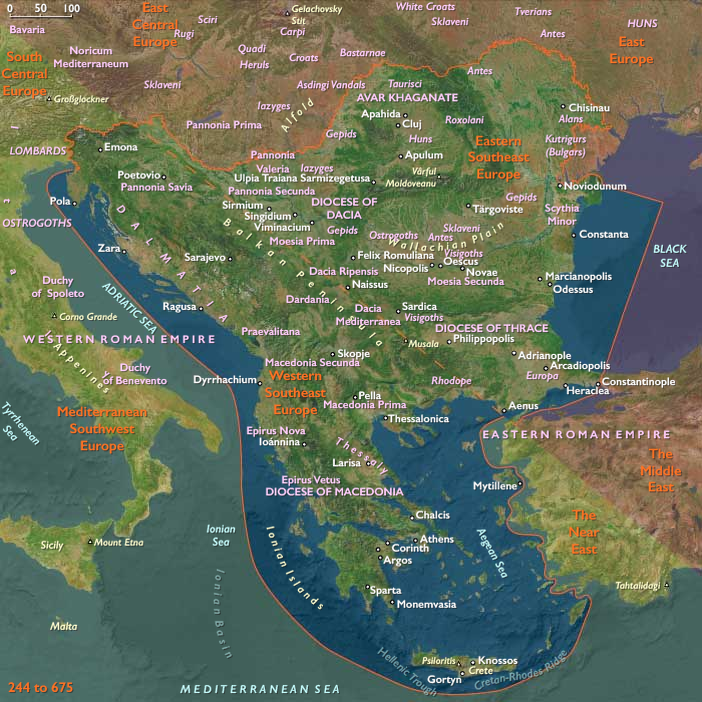
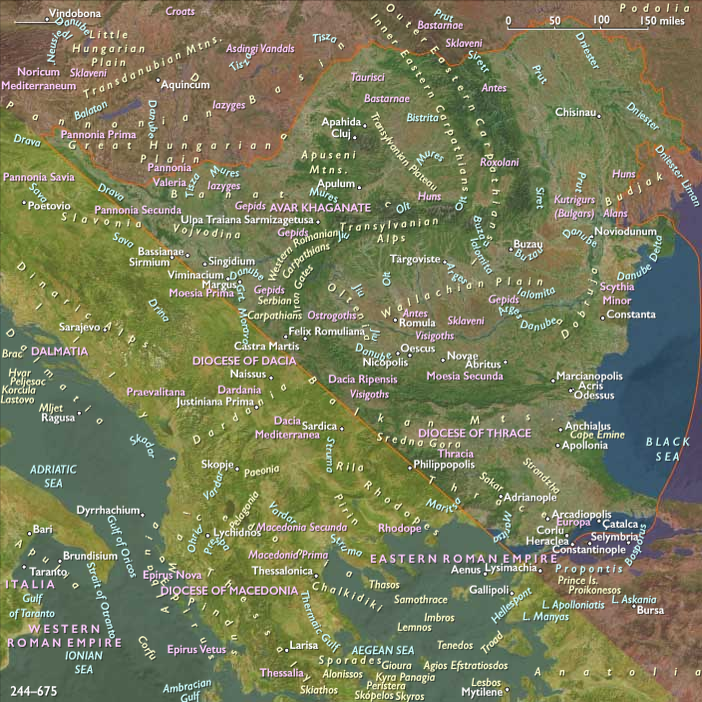
Between 604 and 615 CE, Eastern Southeast Europe experienced substantial demographic and geopolitical shifts due to the combined forces of the Avars and Slavs breaching the Danube frontier. Their occupation of extensive territories drastically altered the configuration of Balkan populations, resulting in profound and enduring demographic transformations.
Isolation of Dacia
For the first time since Emperor Trajan's conquest, Dacia found itself cut off from the Roman world, marking a significant geopolitical shift. This isolation redefined regional interactions and hastened local adaptations to the new socio-political landscape.
Indigenous Population Displacement
The invasions caused significant displacement among the region's indigenous populations, particularly affecting Illyrian and Greek communities. Many relocated their settlements to more defensible, higher ground or fled the Balkans entirely, with a notable exodus to areas such as Calabria in southern Italy.
Political and Military Developments
Defensive Challenges and Reorganization
Faced with the penetrating forces, the Eastern Roman Empire struggled to effectively repulse or assimilate these newcomers. Consequently, defensive strategies underwent significant re-evaluation, focusing on safeguarding key areas and managing an increasingly fragmented regional landscape.
Shift in Regional Dominance
The success of the Avars and their Slavic allies significantly altered regional power dynamics. This shift necessitated ongoing military vigilance and continuous adaptations to imperial defensive and diplomatic strategies.
Economic and Technological Developments
Economic Disruption and Adaptation
The invasions and resultant demographic shifts caused considerable disruption to local economies, particularly affecting agricultural productivity and trade networks. Nonetheless, local communities and imperial structures gradually adapted, striving to restore economic stability under challenging circumstances.
Infrastructure and Defensive Reinforcements
Continuous attention was given to infrastructure improvements, notably fortifications and defensive measures. These reinforced defenses played a crucial role in managing persistent security threats and maintaining administrative and logistical functions.
Cultural and Artistic Developments
Cultural Slavicization and Stability
The extensive Slavic settlements introduced a more stable culture, substantially influencing and reshaping the existing Roman social order. While the Slavs retained their language, significant cultural blending occurred, creating a unique and lasting socio-cultural synthesis within the region.
Intellectual and Cultural Resilience
Despite upheaval, intellectual and educational institutions persisted in their roles of preserving classical and theological knowledge, adapting to the new social conditions and continuing their scholarly activities.
Social and Religious Developments
Governance Under Strain
Imperial and local administrative structures faced considerable challenges managing the extensive demographic and social transformations. Administrative strategies focused on adaptive governance, aimed at maintaining societal order and community resilience amidst significant upheavals.
Continuing Role of Christianity
Christianity maintained its significant societal presence, providing moral cohesion and community support throughout the period of instability. Religious institutions continued to function as key elements in preserving social unity and communal identity.
Long-Term Consequences and Historical Significance
The era from 604 to 615 CE marked a pivotal turning point for Eastern Southeast Europe, characterized by dramatic demographic shifts, extensive population movements, and significant cultural transformations. These developments deeply influenced the region’s historical trajectory, setting the stage for lasting socio-political realignments.
Groups
- Dacians, or Getae, or Geto-Dacians
- Thrace, Theme of
- Thracia (Roman province)
- Dacia Ripensis (Roman province)
- Dacia Mediterranea (Roman province)
- Moesia I (Roman province)
- Moesia II (Roman province)
- Europa (Roman province)
- Slavs, South
- Christianity, Chalcedonian
- Avar Khaganate (Eurasian Avars)
- Roman Empire, Eastern: Non-dynastic
- Roman Empire, Eastern: Heraclian dynasty
Topics
Commodoties
- Weapons
- Oils, gums, resins, and waxes
- Grains and produce
- Ceramics
- Strategic metals
- Slaves
- Beer, wine, and spirits
- Lumber
Subjects
Regions
Subregions
Years: 604 - 615
Groups
- Dacians, or Getae, or Geto-Dacians
- Thrace, Theme of
- Thracia (Roman province)
- Dacia Ripensis (Roman province)
- Dacia Mediterranea (Roman province)
- Moesia I (Roman province)
- Moesia II (Roman province)
- Europa (Roman province)
- Slavs, South
- Christianity, Chalcedonian
- Avar Khaganate (Eurasian Avars)
- Roman Empire, Eastern: Non-dynastic
- Roman Empire, Eastern: Heraclian dynasty
Topics
Commodoties
- Weapons
- Oils, gums, resins, and waxes
- Grains and produce
- Ceramics
- Strategic metals
- Slaves
- Beer, wine, and spirits
- Lumber
Subjects
Regions
Subregions