
Eastern Southeast Europe (568–579 CE): Defensive Restructuring …
Years: 568 - 579
Eastern Southeast Europe (568–579 CE): Defensive Restructuring and Demographic Shifts
Settlement and Migration Patterns
Avar Arrival and Slavic Settlement
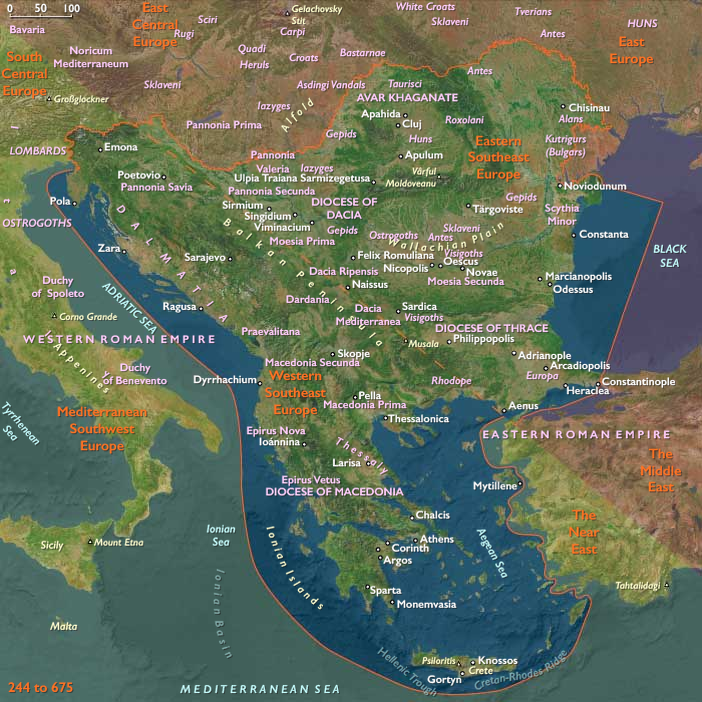
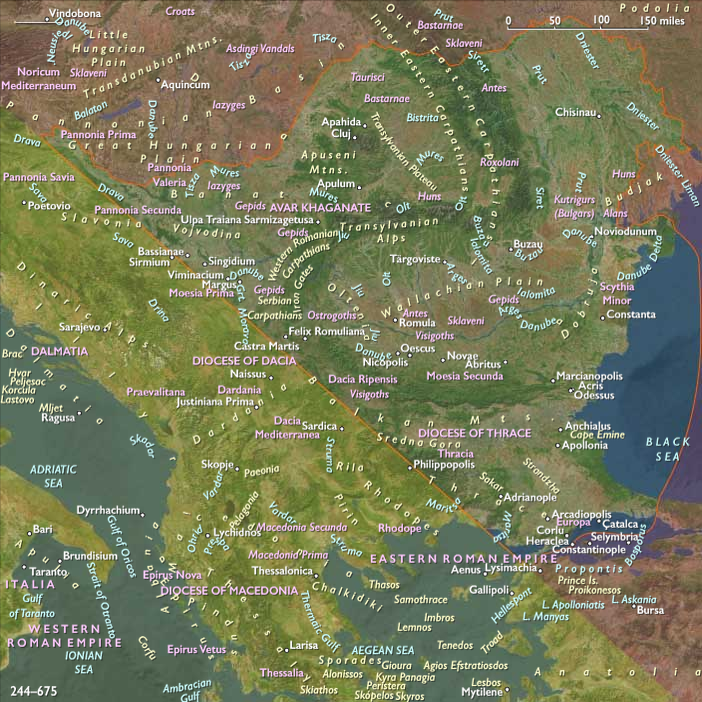
Between 568 and 579 CE, Eastern Southeast Europe experienced substantial demographic shifts driven by the arrival of the Eurasian Avars. After defeating the Germanic Gepidae in 567 CE, the Avars facilitated extensive Slavic migrations into the region of Dacia. Unlike previous transient populations, the Slavs permanently settled the area, significantly intermarrying and integrating with local Daco-Roman communities, reshaping the regional demographic and cultural landscape.
Integration and Cultural Blending
The integration of Slavic settlers with the existing population established enduring community structures, influencing future regional demographics. These new settlements contributed to a distinctive cultural and social synthesis within Dacia and the surrounding areas.
Political and Military Developments
Enhanced Defensive Measures
Responding to severe and frequent incursions from across the Danube, the Eastern Roman Empire undertook significant defensive restructuring, including the extensive construction and rebuilding of fortifications in the Balkans and Greece. These efforts aimed to strengthen regional security, although complete repulsion or assimilation of the invading groups remained elusive.
Avar Impact on Regional Stability
The emergence of the Avars as a dominant power significantly impacted regional political dynamics, altering power balances and necessitating continuous military vigilance and defensive adjustments throughout the Balkans.
Economic and Technological Developments
Economic Strain and Adaptation
Persistent military pressures and the necessity for defensive investments placed considerable strain on regional economic resources. Nonetheless, communities adapted by maintaining agricultural productivity and trade networks where possible, ensuring regional economic resilience.
Infrastructure and Technological Advances
Infrastructure improvements, notably fortifications and defense systems, were a key focus. These developments were crucial in managing ongoing security threats and maintaining logistical and administrative capabilities under challenging circumstances.
Cultural and Artistic Developments
Cultural Integration and Continuity
The fusion of Slavic traditions with local customs contributed to a unique cultural synthesis. Despite external threats, cultural and artistic activities persisted, preserving regional identity and continuity.
Preservation of Intellectual Heritage
Educational and scholarly traditions continued to be maintained, albeit under challenging conditions. Institutions persisted in their roles, safeguarding classical and theological knowledge through periods of instability.
Social and Religious Developments
Governance and Community Resilience
Imperial and local administrative structures worked vigorously to manage the complex demographic and security challenges of the period. These efforts included adaptive governance strategies to sustain social order and community resilience.
Deepening Influence of Christianity
Christianity continued expanding its societal influence, offering significant communal cohesion and moral support during this turbulent period. The ongoing growth of religious institutions further solidified their integral role in regional stability and identity.
Long-Term Consequences and Historical Significance
The period from 568 to 579 CE marked significant defensive restructuring and demographic transformations driven by Slavic settlement and Avar influence. These developments profoundly reshaped the social, cultural, and political landscapes, setting crucial foundations for the region's historical evolution.
People
Groups
- Dacians, or Getae, or Geto-Dacians
- Thrace, Theme of
- Gepids (East Germanic tribe)
- Thracia (Roman province)
- Persian Empire, Sassanid, or Sasanid
- Dacia Mediterranea (Roman province)
- Dacia Ripensis (Roman province)
- Moesia II (Roman province)
- Moesia I (Roman province)
- Europa (Roman province)
- Slavs, South
- Christianity, Chalcedonian
- Roman Empire, Eastern: Justinian dynasty
- Avar Khaganate (Eurasian Avars)
Topics
Commodoties
Subjects
Regions
Subregions
Related Events
Showing 10 events out of 57489 total
Years: 568 - 579
People
Groups
- Dacians, or Getae, or Geto-Dacians
- Thrace, Theme of
- Gepids (East Germanic tribe)
- Thracia (Roman province)
- Persian Empire, Sassanid, or Sasanid
- Dacia Mediterranea (Roman province)
- Dacia Ripensis (Roman province)
- Moesia II (Roman province)
- Moesia I (Roman province)
- Europa (Roman province)
- Slavs, South
- Christianity, Chalcedonian
- Roman Empire, Eastern: Justinian dynasty
- Avar Khaganate (Eurasian Avars)
Topics
Commodoties
Subjects
Regions
Subregions