
Eastern Southeast Europe (556–567 CE): Diplomatic Stabilization …
Years: 556 - 567
Eastern Southeast Europe (556–567 CE): Diplomatic Stabilization and Imperial Consolidation
Settlement and Migration Patterns
Continued Stabilization of Populations
From 556 to 567 CE, Eastern Southeast Europe witnessed ongoing stabilization of its settlements following earlier demographic disruptions. Populations slowly recovered, benefiting from improved agricultural conditions and effective imperial governance strategies.
Integration of Migrant Communities
Slavic communities continued to establish themselves throughout the Balkans, further integrating into regional settlement patterns. Their presence increasingly influenced demographic composition and contributed to the cultural and social landscape.
Political and Military Developments
Imperial Territorial Consolidation
Emperor Justinian’s successful military efforts had led to extensive territorial consolidation, reestablishing communication and administrative links with recovered territories including Italy, Sicily, North Africa, and Southern Hispania. This reunification marked a significant resurgence in the empire's geopolitical strength and administrative cohesion.
Fifty-Year Roman-Persian Truce
A major diplomatic achievement during this era was the negotiation of a comprehensive fifty-year truce between Constantinople and Ctesiphon. This agreement regulated trade along the Silk Road, significantly contributing to regional economic recovery and diplomatic stability between the Roman and Persian empires.
Economic and Technological Developments
Economic Resilience and Trade Recovery
With peace restored along critical trade routes, particularly the Silk Road, the regional economy experienced significant revival. Enhanced trade exchanges bolstered economic resilience and contributed to the gradual restoration of prosperity.
Continued Infrastructure Improvements
Technological and infrastructural developments persisted, especially regarding urban fortifications, transportation networks, and public works. These projects reinforced regional security, supported trade activities, and facilitated administrative efficiency.
Cultural and Artistic Developments
Renewed Cultural Flourishing
Cultural and artistic activities continued to thrive, demonstrating resilience and vitality. This period saw sustained growth in Christian art and architecture, enhancing communal identity and providing spiritual and cultural continuity.
Intellectual Preservation
Educational and scholarly institutions continued their active preservation and dissemination of classical and theological knowledge, sustaining intellectual and cultural traditions despite previous disruptions.
Social and Religious Developments
Effective Administrative Governance
Imperial administration successfully managed the post-crisis stabilization process, implementing effective policies that supported economic recovery, population stabilization, and strengthened governance structures.
Expansion of Christian Influence
Christianity maintained and expanded its role within society, continuing to shape regional cultural, social, and political dynamics significantly. Religious institutions provided vital social cohesion, moral support, and community stability.
Long-Term Consequences and Historical Significance
The era from 556 to 567 CE marked significant diplomatic stabilization and imperial consolidation. The comprehensive truce with Persia and the restored connections to western territories strengthened the empire’s strategic position, setting foundations for future regional stability, economic recovery, and cultural continuity.
People
Groups
- Dacians, or Getae, or Geto-Dacians
- Thrace, Theme of
- Thracia (Roman province)
- Persian Empire, Sassanid, or Sasanid
- Dacia Ripensis (Roman province)
- Dacia Mediterranea (Roman province)
- Moesia II (Roman province)
- Moesia I (Roman province)
- Europa (Roman province)
- Slavs, South
- Christianity, Chalcedonian
- Roman Empire, Eastern: Justinian dynasty
Topics
Commodoties
Subjects
Regions
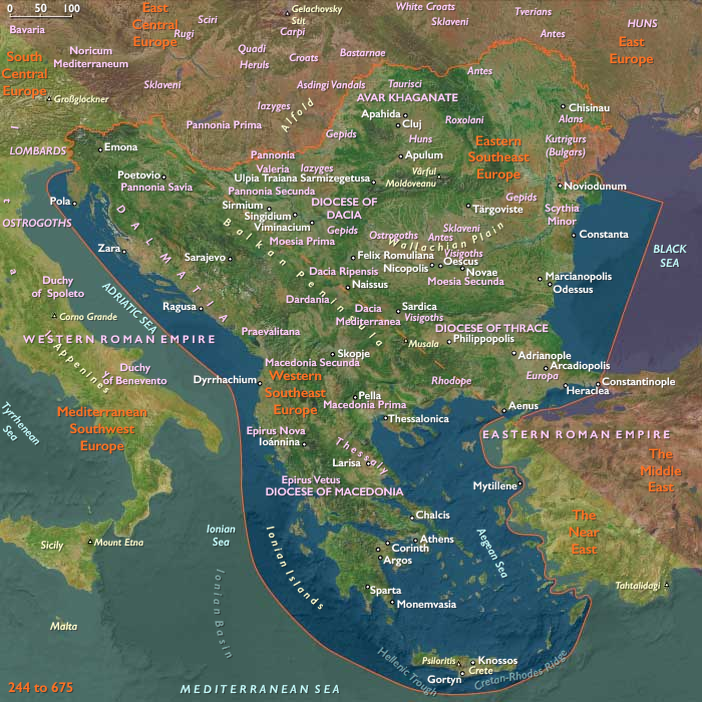
Subregions
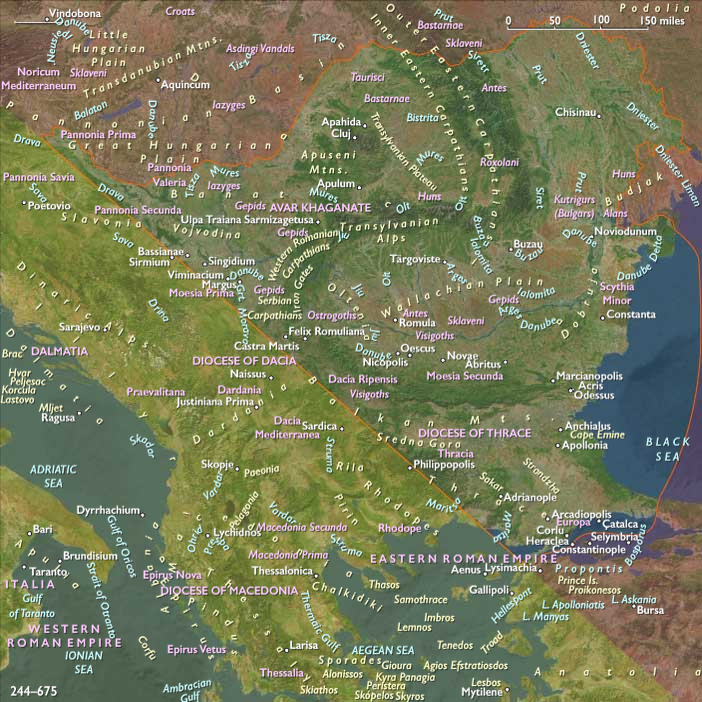
Related Events
Showing 10 events out of 57561 total
Years: 556 - 567
People
Groups
- Dacians, or Getae, or Geto-Dacians
- Thrace, Theme of
- Thracia (Roman province)
- Persian Empire, Sassanid, or Sasanid
- Dacia Ripensis (Roman province)
- Dacia Mediterranea (Roman province)
- Moesia II (Roman province)
- Moesia I (Roman province)
- Europa (Roman province)
- Slavs, South
- Christianity, Chalcedonian
- Roman Empire, Eastern: Justinian dynasty
Topics
Commodoties
Subjects
Regions
Subregions