
Eastern Southeast Europe (544–555 CE): Recovery, Reconquest, …
Years: 544 - 555
Eastern Southeast Europe (544–555 CE): Recovery, Reconquest, and Continuing Challenges
Settlement and Migration Patterns
Persistent Demographic Challenges
Between 544 and 555 CE, Eastern Southeast Europe continued grappling with lingering demographic challenges stemming from the Plague of Justinian. Although the initial devastation subsided, the region remained vulnerable due to reduced population levels, impacting both urban and rural settlements.
Slavic Migration
During this period, significant Slavic migrations reshaped the Balkan Peninsula's demographic composition. As Slavs established themselves throughout the region, these migrations significantly influenced settlement patterns and laid the groundwork for future demographic shifts.
Political and Military Developments
Justinian's Territorial Reconquests
Emperor Justinian's ambitious campaigns culminated in notable territorial reconquests, including Italy, Dalmatia, North Africa, and parts of Southern Hispania. The temporary reunification of these territories with the Eastern Roman Empire represented a brief revival of imperial unity and influence in the Mediterranean.
Continued Military Strain
Despite territorial gains, the empire remained under immense strain, both economically and militarily. The enduring impacts of the plague weakened imperial armies at a critical juncture, complicating further military and administrative consolidation efforts.
Economic and Technological Developments
Gradual Economic Stabilization
The regional economy began a cautious recovery, though ongoing agricultural disruptions and trade challenges persisted. Economic resilience slowly emerged as imperial policies adapted to the lingering impacts of the plague.
Infrastructure and Technological Maintenance
Significant attention remained on maintaining and enhancing infrastructure, particularly urban fortifications and key public works. Technological efforts focused on supporting military and economic resilience amid continued demographic and logistical challenges.
Cultural and Artistic Developments
Cultural Continuity and Adaptation
Cultural and artistic production reflected both continuity and adaptation during this challenging period. Continued development of Christian art and architecture symbolized resilience, providing societal cohesion and spiritual reassurance.
Preservation of Intellectual Heritage
Educational and scholarly institutions persevered, actively preserving classical and theological knowledge. Intellectual activities remained vigorous, adapting effectively to contemporary crises and societal disruptions.
Social and Religious Developments
Adaptive Governance and Resilience
Imperial administration continued to adapt to the ongoing crises, implementing policies aimed at economic recovery, demographic stabilization, and effective regional governance. These administrative adjustments were crucial in navigating the post-plague challenges.
Deepening Christian Influence
The role of Christianity further expanded, significantly shaping regional social, cultural, and political frameworks. The growing prominence of religious institutions helped bolster community resilience, providing essential moral and social support.
Long-Term Consequences and Historical Significance
The era from 544 to 555 CE marked a critical transitional period characterized by territorial reconquests, demographic adaptations, and gradual economic stabilization following the devastating plague. While Justinian's reunification efforts were notable, persistent vulnerabilities facilitated subsequent invasions, notably by the Lombards and later by Arab forces, shaping the region's historical trajectory profoundly.
People
Groups
- Dacians, or Getae, or Geto-Dacians
- Thrace, Theme of
- Thracia (Roman province)
- Dacia Mediterranea (Roman province)
- Dacia Ripensis (Roman province)
- Moesia I (Roman province)
- Moesia II (Roman province)
- Pannonia Secunda (Roman province)
- Europa (Roman province)
- Slavs, South
- Roman Empire, Eastern: Justinian dynasty
Topics
Commodoties
Subjects
Regions
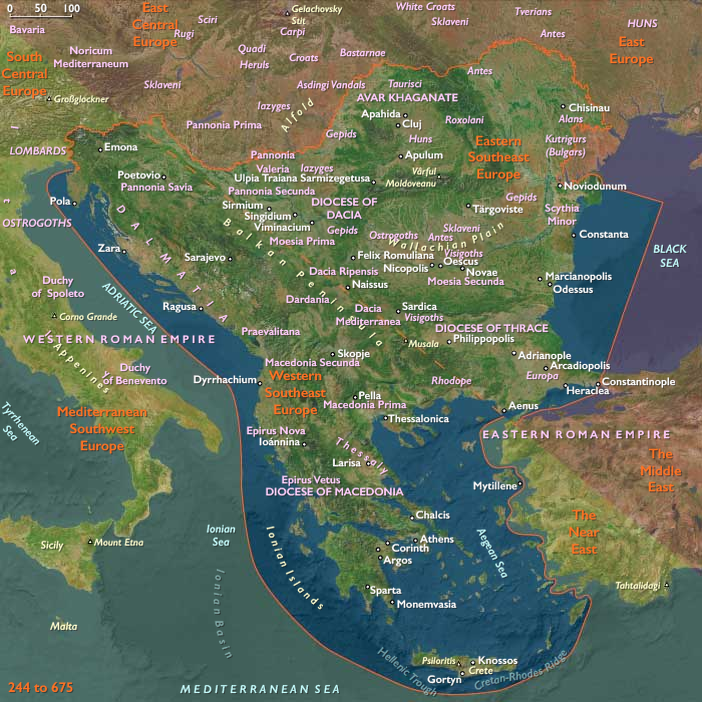
Subregions
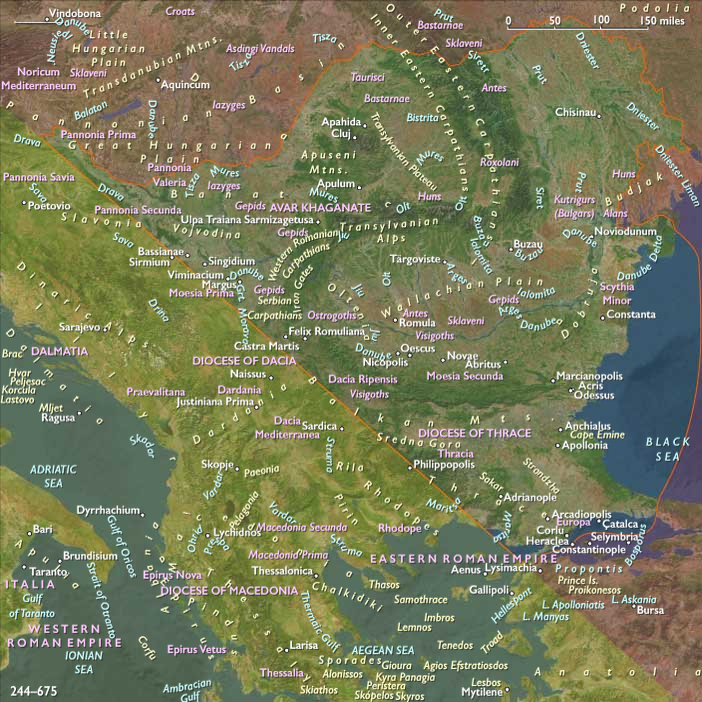
Years: 544 - 555
People
Groups
- Dacians, or Getae, or Geto-Dacians
- Thrace, Theme of
- Thracia (Roman province)
- Dacia Mediterranea (Roman province)
- Dacia Ripensis (Roman province)
- Moesia I (Roman province)
- Moesia II (Roman province)
- Pannonia Secunda (Roman province)
- Europa (Roman province)
- Slavs, South
- Roman Empire, Eastern: Justinian dynasty
Topics
Commodoties
Subjects
Regions
Subregions