
Eastern Southeast Europe (508–519 CE): Reinforced Stability …
Years: 508 - 519
Eastern Southeast Europe (508–519 CE): Reinforced Stability and Anticipated Changes
Settlement and Migration Patterns
Stability and Urban Prosperity
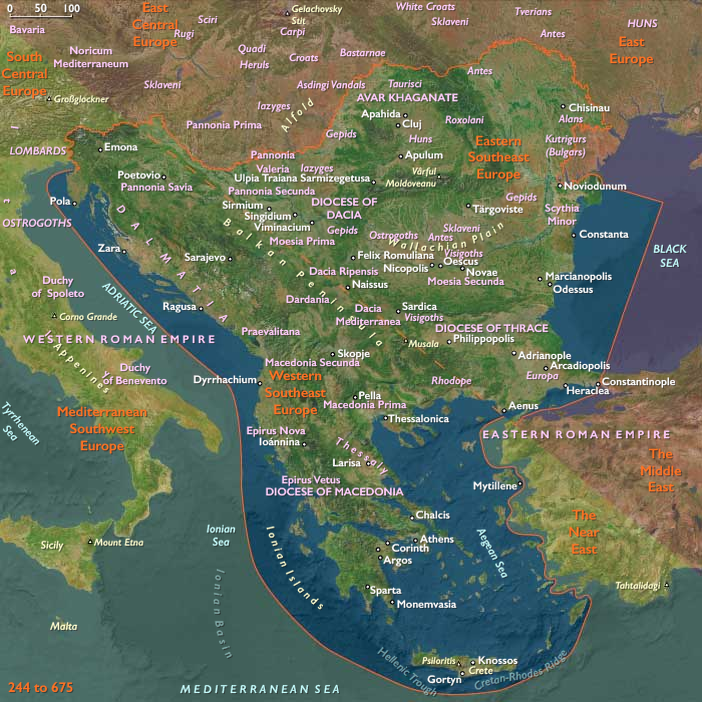
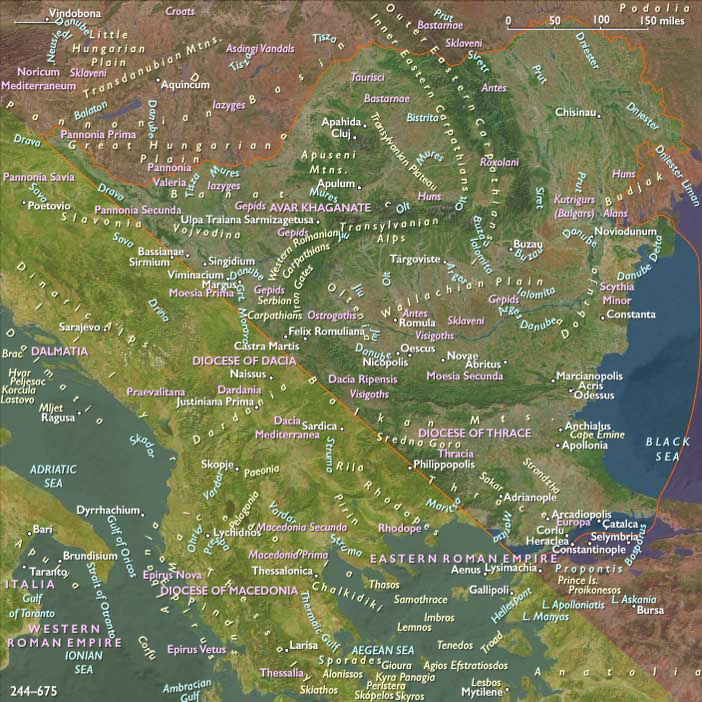
From 508 to 519 CE, Eastern Southeast Europe enjoyed continued stability and prosperity, facilitating sustained urban growth and infrastructural improvements. Major urban centers such as Constantinople and Philippopolis maintained their prominence, attracting stable and growing populations.
Ongoing Vigilance at Borders
Vigilance regarding migratory movements along regional frontiers increased during this period. Small-scale migrations persisted intermittently, prompting strategic settlement adaptations and cautious border management policies.
Economic and Technological Developments
Sustained Economic Resilience
Economic activities remained robust, driven by steady agricultural productivity, active trade routes, and effective urban economic management. Constantinople continued its crucial role as an economic nexus, ensuring sustained regional prosperity.
Defensive Technological Enhancements
Technological advancements continued to focus on military defense and infrastructure improvements. Enhanced fortifications, military logistics, and weaponry advancements reinforced regional security, safeguarding economic activities and urban centers.
Cultural and Artistic Developments
Continued Artistic and Cultural Vitality
Regional cultural life thrived, integrating classical traditions with Christian motifs in artistic production. Public monuments, religious buildings, and decorative arts enriched the cultural landscape, underscoring regional identity and heritage. Notably, the period saw significant artistic productions, including illuminated manuscripts such as the Ambrosian Iliad (Ilias Picta), produced in Constantinople between 493 and 508 CE.
Intellectual and Educational Continuity
Educational and scholarly institutions remained robust, actively preserving classical knowledge and adapting intellectual traditions to contemporary conditions. These institutions supported vibrant intellectual and cultural activities, ensuring continuity amidst changing social contexts.
Social and Religious Developments
Efficient Administrative Structures
Administrative structures further solidified, enhancing local governance efficiency, civic oversight, and regional coherence. These developments significantly contributed to sustained stability and effective management of emerging challenges.
Expanding Christian Influence
Christianity continued its deep integration within societal frameworks, significantly shaping social, cultural, and political dynamics. The expansion and reinforcement of religious institutions promoted societal cohesion and community resilience.
Vitalian's Rebellion
In 513 CE, Vitalian, an imperial general likely of mixed Roman and barbarian descent, rebelled against Emperor Anastasius I due to widespread discontent over fiscal austerity and the promotion of Miaphysitism. Quickly garnering support from large parts of the army and populace in Thrace, Vitalian posed a serious threat to Constantinople, forcing Anastasius to recant Miaphysitism in 515 CE. Vitalian’s rebellion ended following a decisive naval defeat, after which he retreated to Thrace until pardoned by the new emperor, Justin I, in 518 CE, marking a critical moment of religious and political tension.
Long-Term Consequences and Historical Significance
The period from 508 to 519 CE was characterized by reinforced regional stability, effective anticipation of migration pressures, sustained economic resilience, and cultural continuity. These developments shaped Eastern Southeast Europe's historical trajectory significantly, providing a stable platform for future regional growth and Byzantine prominence.
People
Groups
- Dacians, or Getae, or Geto-Dacians
- Thrace, Theme of
- Thracia (Roman province)
- Dacia Ripensis (Roman province)
- Dacia Mediterranea (Roman province)
- Moesia I (Roman province)
- Moesia II (Roman province)
- Pannonia Secunda (Roman province)
- Macedonia, Diocese of
- Europa (Roman province)
- Macedonia, (East) Roman
- Christians, Miaphysite (Oriental Orthodox)
- Christianity, Chalcedonian
- Roman Empire, Eastern: Leonid dynasty
- Roman Empire, Eastern: Justinian dynasty
Topics
Commodoties
- Weapons
- Oils, gums, resins, and waxes
- Grains and produce
- Ceramics
- Strategic metals
- Slaves
- Beer, wine, and spirits
- Lumber
Subjects
Regions
Subregions
Years: 508 - 519
People
Groups
- Dacians, or Getae, or Geto-Dacians
- Thrace, Theme of
- Thracia (Roman province)
- Dacia Ripensis (Roman province)
- Dacia Mediterranea (Roman province)
- Moesia I (Roman province)
- Moesia II (Roman province)
- Pannonia Secunda (Roman province)
- Macedonia, Diocese of
- Europa (Roman province)
- Macedonia, (East) Roman
- Christians, Miaphysite (Oriental Orthodox)
- Christianity, Chalcedonian
- Roman Empire, Eastern: Leonid dynasty
- Roman Empire, Eastern: Justinian dynasty
Topics
Commodoties
- Weapons
- Oils, gums, resins, and waxes
- Grains and produce
- Ceramics
- Strategic metals
- Slaves
- Beer, wine, and spirits
- Lumber
Subjects
Regions
Subregions